The Lord Bless You and Keep You

Introduction

In a world that often feels tumultuous and uncertain, finding a source of true peace and enduring comfort can seem elusive. In church this morning, though, I was reminded of a blessing in Scripture that has been spoken over God’s people for thousands of years—the Aaronic Blessing (called that because God told Moses that this is the blessing Aaron is to speak over God’s people) from Numbers 6:24-26:

The Lord bless you
and keep you;
the Lord make his face shine on you
and be gracious to you;
the Lord turn his face toward you
and give you peace.

Numbers 6:24-26 (NIV)

What got me pondering these verses is the song “The Blessing“, which we sang as one of the praise songs at church. This blessing not only offers comfort but also provides a deep insight into the character of God and how He relates to us, His beloved children. I’d like to explore these verses and consider how we may carry this blessing with us throughout this week and beyond.

A Divine Embrace

“The Lord bless you and keep you.” These opening words of the blessing are a promise of God’s comprehensive care. To be kept by the Lord suggests a protective embrace, safeguarding us from the ills and dangers lurking in the shadows of our daily struggles. It’s not merely a passive watchfulness; it’s an active maintenance of our well-being, a declaration that you and I are worth protecting.

The Radiance of God’s Favor

“The Lord make his face shine on you and be gracious to you.” I find such comfort and hope in the imagery of God’s face shining upon me, upon you. Don’t you? In ancient cultures, a king’s favorable glance was a sign of approval and benevolence, often leading to prosperity and protection for the recipient. When we imagine the Creator of the universe turning His countenance towards us, it suggests a personal attention and care that is both humbling and uplifting.

The request for God’s face to shine on us is a prayer for His grace. Grace, that unmerited favor, is central to our understanding of God’s character. It’s a reminder that despite our flaws and failures, God looks upon us with kindness and a desire to bless and enrich our lives.

The Gift of Divine Peace

“The Lord turn his face toward you and give you peace.” In this final part of the blessing, the repeated mention of God’s face emphasizes a relational God, actively engaged and present in our lives. It reassures us that we are never beyond His notice or care.

Peace—the deep, abiding peace that comes from God—is perhaps one of the most precious gifts He offers. It’s not simply the absence of conflict but a profound sense of wholeness and well-being—shalom—that sustains us even in the midst of turmoil. This peace guards our hearts and minds, anchoring us securely in God’s perfect will.

The more I turn to God and remind myself that He is turning toward me, the better I can deal with the daily stresses and ongoing challenges in my life. I know so many people who could benefit from this same peace, but sadly their mental and spiritual state is such that they are rejecting the gift they need more than anything else in their lives.

Reflecting God’s Light

As recipients of such a blessing, we are called to reflect the light that God shines upon us. Just as the moon reflects the light of the sun, we too are to reflect God’s grace and peace to others. In doing so, we become beacons of hope and comfort in a world desperately in need of both. We become lights in the darkness of this world, just as Jesus was and is the Light that the darkness cannot overcome (John 1:5).

Conclusion: A Blessing for All Seasons

“The Lord bless you and keep you” is not just a benediction for the end of a church service or a prayer meeting; it’s a daily reality for those who walk in relationship with God. Each phrase of this blessing carries deep implications for our lives, offering reassurance and a reminder of God’s eternal commitment to our welfare.

As we continue on our journeys, may we always be aware of God’s shining face turned towards us, His grace that covers our failures, and His peace that transcends understanding. Let this blessing be a cornerstone of our faith, a declaration we not only receive but also share generously with those around us.

In embracing and distributing this blessing, we participate in a divine exchange that enriches our community and world, strengthens our faith, and glorifies our Father in heaven. These verses would be a good token for each of us to carry with us throughout this week and beyond. Our minds can stroke the token’s smooth surface whenever we need a reminder of God’s blessings or a dose of His peace. We can also hand them out to others, too, with kind words or actions.

We need not worry about running out of these tokens. Our loving God has an endless supply.

Posted in Biblical insights, Biblical Teachings, Christian, Christian Living, Christianity and Mental Health, Daily Devotional, Faith, Miracles, Prayer and Worship, Self-Improvement, Spiritual Encouragement, Spiritual Growth, Spiritual Reflection, Trust in God | Tagged , , , , , , , , , , , , , , , , , , | Leave a comment

Where Does My Help Come From?

Introduction

Last year, my wife, father-in-law, and I moved from Colorado to Florida, the flattest state in the US. I love Florida, so I’m glad we made the move, but I miss my friends and family still living in Colorado, and I miss the mountains. Thankfully, God has blessed us with the ability to come back and visit for a good chunk of time this summer, so that’s where we are now.

On this visit, I’ve been struck by a profound sense of nostalgia and a deep appreciation for the majestic mountains that once framed my everyday life. There’s something undeniably comforting about the towering Pikes Peak and its surrounding watchers, which once served as daily reminders of God’s presence and strength. It was here, amidst these silent sentinels, that I often found solace in the words of Psalm 121, a passage that speaks powerfully about God’s protection and care.

The Psalm and the Mountains

This psalm was written by King David. As you may know, in the early part of his adulthood, his life was clearly blessed by God, perhaps due in part to the fact that he relied on God daily for his strength and sustenance. In fact, in one of his sermons, the Apostle Paul pointed out that God referred to David as a man after His own heart (Acts 13:22). David rose from obscurity to become the great uniter and king of Israel in a relatively short time.

However, sadly, as often happens to so many of us, David’s success led to an overblown sense of self-sufficiency, replacing the utter dependence on God that had gotten him to his position of prominence. This is Satan’s handiwork, and we let him play this same trick on us time and again. Not surprisingly for David, that’s when the wheels started to fall off his “greatness-mobile”. For a while, the previous king, Saul, was trying to kill him. At another stage of his life, his son, Absolom, was trying to take the crown from David, and was willing to take David’s head as part of the deal.

Bottom line: David knew more than his share of challenges and hardships.

Fortunately for him, though, he had maintained enough of a relationship with God that he would periodically recognize that he had turned away from his Source of Strength. He would repent and return to God.

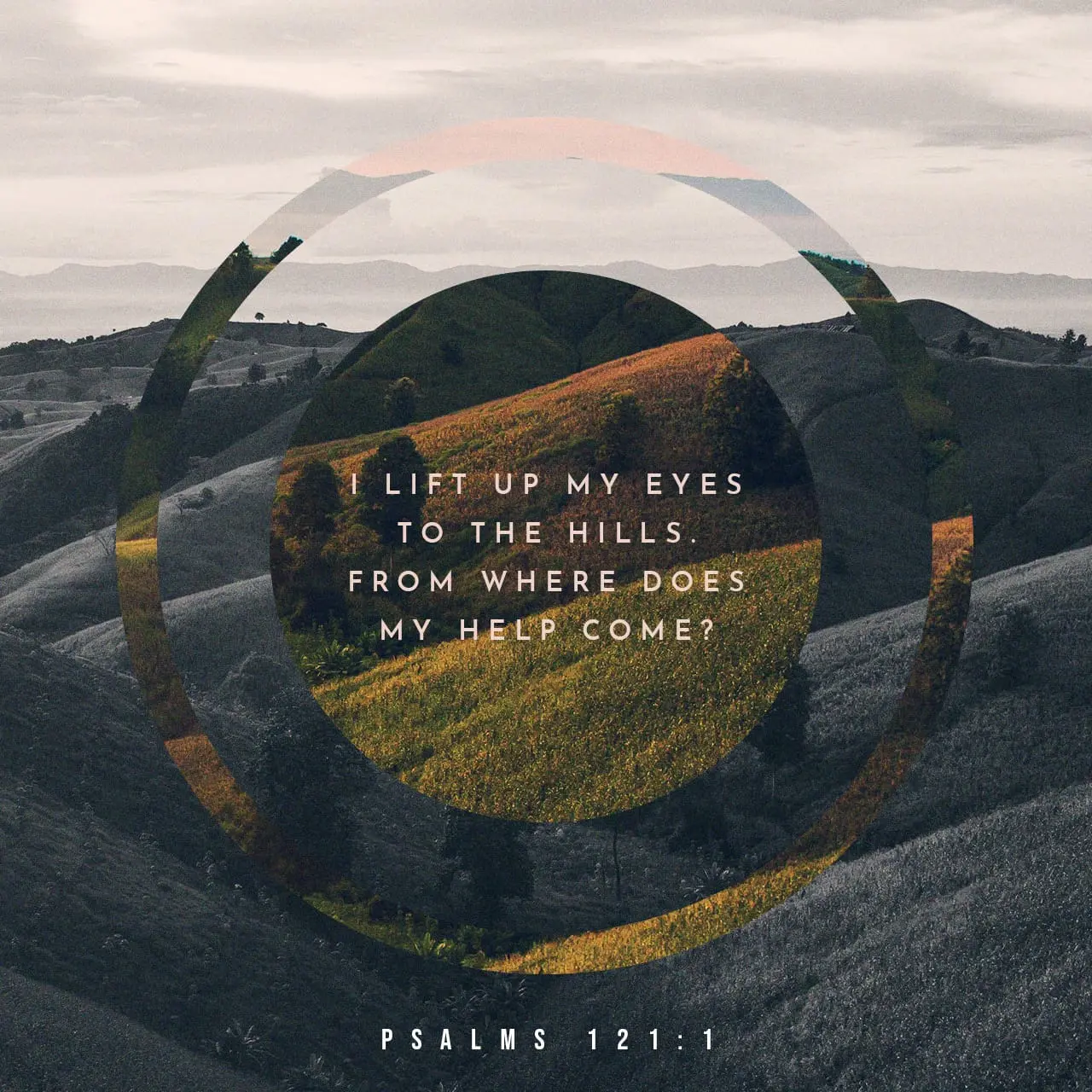
This brings me to Psalms 121, one of my favorites. Perhaps in a period of reflection about why his life had fallen apart, David must have turned his gaze to the mountains and felt these words infuse his mind:

King David, in Psalms 121:1 (NIV, borrowed from YouVersion)

He then answers his own rhetorical, poetic question:

King David, in Psalms 121:2 (NIV, borrowed from YouVersion)

These verses have always resonated with me, especially during my years in Colorado. The mountains were not just a backdrop for life; they were a visible cue to lift my gaze upward and remember the omnipotence of God. They prompted me to consider the vastness of God’s creation and His incomprehensible ability to oversee every detail within it.

I recall once near the end of a particularly moving church service, it was one of the many times God has dragged me out of my comfort zone. A couple sitting in the row in front of me seemed to be struggling mightily with something during a time of dedicated prayer. God placed it on my heart to quote these verses to them, which I did (explaining that God had nudged me to mention this to them). It resonated with them, they seemed to take comfort from the message, and I eventually got over my sweaty palms.

The Psalm Continues

The rest of the Psalm reads as follows:

He will not let your foot slip—
he who watches over you will not slumber;
indeed, he who watches over Israel
will neither slumber nor sleep.

The Lord watches over you—
the Lord is your shade at your right hand;
the sun will not harm you by day,
nor the moon by night.

The Lord will keep you from all harm—
he will watch over your life;
the Lord will watch over your coming and going
both now and forevermore.

Psalm 121:3-8 (NIV)

These words—knowing that God is always watching over me—have comforted me many times.

The Struggle with Unanswered Prayers

Yet, despite the comfort found in these verses, they can sometimes abruptly bring us face-to-face with the harsh realities of life. How do we reconcile the assurance of God’s watchful care with the pain and suffering we sometimes endure? This question becomes particularly poignant when prayers seem unanswered, when the help we seek appears delayed or absent. Why couldn’t my mom, my mother-in-law, or my friend be healed? Why is the world still so broken?

During my time in Florida, far from the mountains and the comfort they offered, these questions have become more pressing. The flat landscapes mirror the stark reality of life’s unanswered prayers. Yet, it is here, away from my mountainous comfort zone, that Psalm 121 speaks with even greater clarity. The psalm does not promise that we will be spared from trouble, but rather that the Lord who created the mountains is continually with us, guarding our lives.

Learning from the Mountains

The mountains taught me that the majesty of God is not confined to the high places of the earth. His majesty extends to the plains, the valleys, and yes, even to the coastal stretches and waterways of Florida. God’s presence is not tethered to a specific geography but is as omnipresent as the air we breathe. Whether we gaze upon the heights or stare across the Gulf of Mexico, our help comes from the Maker of heaven and earth.

This realization brings deep comfort. God’s strong arms are wrapped around me, around you.

This is even true when facing the complexities of unanswered prayers. It reminds us that our perspective is limited, our understanding finite. Just as a child may not understand a parent’s decisions, we too may not grasp the full scope of God’s plans from our vantage point.

Sharing the Comfort

As I return to visit Colorado and once again find myself enveloped by the familiarity of the mountains, I am reminded of the importance of sharing this comfort. Psalm 121 does not just speak to me; it speaks to all who are weary, to all who feel lost or forsaken. It is a reminder that we are never alone, that our help comes from the Lord, who is both the Maker of the mountains and the Calmer of the seas. Florida’s palm trees know His name.

Conclusion: A Call to Trust and Remember

So, as I reflect on the enduring truth of Psalm 121, I invite you, wherever you are, to find your “mountains”—those reminders of God’s immense power and unfailing love. Let them comfort you, let them challenge you, and above all, let them draw you closer to the One who watches over your coming and going, both now and forevermore.

As we navigate the terrain of life, with its peaks and valleys and rivers and swamps, may we always remember that the same God who created the vast mountains watches over us with an even greater vigilance. And in this awareness, may we find the ultimate comfort and an unshakeable peace that come from knowing God, and that our help comes from Him.

Per

Posted in Biblical insights, Biblical Teachings, Christian, Christian Living, Daily Devotional, Faith, Life Transitions, Nature and spirituality, Poetry, Self-Improvement, Spiritual Encouragement, Spiritual Growth, Spiritual Reflection | Tagged , , , , , , , , , , , , , , , , , | Leave a comment

A Father’s Wisdom: Understanding God’s Good Gifts

Introduction

As Father’s Day winds down, I’ve been thinking about fathers’ pivotal role in our lives—providing, protecting, guiding, and loving us. This reflection invited me to consider our Heavenly Father’s role in our lives and His deep desire to give us good things. In the gospel of Matthew, Jesus highlights the nature of God’s goodness as a Father:

“Which of you, if your son asks for bread, will give him a stone? Or if he asks for a fish, will give him a snake? If you then, though you are evil, know how to give good gifts to your children, how much more will your Father in heaven give good gifts to those who ask him!”

Jesus, in Matthew 7:9-11 (NIV)

The Challenge of Unanswered Prayers

For many, the idea of God as a good Father becomes challenging when prayers seem unanswered. If I ask my dad for bread, he’ll probably give me bread shortly after I ask him. I’m confident about that. But if I ask God for bread, He might give me bread right now, or He might give me a pickle. Or He may give me bread three weeks from now. Or, worse, He may not give me bread at all, seeming to ignore my prayer.

This is the challenge of faith, of prayer.

When we pray for something and it’s not granted, doubts creep in about whether God truly cares. Or whether God truly exists. Suddenly, there are questions about the goodness of God, or even the existence of God, because how could a good God allow so many prayers to go unanswered?

Although my children (hopefully) never doubted my existence, there may have been times when they questioned whether I really loved them because I wouldn’t let them get a pet emu, or other such unhealthy or unusual requests.

A Father’s Perspective

But here’s the thing: as a father, I’ve faced countless moments when my children asked for things that weren’t in their best interest (like the pet emu example). Every “no” was not a refusal of love but an expression of it, grounded in a desire to protect them from harm or to prepare something better for them (“How about if we get a dog instead of an emu?”).

Granted, when I told them “no”, they could hear me say that. It was an answer, even if they didn’t like it.

With God, though, if we do not get what we pray for, it can be challenging to discern whether He’s saying “no” or “not yet”. Further, if we ask for bread but get a pickle, we may not recognize it as God’s answer to our prayer.

This is where faith comes in. Faith, wisdom, and more prayer.

I should note that if you or someone you know can’t get past this challenge and can’t bring yourself to believe that God exists, a few years ago, I wrote a series of posts under the heading “Beyond Belief“, which addresses the most common questions about God’s existence. You may want to check it out or recommend it to your non-believing friend.

Anyway, back to faith and prayer and the wisdom to discern God’s answers to our pleas.

God’s Better Plans

Scripture reminds us that God’s ways and thoughts are higher than ours (Isaiah 55:9). He sees the end from the beginning and knows the full implications of our desires and prayers. Just as a father might withhold something harmful from a child or delay a gift until it can be truly appreciated or beneficial, God orchestrates our lives with the wisdom of eternity in mind. Sometimes, this means not receiving what we ask for, because He has something greater in store or because it might lead us away from His best for us.

We can and should keep praying for what we earnestly desire, but we should also ask God to help us understand how He is answering our prayers. Further, we can ask God to help us remember that our relationship with Him and the assurance of our eternity in heaven are ultimately more important than whatever we are begging Him for.

Faith in Our Heavenly Father

This is about developing trust in God’s fatherly goodness. It’s about believing that He knows us better than we know ourselves, and that His love for us is unfailing—even when it’s hard to see in the moment. Embracing this trust means understanding that “no” from God is not a denial of love but a profound expression of it. It means believing that not getting the answer we want when we want it is not the same as God ignoring us or God’s apathy or God’s non-existence. It means realizing that God loves us more than we love ourselves, and more than we can understand.

Conclusion: Celebrating Our Divine Father

So, even as we have honored and appreciated the earthly fathers in our lives this Father’s Day, let’s also deepen our appreciation for our Heavenly Father. Let us celebrate His infinite wisdom, His enduring patience, and His unconditional love. Let’s remember that His every decision regarding our lives is made from a place of divine love and foresight. Whether we’re facing times of joy or challenge, let’s hold firm to the belief that our Heavenly Father is always working for our good, teaching us, guiding us, and above all, loving us—just as the best father would.

As we reflect on God’s role as our Father, may we find peace in His divine wisdom and reassurance in His promise to give good gifts to His children. Let this understanding transform our relationship with Him, strengthening our faith and our trust in His perfect fatherly care.

Posted in Biblical Teachings, Christian, Christian Living, Daily Devotional, Faith, Jesus's teachings, Spiritual Encouragement, Spiritual Growth, Trust in God | Tagged , , , , , , , , , , , | Leave a comment

Claiming Grace—So You Can Share It

In the eighth chapter of John’s Gospel, we encounter a deep and unsettling scene: a woman caught in the act of adultery is brought before Jesus by the religious leaders of the day (the first hint of hypocrisy: where’s the man she was committing adultery with?). By now, they know there’s something different about Jesus, and many of them do not like it, so they’re trying to find ways to snare Jesus in a religious trap so they can arrest and kill Him. This story, while exposing the accusers’ hypocrisy, beautifully illustrates the depth of Jesus’ grace and challenges us to reflect on how we extend that grace to others.

The Scene of Grace

The narrative begins with the scribes and Pharisees presenting the woman to Jesus, attempting to trap Him with a question of law versus mercy. They ask, “Teacher, this woman has been caught in the act of adultery. Now in the Law, Moses commanded us to stone such women. So what do you say?” (John 8:4-5). The law was clear, but so was Jesus’ mission of grace.

Jesus’ response is both brilliant and profound. He bends down and writes on the ground, as if to emphasize the weight of the judgment they demand. After a moment, He stands and delivers a challenge that cuts to the heart of the matter:

“Let him who is without sin among you be the first to throw a stone at her”.

Jesus, in John 8:7 (NIV)

One by one, convicted by their own consciences, the accusers leave until only Jesus and the woman remain.

Grace Extended

Jesus turns to the woman and asks, “Woman, where are they? Has no one condemned you?” (John 8:10). When she replies that no one has, Jesus speaks words of liberation and grace:

“Neither do I condemn you; go, and from now on sin no more”.

Jesus, in John 8:11 (NIV)

In this moment, Jesus does not merely dismiss her sin; He extends grace that both forgives and calls for transformation—a second chance at life defined not by failure but by the possibility of renewal.

The Challenge of Sharing Grace

This encounter not only highlights Jesus’ mercy but also poses a question to each of us: how do we handle the gift of grace Jesus has given to us? Do we hoard it, trying to keep it all to ourselves? Do we act like the Pharisees, like we somehow deserve grace because we’re such good people? Do we hold others to standards that we cannot meet ourselves?

Or do we recognize that at one point or another in our lives—and probably many times in our liveswe have been that woman, standing before Jesus covered in the filth of our sin, hoping He will show us mercy and grace?

We revel in the grace we receive from Jesus, cherishing our own forgiveness and the fresh starts we are granted. However, the true test of understanding this grace comes in our willingness to extend it to others—especially those who we think least deserve it.

Practicing What We Preach

Grace is not just a gift to be received; it’s a commission to be enacted. When we claim grace from Christ, we must also be prepared to share it. This means offering forgiveness instead of judgment, seeking restoration over retribution, and showing love where there is disdain. The Apostle Paul puts this beautifully in his letter to the Ephesians:

Conclusion: A Call to Graceful Living

The story of the woman caught in adultery ends with her walking away uncondemned, tasked with living a transformed life. Likewise, we are called to transform our interactions with others based on the grace we have received. Each day provides us with opportunities to reflect Jesus’ grace in our words, actions, and interactions with others.

For each day forward, let’s challenge ourselves to not only claim grace but to actively share it. In doing so, we not only become conduits of Christ’s love but also genuine representatives of His kingdom here on earth. Let this story remind us that grace is not just a doctrine to appreciate but a dynamic gift to be lived out and given away freely—as freely as it was given to us.

Posted in Biblical Teachings, Christian, Christian Living, Daily Devotional, Jesus's teachings, Spiritual Encouragement, Spiritual Growth | Tagged , , , , , , , , , , , , | Leave a comment

No Comparison: Finding Joy in Our Own Journey

In the Daily Audio Bible’s annual journey through the Bible, this week we reached the end of the book of John, the last of the gospels. In John 21, we find a poignant scene that speaks volumes about human nature and the spiritual pitfalls of comparison. After His resurrection, Jesus takes a moment to reinstate Peter, who had previously denied Him three times. This should have been a moment of profound relief and gratitude for Peter. Instead, he turns around, sees John following them, and asks, “Lord, what about him?” (John 21:21). This seemingly harmless question reveals a deep-seated struggle many of us face: the urge to compare our journey with others.

The Pitfall of Comparison

Peter’s question to Jesus highlights a common human tendency—to look at others and measure our own life against theirs. This moment of comparison detracts from the profound personal interaction Peter was having with Jesus. Instead of focusing on the grace being extended to him, Peter looked at John and sought to measure his own destiny against that of his friend and fellow disciple.

We can’t blame Peter, though, since we all do this. It gives us another opportunity to appreciate the raw humanness of one of Jesus’s closest friends and followers. He’s one of us–always doing and saying dumb things, and yet Jesus uses him as the foundation upon which to build His church.

But why does Peter try to compare himself and his blessings to John’s? Why do we?

It’s the same idea behind the curated views we see of our friends’ “perfect” family or meal that we see them post on Facebook, or their “perfect” career recounted on LinkedIn. I might have been thrilled about my vacation until I saw my friend take a better one.

Jesus’ response to Peter is telling:

“If I want him to remain alive until I return, what is that to you? You must follow me”.

John 21:22 (NIV, emphasis added)

Here, Jesus redirects Peter’s focus back to what truly matters—not John’s path but his own. Jesus emphasizes that each disciple has a unique journey, shaped by God’s specific calling and timeline for them.

The Thief of Joy

The saying goes that comparison is the thief of joy, and scripture supports this notion extensively. In Galatians 6:4, Paul advises, “Each one should test their own actions. Then they can take pride in themselves alone, without comparing themselves to someone else.” This wisdom from Paul aligns with Jesus’ instruction to Peter, teaching us to focus on our own spiritual responsibilities and growth rather than looking over at the path of others.

Satan’s Strategy: Steal, Kill, and Destroy

When we engage in comparisons, we play into a strategy that Satan often uses to distract and derail us. Jesus described Satan’s motives in John 10:10, stating, “The thief comes only to steal and kill and destroy.” When we compare, we allow the enemy to steal our joy, kill our sense of gratitude, and destroy our spiritual contentment. Each of us has our own blessings, challenges, and divine path, and when we focus excessively on others, we miss the beauty and opportunities and blessings in our own lives.

Cultivating Contentment

To combat the urge to compare, we can cultivate a spirit of contentment and gratitude. Philippians 4:11-12 shows Paul speaking about learning to be content in any situation, relying on the strength provided by Christ. By focusing on what God is doing in our lives and recognizing His blessings, we can maintain a sense of gratitude and fulfillment. We can keep the enemy from stealing them.

Conclusion: Embrace Your Unique Journey

As we move forward in our faith, let us take to heart the lesson that Jesus imparted to Peter beside the Sea of Galilee. Our focus should not be on how God is working in the lives of others, but rather on how He is working in our own. Each path is uniquely crafted by God, and when we trust in His plan for us, we find that our journey is exactly where we need to be. Whenever we are tempted to compare our journey to someone else’s, Jesus’s words to Peter should echo through our minds: “You must follow me.”

This week, let’s challenge ourselves to look inward and upward, thanking God for our personal journey, and resisting the temptation to compare it with that of others. By doing so, we affirm God’s sovereignty and grace in our lives, and we keep our hearts aligned with His purposes, filled with peace and joy, overflowing with gratitude for the blessings he showers upon us.

Posted in Biblical Teachings, Christian, Christian Living, Christianity and Mental Health, Daily Devotional, Faith, Jesus's teachings, Self-Improvement, Spiritual Encouragement, Spiritual Growth | Tagged , , , , , , , | Leave a comment

Remembering Sacrifice: Gratitude for Freedom and Life

Introduction

As we approach Memorial Day, a poignant moment arises in our collective consciousness—a time to remember and honor those who have made the ultimate sacrifice for our nation. This day is set aside not just as a holiday from work, but as a sacred time to reflect on the cost of our freedoms. In a similar spirit of remembrance, this occasion also invites us to reflect on the supreme sacrifice made by Jesus Christ, whose death on the cross granted us freedom from the bondage of sin and death. In both cases, these acts of sacrifice demand our deepest gratitude and reflection.

The Sacrifice of Service

Memorial Day is dedicated to the brave men and women who laid down their lives in the service of our country. Their sacrifice is a stark reminder of the price paid for the liberties we often take for granted. As Scripture says:

“Greater love has no one than this, that someone lay down his life for his friends”.

Jesus, in John 15:13 (NIV)

This verse powerfully encapsulates the spirit of Memorial Day, urging us to consider the depth of love and commitment demonstrated by those who have served.

The Sacrifice of the Savior

In parallel, the sacrifice of Jesus Christ stands as the cornerstone of our faith, offering us spiritual freedom and the promise of eternal life. His death and resurrection are pivotal events that we must continually bring to our hearts and minds. The Apostle Paul reflects on this sacrifice saying:

“For I delivered to you as of first importance what I also received: that Christ died for our sins in accordance with the Scriptures”.

1 Corinthians 15:3 (NIV)

Just as we remember the soldiers who fought for our earthly freedom, we should also remember Christ, who conquered death to set us free from eternal bondage.

The Power of Remembrance

Here’s something to keep in mind, though: remembering is for gratitude, not regrets or dwelling on past mistakes. Life, like a river, flows in one direction—forward. While the past is laden with lessons, it is not a place of permanent residence but a wellspring of wisdom for the future. The act of remembering, especially in the context of sacrifice, should elevate our appreciation for the present and inspire us to live better, fuller lives in the freedom we’ve been granted.

Finding a Space for Reflection

Sometimes, finding the right mindset for remembrance requires stepping away from our daily routines. Nature, in its vast beauty and tranquility, provides a perfect backdrop for contemplation. Whether it’s a quiet park, a serene beach, a bench by a lake, or a lush garden, natural settings have a unique way of stirring reflection and enhancing our sense of gratitude. As we immerse ourselves in these peaceful surroundings, let us open our hearts to the profound truths these sacrifices represent.

Conclusion: A Call to Gratitude

This Memorial Day, let’s take time to remember—not just in passing, but with intentional moments of silence and reflection. Let’s honor those who have sacrificed their lives for our nation and remember the One who gave His life for our ultimate freedom. May this day be a reminder of the precious freedoms we enjoy and the high cost at which they were purchased. Let these acts of immense sacrifice inspire us to live with gratitude and to extend love and kindness in our own spheres of influence, just as Christ has taught us.

As we pause and reflect on these sacrifices, let us renew our commitment to living in the freedom they have secured for us, embracing each day with gratitude and purpose. We are not just beneficiaries of these sacrifices—we are bearers of their legacy. Remember this.

Posted in Christian, Christian Living, Daily Devotional, Faith, Spiritual Encouragement, Spiritual Growth | Tagged , , , , , , , , , , , , , , , | Leave a comment

Anxiety Destroyed Saul

Introduction

In my journey with the Daily Audio Bible through the Bible in one year, we’ve slogged through the miserable period of the Judges of Israel (where we’re reminded repeatedly that everyone did what was right in their own eyes–does that sound familiar?) and reached the strange story of the first two kings of Israel: Saul and then David. One odd thing about this story is that Saul seemed to be an unlikely choice to be the first king. He was from the smallest of the tribes of Isreal, and the reason it was small was because it had been almost completely annihilated by the other tribes several hundred years earlier due to awful, aberrant behavior by some of its men. This part of the odd story is actually somewhat inspiring, a reminder that God uses unlikely people to accomplish His purposes.

Anyway, God gives Saul the unexpected blessing of being selected as the first king of Israel. At first, it sounds like the stuff fairy tales are made of, but it quickly turns into a tragic saga of how anxiety can unravel even the most promising of beginnings. Saul was anointed by God and was given every opportunity to succeed. Yet, his reign was marred by fear and insecurity, leading him to make disastrous decisions that ultimately cost him his kingship before it could even get going.

Saul’s Anxious Downfall

Saul’s journey begins with great promise. In 1 Samuel 10:1, we see Samuel anointing Saul, declaring, “Has not the Lord anointed you ruler over His inheritance?” But despite this divine affirmation, Saul’s kingship is plagued by anxiety and self-doubt. One of the most telling examples of Saul’s anxiety is found in 1 Samuel 13:8-14. Facing an impending battle with the Philistines and feeling the pressure of his people scattering, Saul takes matters into his own hands. In other words, he does what was right in his own eyes. Instead of waiting for Samuel to offer the burnt offering, Saul performs the sacrifice himself. This act of disobedience reveals Saul’s lack of trust in God’s timing and his desperation to maintain control on his own.

Samuel’s rebuke is stern: “You have done a foolish thing…now your kingdom will not endure; the Lord has sought out a man after his own heart” (1 Samuel 13:13-14). Saul’s anxiety drove him to act rashly, undermining his role as king and his relationship with God.

Another poignant instance is Saul’s reaction to David’s growing popularity. After David defeats Goliath, the women of Israel sing, “Saul has slain his thousands, and David his tens of thousands” (1 Samuel 18:7). Saul’s insecurity morphs into jealousy and paranoia, leading him to pursue David relentlessly, seeing him as a threat rather than an ally.

Saul tries to kill David on many occasions, which is another reason I find this story strange. In one visit, Saul throws a spear at David twice–I’m pretty sure I would leave the first time someone threw a spear at me in their house. Also, David becomes the greatest military leader in Israel, winning one victory after another for Saul, and Saul tries to kill him. David becomes Saul’s son-in-law and his personal musician, whose job it is to try to soothe the worrying king, but still Saul tries to kill him. This is a very strange relationship, and it’s mainly because of Saul’s anxiety and resulting paranoia.

The bottom line: God gave Saul a blessing, but rather than continue to trust God with that blessing, he constantly wrestles it away from God and tries to manage it himself. So, it ultimately gets taken away from him.

David’s Trust in God

Here’s another weird thing about this story: it’s about 15 years between the time David gets anointed to replace Saul and when he actually becomes king (in 1 Samuel 16, we see that David is still a young shepherd when he gets anointed, be we later learn in 2 Samuel 5:4-5 that David was about 30 years old when he finally became king of Judah (and even later before he also became king of Israel)). Meanwhile, Saul stays in place as king. During this time, I can’t help but wonder how many times David pointed out to God that He has a strange way of showing David that he was the one God chose to become the new king.

But, I digress. Back to the point, in stark contrast to Saul’s anxiety-ridden reign, David exemplifies trust and reliance on God, even in the face of immense challenges. David’s life was far from easy; he faced numerous battles, personal failures, and betrayal. Oh yeah, and his leader/father-in-law was trying to kill him. Yet, David’s response to these trials was markedly different from Saul’s.

David’s deep trust in God is beautifully captured in Psalm 23, where he declares:

“The Lord is my shepherd; I shall not want. He makes me lie down in green pastures; He leads me beside quiet waters. He restores my soul”.

Psalm 23:1-3 (NIV)

David acknowledges God as his guide and provider, trusting Him to lead and restore him through every valley. He recognizes that God is the giver of blessings.

When David is pursued by Saul and finds himself in desperate situations, he repeatedly turns to God. In 1 Samuel 24, David has the perfect opportunity to kill Saul and end his own suffering. Yet, he refrains, saying, “The Lord forbid that I should do such a thing to my master, the Lord’s anointed” (1 Samuel 24:6). David’s restraint and trust in God’s justice stand in sharp contrast to Saul’s impulsive actions.

As a result of David’s trust in God, he came to be known as “the man after God’s own heart”, and with God’s help, he built Israel into the greatest world power at the time. He led them to one of the shining moments in Israel’s history.

Lessons for Us Today

The stories of Saul and David offer profound lessons for us today. Saul’s anxiety and resultant actions serve as a cautionary tale about the dangers of trying to control situations out of fear. His inability to wait on God and trust His plan led to his downfall. David, on the other hand, shows us the power of relying on God, even when circumstances are dire. His life was not free of trouble, but his trust in God provided him with the strength and guidance to navigate through every challenge.

As we reflect on these contrasting narratives, we have an opportunity to think about God’s blessings in our own lives. Are we, like Saul, allowing anxiety to drive our decisions? Are we grateful for God’s blessings one minute, but then in the next moment are we impatiently snatching them back from God because He’s not doing it right?

Or are we, like David, trusting in God’s timing and His provision?

Pastor Jason Starrett delivered a great sermon at church this morning (The Chapel.cc). It was probably the best message I’ve heard about Communion and why we remember Jesus’s sacrifice for us. One of his key points was that we need to remember that God provides for us. Yes, we are all born into sin and continue to sin throughout our lives, even after accepting Jesus as our Lord and Savior. But contrary to the lies Satan has woven into this culture (to the point where most people regard them as fact), God does not sit there rubbing His hands together, laughing maniacally, excited about the chance to punish us for all our wrongdoing. Instead, He offered up His only begotten Son to take the punishment in my place, in your place. In place of all who accept the Offer.

God provides what we need. His provision pours out of His love for us.

Here’s an example of why that matters for me. During the message at church and the subsequent Communion time, God pointed to a place of concern in my life: my job and career. I want to be able to provide for my wife and me, and for our family as long as I can, hopefully until I am ready to retire (at least from my “day job”). My job is going fine right now, but things are unstable in the technology industry, and ageism is rampant. So occasionally I get concerned that I may not be able to keep working in this sort of job for another few years (my targeted timeframe for retirement). What will happen, I sometimes wonder, if I get laid off from this job before then? What if I can’t find another one?

From a human perspective, I think these are valid questions. Even though I don’t feel like they are causing me daily anxiety, they are nonetheless questions that pop up in my mind regularly.

But here’s what I must remember when they float into my consciousness: God provides what we need.

In moments of uncertainty and fear, our minds should immediately pivot away from those thoughts, turning instead to David’s words in Psalm 23, where he trusts God for restoration and guidance. We too should choose to trust in God’s plan, knowing that He is our shepherd, leading us beside quiet waters and restoring our souls. Knowing that He provides what we need.

Conclusion

Saul’s story is a reminder that anxiety and fear can destroy even the most promising blessings and opportunities. But David’s life demonstrates that trust in God can lead to restoration and triumph, even in the midst of great trials. Let us learn from these two kings and strive to place our faith in God, allowing His wisdom and timing to guide our steps.

In doing so, we can overcome our anxieties and experience the fullness of life that God intends for us, remembering that God is the giver of all good things.

Posted in Christian, Christian Living, Daily Devotional, Faith, Spiritual Encouragement, Spiritual Growth, Trust in God | Tagged , , , , , , , , , , , , , , , , , , , , , , , , | Leave a comment

Do You Want to Get Well?

In the fifth chapter of John’s gospel, we encounter a story of Jesus healing a paralytic man who had been waiting by the pool of Bethesda for 38 years to try to get healed. It’s easy to glide past this little narrative as another of Jesus’s healings or miracles in general. But instead of doing that, I’d like to pause to ponder the simple question Jesus asks the man before doing anything else:

“Do you want to get well?”

Jesus in John 5:6 (NIV)

This question, direct and piercing, seems strange at first. Who wouldn’t want to be healed?

Well, not so fast. Sometimes we have to walk through pain to break through to healing. It’s worth it in the long run, but the road to get there can be long and arduous. So, it’s not really a given that we truly want Jesus to chip away all the garbage we may carry with us—deep-seated habits, negative thought patterns, and so on. So it is that Jesus’ question cuts to the heart of our own encounters with God and whether or not we truly desire healing in every broken area of our lives, be it emotional, spiritual, or relational.

The Desire for Healing

When Jesus asked this question, He was not merely inquiring about the man’s desire for physical health but was probing deeper into his readiness for a transformation that would upend his life as he knew it. To be healed is to embrace change, to accept a new way of living, and to undertake the responsibilities that come with it. Jesus asks the man—and us—this question to gauge preparedness for enduring the transformation.

The Power of God’s Healing

Jesus’ interaction with the invalid at Bethesda is a testament to the divine initiative—God reaches out first. He meets us in our places of despair and dysfunction, not to condemn but to offer a path to wholeness. This is the key that reveals God’s heart, His love for us. He loves us as we are, but He loves us enough not to leave us in our broken state. He knows we cannot heal ourselves, no matter how hard we try. He knows we need Him to be healed, even if we don’t recognize that ourselves.

Through His question, Jesus invites us to reflect on our willingness to step away from our infirmities and into His restorative grace.

The Challenge of Letting Go

To answer “Yes” to Jesus’ question is to let go of our familiar pains and the identities we’ve constructed around our brokenness. It challenges us to trust in God’s ability to heal more than our capacity to endure suffering, or at least repeatedly try to fix ourselves. This step of faith can be daunting because it requires us not only to believe in Jesus’ power to heal, but also to surrender to His ways, which can be challenging and are often beyond our understanding.

Embracing the Holy Spirit’s Transformative Work

Accepting God’s offer of healing means allowing the Holy Spirit to work within us, chiseling away the parts of our lives that do not conform to the image of Christ. This process is not always comfortable—it can be as painful as it is liberating. However, it is also filled with hope and the promise of a life lived in full alignment with God’s will and freedom from the garbage that has been separating us from Him.

An Invitation to Wholeness

Jesus’ question, “Do you want to get well?” serves as a daily invitation to each of us. It encourages us to examine the areas in our lives that require God’s healing touch. As we ponder this question, let us be honest about our desires and fears. Are we ready to let go of our old ways and embrace the new life God offers?

In accepting the call to wellness, we do not merely seek to be freed from our afflictions but to be wholly transformed by the renewing power of the Holy Spirit. Thus, every day becomes an opportunity to say yes to Jesus, to welcome His healing, and to trust in the perfect work of the Holy Spirit.

Jesus finds us disabled by our infirmities. Some we’ve been dealing with for a week or a month, but others could have been torturing us for 38 years or more. But Jesus doesn’t pass by us, pretending not to notice us. Instead, he offers His hand to me, to you, looks us in the eye, and asks us: Do you want to get well?

Posted in Christian, Christian Living, Daily Devotional, Faith, Miracles | Tagged , , , , , , , , , , , , , , , , , , , , , , , , | 2 Comments

More Power To You

In the dynamic journey of faith, there is a profound force at work within us, not merely guiding and comforting, but actively empowering and sustaining us—the Holy Spirit. This divine Helper, promised by Jesus, is the same Spirit that empowered Christ to perform miracles, teach with authority, and ultimately overcome death. Understanding and embracing the role of the Holy Spirit in our lives can transform how we live, how we serve, and how we face the challenges of daily life.

It is, after all, the power of God working in and through us. How could that NOT change our lives?

Jesus and the Promise of the Holy Spirit

Doesn’t it seem a little “out there” to think of ourselves as being filled with the power of God, the same power that Jesus called upon? But Jesus Himself makes this promise to His disciples—a promise that extends to you and me as well:

“Very truly I tell you, whoever believes in me will do the works I have been doing, and they will do even greater things than these, because I am going to the Father.”

Jesus, in John 14:12 (NIV)

But how? How are we supposed to do even greater things than what Jesus did?

Jesus answers this question a few verses later, saying that if we love Him and keep His commands, He will:

“ask the Father, and he will give you another advocate to help you and be with you forever—the Spirit of truth. 

Jesus, in John 14:16-17a (NIV)

In this passage, Jesus is explaining that the coming of the Holy Spirit will empower His followers (which includes all of us) to extend His work on earth, and that through the Spirit’s power, they (and we) will be able to accomplish even more than what was seen in His own ministry. This promise previews the profound impact and expansive reach that the disciples would have through the Holy Spirit’s enabling, continuing Jesus’ mission across the globe and through the ages.

Then, right before Jesus ascends to heaven, He reiterates the promise of the Holy Spirit:

“But you will receive power when the Holy Spirit has come upon you”.

Jesus, in Acts 1:8a (NIV)

Jesus always means what He says. And if He repeats something, it’s because He wants to ensure we understand the importance of His point.

The Role of the Holy Spirit in the Early Church

The book of Acts provides numerous examples of how the Holy Spirit empowered the early Christians. At Pentecost, the apostles received the Holy Spirit and began to speak in other languages as the Spirit enabled them (Acts 2:4), a powerful sign that God’s presence and power were indeed available to all believers. The Holy Spirit also gave the early Christians the boldness to preach, despite persecution, and the wisdom to handle complex situations in the fledgling church.

The Holy Spirit in Our Lives Today

In his letter to the church in Rome, Paul reminds them, and us by extension:

This truth is staggering when we pause to consider its implications. It means that the same power—yes, the very same— that enabled Jesus to walk on water, heal the lepers, and feed the thousands, is at work in us today. This power is not just for overcoming life’s challenges but for transforming us from the inside out, enabling us to change our world through love, joy, peace, patience, kindness, goodness, faithfulness, gentleness, and self-control (Galatians 5:22-23).

The Holy Spirit continues to work miracles great and small in and through followers of Christ.

I used to be angry a lot, judgmental, and prideful. Although I am of course far from perfect, I believe the Holy Spirit has replaced much of that garbage in my way of being with many of the fruits of the Spirit I listed above from Galatians.

And when I screw up, acknowledge my mistake, and ask for forgiveness, He helps me to do a little bit better the next time. Like Michelangelo sculpting David, the Spirit is slowly but surely chipping away all the extra stuff that’s not supposed to be part of me. He is shaping me into a better person, and maybe in some small way, that will help advance the Kingdom of Heaven on this earth.

And with more and more of us allowing the Spirit to work in and through us, we are gradually overcoming the dark forces of this world, regardless of how it may seem otherwise on the 7:00 news.

Accessing the Power of the Holy Spirit

How can we tap into this incredible power? Here are a few ideas:

  1. Live Like Jesus’s Promise Is True: Faith unlocks the potential of the Holy Spirit’s work in our lives. We must believe that Jesus means what He says about the Holy Spirit’s power and presence.
  2. Seek the Filling of the Spirit: Ephesians 5:18 instructs us to “be filled with the Spirit.” Regularly asking God to fill us with His Spirit should be an integral part of our spiritual routine. As I’ve mentioned before, I’ve adopted the habit described by the pastor at my previous church (Brady Boyd at New Life Church) of starting each day with the simple prayer, “Come, Holy Spirit.” I’ve also added, “Fill this day. Fill me. Guide me, step by step, moment by moment, through this day in trusting dependence on You.” I do this first thing, before I look at my phone, before my feet hit the floor.
  3. Obey the Promptings of the Spirit: The Holy Spirit often guides us in subtle ways, nudging us toward acts of kindness, prompting us to speak truth out of love, or encouraging us to turn away from sin. Obedience to these promptings cultivates a deeper relationship with the Spirit.
  4. Pray for Empowerment: Just as the apostles did, we should continually ask for the Holy Spirit’s power to witness, serve, and live in a way that glorifies God. James 4:2 tells us, “You do not have because you do not ask God.”
  5. Practice Gratitude: When the Holy Spirit comes through for you in response to your actions above, as He does frequently throughout the day, take a moment to acknowledge that and thank Him for it. Not only will this develop your conversational intimacy with the power of God within you, it will help you realize how much He is working within you and through you. This is how you can find joy even in the smallest blessings.

Jesus modeled these behaviors for us. In spite of having so much to do and so little time in which to do it, He frequently separated Himself from the bustle of His frenzied life to reconnect with the True Source of His power.

Conclusion: Embracing the Holy Spirit’s Power

The Holy Spirit is not a distant or abstract force; He is God’s presence within us, sustaining, guiding, and empowering us to live lives that reflect the love and power of Christ. As we learn to rely on the Holy Spirit, we find that we are not walking through this world alone but are carried and upheld by the very power of God. We should embrace this gift with the seriousness and joy it deserves, trusting that as we do, the Holy Spirit will transform us and work through us in ways we can hardly imagine.

Buckle up and hold on tight! This will be the ride of your life.

Posted in Christian, Christian Living, Daily Devotional, Faith, Miracles, Spiritual Encouragement, Spiritual Growth, Trust in God | Tagged , , , , , , , , , , , , , , , , | Leave a comment

Soul Rest: Finding Restoration with God

In the relentless hustle of modern life, where the din of demands never ceases, the concept of rest can seem almost revolutionary. Yet, it’s not merely a modern necessity but a divine invitation. Scripture is full of references to rest, not just as physical cessation from labor, but as a profound, spiritual renewal that God eagerly offers to us.

Starting with my confession, I must admit that resting is something I struggle with. I am a driven person. I like to achieve things, get things done. Check them off my list (so I can add more…). For the most part, my drivenness has served me well. But sometimes it makes me tired.

God didn’t make me (or anyone) as a machine. He made us so we would need time to recharge, and not just physically. We need “soul rest”—a state of being where our innermost self finds peace and rejuvenation in the presence of God. This is essential for our spiritual well-being and our relationships, with God and with others.

The Divine Command to Rest

God’s commandment for Sabbath rest in Exodus 20:8-11 underscores the importance He places on rest. The Sabbath is not just a day off from work; it’s a sacred time dedicated to refocusing on God, reflecting on His goodness, and restoring our spirits. This command reflects God’s own example from Genesis, where He rested on the seventh day after creating the universe, not out of necessity, but to set a precedent for our need for regular restorative breaks.

Jesus and the Invitation to Rest

Jesus Himself emphasized the importance of rest, offering an open invitation to those who are weary:

Here, Jesus is not merely suggesting a temporary reprieve from labor but is offering a deep, transformative rest that rejuvenates the soul.

The Psalmist on Rest

David speaks beautifully of this kind of soul rest in Psalm 23, a passage that paints a vivid picture of God as our shepherd who leads us into rest:

This imagery of green pastures and still waters evokes a sense of profound peace and security, illustrating how our souls can be refreshed and restored under God’s care.

Practical Steps to Soul Rest

Here are some thoughts about how to make this happen. To experience this soul rest, we must be intentional about how we structure our time and prioritize our spiritual practices:

  • Sabbath Keeping: Dedicate one day each week to rest from your usual work and to engage more deeply with God through prayer, worship, and reflection.
  • Daily Devotion: Incorporate regular times of Bible reading (or listening using apps like the #Daily Audio Bible) and prayer into your daily routine to stay connected with God and to continually lay your burdens before Him.
  • Meditation and Prayer: Spend time in silence and solitude, allowing God’s Word to speak to you and His presence to fill you with peace.
  • Community and Fellowship: Engage with a church or other community of faith where you can find support, encouragement, and mutual growth, which are vital for maintaining spiritual vitality.
  • Spend Time in Nature: Of course, nature is not God, but it reflects the generosity of His endless creativity. If you’ll take time to notice, you will see that we are often surrounded by natural beauty. Sunshine, glowing moonlight, a blooming flower, clouds sailing across the vast expanse of sky, a flowing stream, the fresh scent of the world around you after a cleansing rain.

My Example

Yesterday, my wife and I took a delightful kayaking trip on the Crystal River. Even though paddling the kayak was invigorating at times, our journey was still soul-restful. Immersed in nature, I felt close to God and my wife. My to-do list was nowhere to be seen. Instead, we experienced several manatees, a bird that had caught a fish as big as it was, sea turtles, and an owl. I’ve included a few pictures below.

Our pace was unhurried as we explored. Psalm 23 wafted through my mind, God leading us through (not really beside) the still waters and restoring my soul.

And when we got home, I even indulged in a rare brief nap, which I sorely needed.

Conclusion: Embracing Soul Rest

In embracing the practice of soul rest, we not only obey a biblical command but also align ourselves with God’s rhythms of grace and renewal. As we do so, we find that our capacity to handle life’s challenges is not diminished but enhanced. We discover that in the economy of God, resting is not wasting time—it’s an investment in our spiritual health and vitality.

As we journey forward, we would all do well to remember that soul rest is not a luxury; it’s a necessity, as vital to our spiritual well-being as food and water are to our physical bodies. Let’s approach God’s invitation to rest with the seriousness it deserves, trusting that as we do, He will restore our souls, refresh our spirits, and renew our strength, enabling us to face each day with renewed energy and deep-seated peace.

Posted in Christian, Christian Living, Daily Devotional, Faith, Spiritual Encouragement, Spiritual Growth | Tagged , , , , , , , , , , , , , , , | Leave a comment