“The Lord is my shepherd; I shall not want. He makes me to lie down in green pastures; He leads me beside the still waters. He restores my soul; He leads me in the paths of righteousness for His name’s sake.” Psalm 23:1-3 (NKJV)
Rocky Mountain National Park
These opening lines from King David’s poem that came to be known as Psalm 23 have comforted me from the earliest days I can remember being a follower of Christ. And given that this is one of the most recognizable passages in the Bible, it must have comforted many others before me. Even my prodigal younger daughter has found solace in these words during her prolonged period of being away from the faith.
And here’s one really cool thing (among many) of being a sheep belonging to the Great Shepherd: maybe one of the reasons I (and many of us) have been comforted by these words is because I have actually experienced Him restoring my soul.
I’m going to let you in on a deep theological secret: life is hard. Fortunately, there are some days that are the best day ever, but sprinkled all throughout them are other kinds of days.
For me, one thing that has delivered more than its fair share of hard days in my life is my secular vocation. God has made me good at it and has given me the endurance to continue running this marathon. One role I had took me to NYC regularly for almost 3 years, leading an exhausting engagement for a difficult, unreasonable, and ungrateful client while working for an equally difficult, unreasonable, and ungrateful employer. Yet in the midst of drudging through that valley of the shadow of death (the job, not NYC itself), there were many times when I felt my Shepherd making me lie down in green pastures and leading me beside still waters so He could restore my soul.
For example, I spent countless hours on weekends wandering through the ever-amazing Central Park (which should be renamed to Giant Park with Lakes and Woods and a Little Castle–OK, maybe that doesn’t quite roll off the tongue as well). He also led me to the green pastures and still waters of 2 different but spectacular locations of the New York Botanic Gardens (one in the Bronx and the other in Brooklyn), not to mention the (not to be outdone by Manhattan) Prospect Park in Brooklyn.
He restored my soul from the desert wasteland of exhaustion in these green pastures and beside those still waters more times than I can count.
Another of many cool things about the Good Shepherd is that He offers this to all of us.
One thing that’s probably worth pointing out is that by referring to God as our Shepherd, we are at the same time comparing ourselves to sheep. This is not a compliment. Sheep are really dumb and stubborn. They can get themselves into a bind fairly easily through their own stupidity. Hmm, can’t think why David–or Jesus, for that matter–would compare us to sheep….
But thanks to God’s infinite grace, He will still lead us to green pastures and beside still waters, even when we have wandered into the valley of the shadow of death because of our own stupidity.
I, for one, am very thankful for that.
So no matter what has you wandering in the desert or drudging through the valley of the shadow of death, all you have to do is call upon the name of our Good Shepherd.
I have no intention of getting political here, but let me point out that there are a lot of, well, stupid rhetoric and actions flying around the country right now, and no political party is immune from this. Let me ask some questions:
In what world does it make sense to protest hatred with more hate?
Why is it OK to combat racism with more racism?
Who in the world thinks that trying to end violence with violence of your own makes any sense?
My point in asking these questions is not to stir up political debate, but rather to say that the things going on in America right now make me think of 1 Peter 6:8: “Be alert and of sober mind. Your enemy the devil prowls around like a roaring lion looking for someone to devour.” One of Satan’s most insidious and dangerous skills is his ability to get people–even (or especially) followers of Christ–to take him lightly or (worse) to disregard him altogether. I think this is why Peter starts his grave warning by telling us to be alert and think clearly. If anyone doesn’t see Satan prowling around in the insanity that is sweeping across our country, WAKE UP! He wants us to ignore him, which must make it the wrong thing to do!
So what are we supposed to do?
Although the Bible doesn’t necessarily instruct us all in what to do specifically every day, Peter gives us some ideas in the subsequent verses, and I’ll also add some thoughts from Paul and Jesus.
Turning first to Peter, in verse 9, he tells us to “Resist him, standing firm in the faith…” I think we mostly know what that means so I won’t go into that much, except to say that if you’re not sure, a couple winning strategies are prayer and immersing yourself in God’s love letter to us, the Bible. In His Word, he gives us many ways to stand firm in our faith, and numerous reasons why we should. In verse 10, Peter give us mostly good news, with a little bit of character-building bad news mixed in: “And the God of all grace, who called you to his eternal glory in Christ, after you have suffered a little while, will himself restore you and make you strong, firm and steadfast.”
Next. what does Paul have to say? Well, a lot, of course, since he wrote most of the New Testament. One bit of background about Paul that’s interesting here is that before he became the guy we know as Paul, he was called Saul and he was part of the roaring lion, looking for people to devour. If he were around today, maybe he would have been one of the people behaving in ways that are causing the more sensible people to be scratching their heads. But after he met Jesus on the road to Damascus, he totally changed directions and wrote many encouraging exhortations. One such passage is Colossians 3:17: “And whatever you do, whether in word or deed, do it all in the name of the Lord Jesus, giving thanks to God the Father through him.” Granted that some really dumb things have been done in the name of God throughout history, but it seems to me that if we really honestly ask ourselves whether that thing we are about to do is something that God would want us to do in His name, it will likely help keep everything we do consistent with Biblical principles.
Finally, I’ll close with some words of wisdom from Jesus, God in the flesh Himself, from the Sermon on the Mount in Matthew 5, verses 43 through 47. He tells us how to avoid getting sucked into the ever-widening vortex of hate: love our enemies. While His words are simple, that doesn’t mean they’re easy to put into action…
“You have heard that it was said, ‘Love your neighbor and hate your enemy.’ But I tell you, love your enemies and pray for those who persecute you, that you may be children of your Father in heaven. He causes his sun to rise on the evil and the good, and sends rain on the righteous and unrighteous. If you love those who love you, what reward will you get? Are not even the tax collectors doing that? And if you greet only your own people, what are you doing more than others? Do not even the pagans do that?”
I’ve been a dad now for 25 years. Many of the best moments of my life–and many of the most difficult and painful–have been because of my kids. Giggles, laughter, bedtime stories and snuggles and prayers; sweet and heartfelt Father’s Day messages. Memories I’ll cherish all my life. Sure, there are also plenty of things I wish I had done differently, things I could have said better. But time flows like a river, inexorably one way toward its unseen destination. All I can do is the best I can from this moment forward. No regrets, because regrets struggle mightily against the current you can’t possibly defeat and leave you facing the wrong way.
But I don’t mean to make it sound like I don’t love being a dad–I do, and I have for all 25 years of it. My kids are all interesting and beautiful people, each in their own way. My life has been enriched in countless ways by each of them, and my music playlists might still be stuck in the 80s and 90s if not for the fresh and (mostly) enjoyable music they’ve all introduced me to.
While each of my kids is their own unique person, I see in each of them little pieces of myself that I have placed in them, some intentionally and some not. I helped set their lives in motion, carrying these thousand little torches I have lit throughout their lives. In a way, they are the gift I give to the world in a future some of which I likely won’t see. One of my prayers for them is that they will be better people and better parents than I have been–not saying that I’ve been bad at either, just hoping that they will do even better.
Anyway, in honor of Father’s Day, I have been pondering what is the most essential theme I want to impart to them that has been driving me as their dad. After covering a lot of ground, I finally landed on this: I have always wanted them to know that no matter what has happened, no matter what they have done, they are loved. ThatI love them. So I think and hope and pray that they know this.
And, thankfully, I am not the only father who feels this way. In addition to the many great dads out there (and even in spite of the not-so-great ones), we all have the greatest Father in heaven who loves us all so powerfully and unconditionally that He sacrificed His Child to bring us close to Him, into the protective shadow of His wings. If I in all my brokenness can love my kids as strongly as I do, it’s hard to imagine a Father loving His children more than that. But He does, and I am at once amazed and grateful for that. How could you not be?
Happy Father’s Day to all the dads out there, and blessings to all.
Brady Boyd, Senior Pastor at New Life Church in Colorado Springs, CO, is doing great things to help the Church lead the way out of racial conflicts in meaningful ways–not sweeping the issues under the rug hoping they’ll go away. Instead of giving a sermon today, he led an open and honest dialog with two black couples in the church so we could hear their perspectives on racism. What we heard from them was quite eye-opening. Brady introduced the topic by quoting James 1:19, “My dear brothers and sisters, take note of this: Everyone should be quick to listen, slow to speak and slow to become angry….” He also concluded the discussion by saying that he didn’t mean for this time today to patronize our black brothers and sisters, nor did he mean for it to shame those of us who are white. His intent is to guide us all to the table for constructive, challenging, and needed discourse.
In light of what’s happening in our country these days, I thought it would be worth briefly summarizing what I heard today, then sharing some quotes from Scripture and Dr. Martin Luther King, Jr. that seem particularly relevant. So here are some interesting points:
We may not see racism in action because of our perspective. This hit home for me because I have been guilty of thinking that racism is on its way out since I don’t see any examples of it in my everyday life. But I am not black. These brothers and sisters shared recent personal stories where they (and even more sadly, their children) have experienced racism. Bottom line: we all (people of every color) need to wake up and realize that racism is very real. Admitting we have a problem is the first step toward curing it. One of the gentlemen said that while working on his master’s degree, he read A Country of Strangers: Blacks and Whites in America, by David Shipler, who pointed out that blacks see race in everything and whites see race in nothing. This seems to be a good summary of the difference perspective makes in perceiving racism.
We need to celebrate our differences, but also recognize the vast sea of similarities. One of the ladies on the panel said she really doesn’t like it when people say that they don’t see the color of someone’s skin. She added, “Please do see it. When you don’t see the color of my skin, you don’t see me.” The point, however, is not to judgesomeone because of the color or their skin. If we are going to do anything with our differences–and it seems like we should–we should celebrate them in mutually respectful ways, and then land together on the realization that we have much more in common than we do differences. Ultimately, if we were to take the time to make a Venn diagram with a very detailed list of characteristics that make up a person, we would see that it looks something like this:
Venn Diagram for characteristics of a black person and a white person
In other words, there are far more things that link us together than those that separate us. But let us celebrate both.
If you have pain in your elbow and do nothing about it, that pain is going to keep getting worse until you do something about it. What we are seeing now in our country is an explosion of pain resulting from a group of people who have not been truly heard. In order to make this pain go away, we need to be able to come to the table–all of us–to have civilized discourse, something that has been nearly eradicated by people on both extremes of the political spectrum who freely spew hateful speech in social media that they would never say to someone’s face [I recognize the irony of me saying this in a blog, a form of social media, but I do not intend for this statement to be hateful and I would say the same thing (in calm and soothing tones) to anyone in person who would listen to me.] We need to ask each other earnest questions with the goal of creating common understanding of one another and working together to find peaceful solutions that are more than a simple detente (i.e., sweeping it under the rug).
The best hope for a resolution to our current situation is Jesus Christ. Although this isn’t a new idea to me, it warrants repeating anyway because it is a hope we already have in common. Jesus is the answer, and not just because we were in church! Jesus told a radical story about how the only man who would help a stranger who was beaten almost to the point of death was someone from a different–and hated–racial group: a Samaritan. So He clearly understood our human tendency to hate or fear people who are different from us, and in this story He give us the simple (although not easy) answer, that if we see another human being in need of help, we are to help them.
With that summary, let me now get to some scriptural references and quotes from Dr. King, all of which I hope will make you–will make all of us–think about how we can work together constructively toward a real unity and toward a real end to the festering would of racism. As Brady pointed out, the Church can and should lead the way out of this national nightmare.
Scripture
“I appeal to you, brothers and sisters, in the name of our Lord Jesus Christ, that all of you agree with one another in what you say and that there be no divisions among you, but that you be perfectly united in mind and thought.” I Corinthians 1:10
“After this I looked, and there before me was a great multitude that no one could count, from every nation, tribe, people and language, standing before the throne and before the Lamb. They were wearing white robes and were holding palm branches in their hands.” Revelation 7:9
On one occasion an expert in the law stood up to test Jesus. “Teacher,” he asked, “what must I do to inherit eternal life?” “What is written in the Law?”he replied. “How do you read it?” He answered, “ ‘Love the Lord your God with all your heart and with all your soul and with all your strength and with all your mind’; and, ‘Love your neighbor as yourself.’” “You have answered correctly,”Jesus replied. “Do this and you will live.” But he wanted to justify himself, so he asked Jesus, “And who is my neighbor?” In reply Jesus said: “A man was going down from Jerusalem to Jericho, when he was attacked by robbers. They stripped him of his clothes, beat him and went away, leaving him half dead. A priest happened to be going down the same road, and when he saw the man, he passed by on the other side. So too, a Levite, when he came to the place and saw him, passed by on the other side. But a Samaritan, as he traveled, came where the man was; and when he saw him, he took pity on him. He went to him and bandaged his wounds, pouring on oil and wine. Then he put the man on his own donkey, brought him to an inn and took care of him. The next day he took out two denarii and gave them to the innkeeper. ‘Look after him,’ he said, ‘and when I return, I will reimburse you for any extra expense you may have.’ “Which of these three do you think was a neighbor to the man who fell into the hands of robbers?” The expert in the law replied, “The one who had mercy on him.”Jesus told him, “Go and do likewise.” Luke 10:25-37 (NIV)
Dr. King Quotes
“Every man must decide whether he will walk in the light of creative altruism or in the darkness of destructive selfishness. ”
“Shallow understanding from people of good will is more frustrating than absolute misunderstanding from people of ill will.”
“There comes a time when people get tired of being pushed out of the glittering sunlight of life’s July and left standing amid the piercing chill of an alpine November.”
“A riot is the language of the unheard.”
“The limitation of riots, moral questions aside, is that they cannot win and their participants know it. Hence, rioting is not revolutionary but reactionary because it invites defeat. It involves an emotional catharsis, but it must be followed by a sense of futility.”
“Love is the only force capable of transforming an enemy into a friend.”
“We must develop and maintain the capacity to forgive. He who is devoid of the power to forgive is devoid of the power to love. There is some good in the worst of us and some evil in the best of us. When we discover this, we are less prone to hate our enemies.”
“I believe that unarmed truth and unconditional love will have the final word in reality. This is why right, temporarily defeated, is stronger than evil triumphant.”
“Only in the darkness can you see the stars.”
“The ultimate measure of a man is not where he stands in moments of comfort and convenience, but where he stands at times of challenge and controversy.”
“People fail to get along because they fear each other; they fear each other because they don’t know each other; they don’t know each other because they have not communicated with each other.”
“We must learn to live together as brothers or perish together as fools.”
“We who in engage in nonviolent direct action are not the creators of tension. We merely bring to the surface the hidden tension that is already alive.”
“History will have to record that the greatest tragedy of this period of social transition was not the strident clamor of the bad people, but the appalling silence of the good people.”
In light of the fact that some of our great American cities seem to be tearing themselves apart at the seams, the best thing I can think of to say to anyone who reads this is that we should all be praying feverishly for healing in our country. A few thoughts to go along with this…
I’m not suggesting we pray that it all just goes away, like it never happened. One thing that’s clear is that we have an urgent need in our society for reform, to work together to attack and eradicate all forms of racism. As followers of Christ, we should do all we can to give voices to those who are not being heard. I’m pretty sure this is what Jesus would be doing. So in praying for healing, I suggest we ask for God’s help to cure the disease of racism, not just treat the symptoms.
To that end, though, I think we should pray that the criminals who are using George Floyd’s death as an excuse to act like criminals will end their cycle of violence–not only because they are destroying our cities, but also because they are undermining the cause of the peaceful protesters, who legitimately seem to want to improve our society (not destroy it) and who seem to be making a positive difference.
Also, we should pray for our city, state, and national leaders, that cooler, more logical heads will prevail. One thing that has been made clear by the peaceful protesters across the country is that there is a need to identify and eliminate systemic racism, particularly in our criminal justice system. Be that as it may, and while I agree with that, we have to be careful not to choose knee-jerk reactionary courses of action that could be even more dangerous. I just saw a news story that 9 of the 12 Minneapolis city council members announced today that they are going to disband the Minneapolis Police Department. What?? I admit, I don’t know what their plans are, and maybe they intend to replace the Police Department with something different but similar, but I will say that the idea of a major city without any police seems like a colossally bad idea. I for one would never go anywhere near such a city. So we should pray that our leaders won’t do anything catastrophically stupid that ends up endangering even more lives.
Finally, the last thought I’ll leave off with repeats some thoughts from previous posts of mine, but I think they are worth repeating, at least in summary. For one thing, we always tend to act like praying is the last ditch course of action when everything else has failed (“all we can do now is pray…”). However, we should never underestimate the power of the God who crafted the universe, which of course includes our little world and each of us in it. Also, neither should we think for a moment that the turn of events since George Floyd was brutally killed in police custody have caught God off-guard. It may seem to us like things are spinning out of control, but we should console ourselves by remembering that God has it all in His more than capable and loving hands.
So anyway, please join me throughout this week in praying for healing for our nation.
There is no excuse for what was done to George Floyd, how he was killed. It was unspeakably tragic. My heart and prayers go out to him and his family. Moral outrage, expressed with dignity, is certainly an appropriate response to what happened.
But this?
Rioting and looting? There is no dignity in this. Behavior stooped way down to this level accomplishes nothing.
I admit I will never know what it’s like to be a black man, to know that a life-threatening atrocity can happen at any moment just because of the color of my skin. It is unconscionable to look at someone and make judgments about them because of the color of their skin, or their gender or religion. I’m disgusted that this happens. It is disappointing and foolish that there are people of all races who strive to keep racism alive.
What is the point of these violent protests? It can’t really be a cry for justice–the perpetrating former policeman was fired, arrested, and charged, as it should be. The other 3 cops who stood by while this atrocity occurred and did nothing have been fired. Justice is on its way to being served.
Is the point of the riots to end racism? Nothing says “Why can’t we all get along?” like burning down local businesses and destroying neighborhoods. I wonder what Dr. Martin Luther King would say about all this.
When things like this happen, it’s easy to think that the darkness, the evil in this world, is winning. Isn’t it?
Well, when the church was born on this day, Pentecost Sunday–the day the Holy Spirit was poured into this broken world–racism already had a lengthy and notorious history. In fact, as ugly as what’s happening now is, people tended to do even more awful and evil things to each other 2000 years ago. God was and is disgusted by racism and the endless other examples of the depravity of man, but He was not and is not surprised by it.
This is why the world–and each of us in it–need redemption, forgiveness, reconciliation. This is why we needed, and still need, Jesus, and the Holy Spirit dwelling in us. Strange as it may seem to us, this is God’s plan to turn the world around: to live in us and guide us as we each in our own small way, day by day, brandish our flickering little candles of light against the seemingly bottomless pit of darkness in this world.
But this is how we win.
Nothing banishes darkness like light. Nothing overcomes hate like love. It doesn’t always make sense, but it doesn’t have to–it’s God’s plan. He will find a way to make it work. He will take our 2 fish and few little crumbs of bread and feed 5000 people with it.
We can and should be assured by reminding ourselves of how the Apostle John introduces Jesus in his gospel (John 1:5): “The light shines in the darkness, and the darkness has not overcome it.”
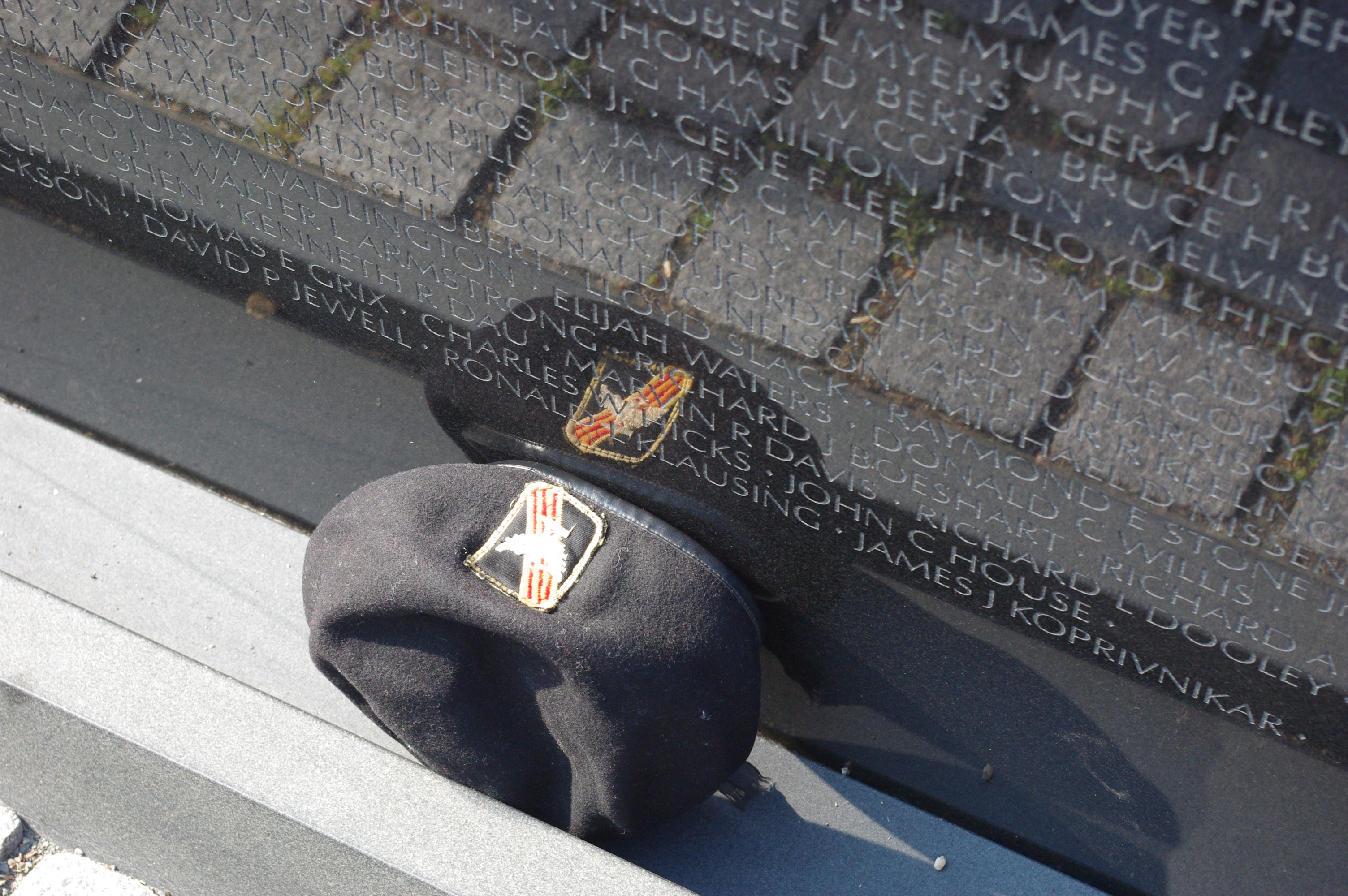
Bravery is not the absence of fear–it is doing the right thing, doing that dangerous thing that must be done–in spite of fear. From Gettysburg to Normandy to Saigon to Iraq, from NYC on 9/11 to hospitals today in the midst of COVID-19, you don’t need to think too hard to come up with valiant examples of people who have stood up on our behalf and shook their fists in that face of fear.
On this Memorial Day of 2020, I want to take this time and space to thank and honor those people who have and continue to do this.
This holiday started to honor and remember military veterans, both those who came home and those who did not. This is certainly appropriate. It has expanded sometime in the last 50 years, and also appropriately, to include the families of those brave souls who have stood between us and the dark and evils forces of this broken world–theirs is also a tremendous sacrifice, to go without a father or mother, during the time of their service abroad, or forever.
Starting from 9/11 (in my perception, anyway–I could certainly be wrong), it has also grown to honor first responders–police officers, firemen, paramedics, etc.–who daily, as a normal part of their jobs, and not just on days like 9/11 (although, certainly, especially on days like that), put their lives on the line to keep our cities relatively safe and civilized. I believe this is also appropriate for the same reasons–the sacrifices they and their families are willing to make on our behalf.
And now, in 2020, and also appropriately, in light of this menacing virus that infects people but leaves them asymptomatic for a dangerous period of time, we also salute and remember with extreme gratitude the medical professionals who take their lives into their hands every time they step foot in their place of work.
I thank God for all of you and all you have done and continue to do for me, for all of our families, and for this great nation.
One last thing: I would be remiss if I didn’t point out that Jesus made the same sort of sacrifice for all of us. As He headed back to Jerusalem one last time, in the days leading up to Palm Sunday, He knew what was waiting for Him there, but He went anyway to lay down His life on our behalf. Read about His time in Gethsemane garden the night before His execution in Matthew 26 (among other places). In verse 38, He said to His closest friends that His soul was overwhelmed with sorrow to the point of death. It sure sounds to me like He was grappling with fear. But He went anyway. He voluntarily laid down His life so that you and I and every person for all time who looks to Him as their Savior will be reconciled to God and enjoy eternal life with Him in a return to the perfection of Eden. I am also forever grateful for His sacrifice on my behalf.
May God bless your day of remembrance for all of these sacrifices, and blessings for the rest of your week as well.
P.S. I’d like to take a moment to honor and thank my immediate family members who fit into categories above: David J. Little, a Vietnam Veteran who I’m proud to call my father-in-law; Kristin Carpenter, his daughter and my wife, as well as his 3 sons–Jeff, David (who also served), and Kevin; and Katherine (Katy) Neff, a NICU nurse and my daughter, plus her husband, Brandon. You guys all rock!
Participating in church this morning (still online instead of in-person), I sat with my back to a big picture window, so the pine forest and sparkling blue Colorado sky reflected off my laptop screen. The superimposition was striking–singing praises to God and hearing a great sermon about our Creator with reflections of His created beauty floating around the picture.
Life is beautiful, and there is beauty all around, if we have eyes to see it. If we focus on sunshine and flowers and the smell of freshly cut grass and people being kind and loving toward others. Or life can be bitter and ugly if we focus on that which is bitter and ugly in the world.
Which perspective we take is our choice.
We usually can’t choose our circumstances, but we can choose how we respond to them. This is what Paul is talking about in Philippians 4 when he says he has learned how to have an inner wellspring of joy regardless of what’s going on around him.
There’s something else we should keep in mind about beauty: whenever we see someone behaving in a kindly, loving way toward us or another human being, we are seeing a reflection of God, albeit pale and dim compared to the real thing. I say this because God made us in His image. Since Jesus, with His sacrificial love for all of us, is the ultimate expression of God in human form, then we all must have been intended to be a reflection of His love and beauty. So even if someone is not yet a follower of Christ but they donate time or money to help the poor, or they give you a kind word and a smile on a rotten day, they are reflecting the love of our Creator, and that is a beautiful thing to behold.
Another awesome thing about this is that we all, each in our own way, have something beautiful, some small aspect of our great and gracious God, to reflect to everyone we meet. In what special way has God gifted you to reflect His light to each person He puts in your path?
As this Mother’s Day winds down, it occurs to me that there may be no love in human relationships more ferocious and personal–or more like God’s love–than the love a mother feels for her children.
I’m a dad, so I don’t mean to down-play a father’s love for his kids. I would have (and still would) give my life for my children, and I know many dads feel the same. But moms give their lives into their children better than dads do. For a mom, their kids’ problems become their problems. When a child’s heart is broken by a friend (or boy/girlfriend), or by not being selected for a team or to play a part in the school play, their mom’s heart breaks for them even more than a dad’s does. Moms seem to be quicker to forgive and more full of grace. Moms are more likely to love so much it hurts.
These all describe attributes of God’s love for us.
Jesus loved and honored his mother. Joseph would have had a significant influence on him, of course, but we don’t hear anything more about him in the Bible after he and Mary almost lose Jesus when he was 12 years old (“Oops, we lost the King of the Universe, let’s go back…”). This, of course, isn’t to say that fathers aren’t important (they are), but I’m only pointing out that God the Son clearly experienced the special bond a child has with his/her mother.
I’ve heard of situations where people have struggled with the idea that God is a loving father because their earthly fathers were horrible to them or abandoned them. And they have a hard time trusting or loving God as a result. I wonder if it would help them at all to instead think of how their mother has loved them.
Anyway, it is with all this in mind that I wish all moms, moms-to-be, and women striving to be moms a happy and blessed Mother’s Day. Thank you for painting the best picture of sacrificial love that there is this side of heaven.
In Memorium, fondly remembering my mom and mother-in-law: Nancy Carpenter and Patricia Little.
In (virtual) church today, we heard a great sermon today by Pastor Andrew Arndt from New Life Church (East) about the end of Moses’ life, as recounted in Deuteronomy 34 (also the end of that book, as well the Torah). Although it wasn’t central to the sermon, Andrew mentioned that Moses was not allowed to enter the promised land because of a little episode that happened many years earlier in Kadesh (as told in Numbers 20).
In a nutshell, the Israelites had been in the Desert of Zin for about a month, and there was no water to be found anywhere, so the people came after Moses and Aaron. They went to God and fell facedown before Him. God told Moses to speak to the rock and water will pour forth from it. Moses did as he was told–almost. Instead of speaking to the rock, in his anger about this rebellion, Moses struck the rock with his staff. God still produced the desired result–water did, in fact, pour from the rock–but because Moses didn’t completely obey God (he hit the rock instead of speaking to it), God told him he wouldn’t get to enter the promised land.
The apparent unfairness in this situation drew quite a visceral reaction from my wife, and rightfully so. I mean, Moses served God faithfully doing a job he didn’t even want, leading the people of Israel, for 40 years! But he makes one little mistake and then he doesn’t get to enter the promised land–where’s the justice in that? What about forgiveness?
Here is my take, or at least the first part of my answer: God knows our hearts. If we do the right thing for the wrong reason, I think God would prefer we not do it at all. God asked Moses to speak to the rock to draw forth the water, but Moses, because he was angry with the Israelites, hit the rock instead of speaking to it. In other words, he didn’t do it out of love, but more out of frustrated obedience. The results still seemed good to us, but we can’t see the dark river flowing through Moses’ heart in that moment the way God can.
Bottom line for this part of it: in everything we do, we need to do it out of love–for God and for others. If we serve at the food bank or soup kitchen or mission field (or write blogs!), but we don’t do it out of love, we’re better off not doing it. As Paul says in 1 Corinthians 13 (“the love chapter”), if I do all sorts of holy, godly things, “but do not have love, I am nothing”. No word or story is in the Bible by accident, so it’s possible this little lesson in “unfairness” from the life of Moses is meant to remind us of this.
Also, we have to remember that there are parts of every story that God sees and knows that we can’t possibly see or know. When we judge this story to be unfair, we see that God shows Moses the promised land from Mount Nebo, then Moses dies. We think, The End. Roll the credits on an unhappy ending.
But wait. We who believe in heaven have to remember that when Moses dies viewing the earthly promised land, he passes into the eternal Promised Land. Maybe God kept him out of the earthly promised land so all of us who came later can learn this lesson, but also in the same instant welcomed him into heaven with a warm embrace and a “Well done, good and faithful servant.” All is forgiven after all.
And one last quick thought–Moses was not perfect. We are told of only one “little” slip-up during 40 years of leading the Israelites, which is an outstanding track record, but let’s not forget that he had murdered someone 40 years prior to being called by God to lead the people of Israel. But none of us is perfect, so it’s really good news that Moses wasn’t either, yet God chose him to do great things for the Kingdom!
There is only one perfect person who ever lived: Jesus. And he’s just the guy to lead us all into the Promised Land. Take His hand and come along too!