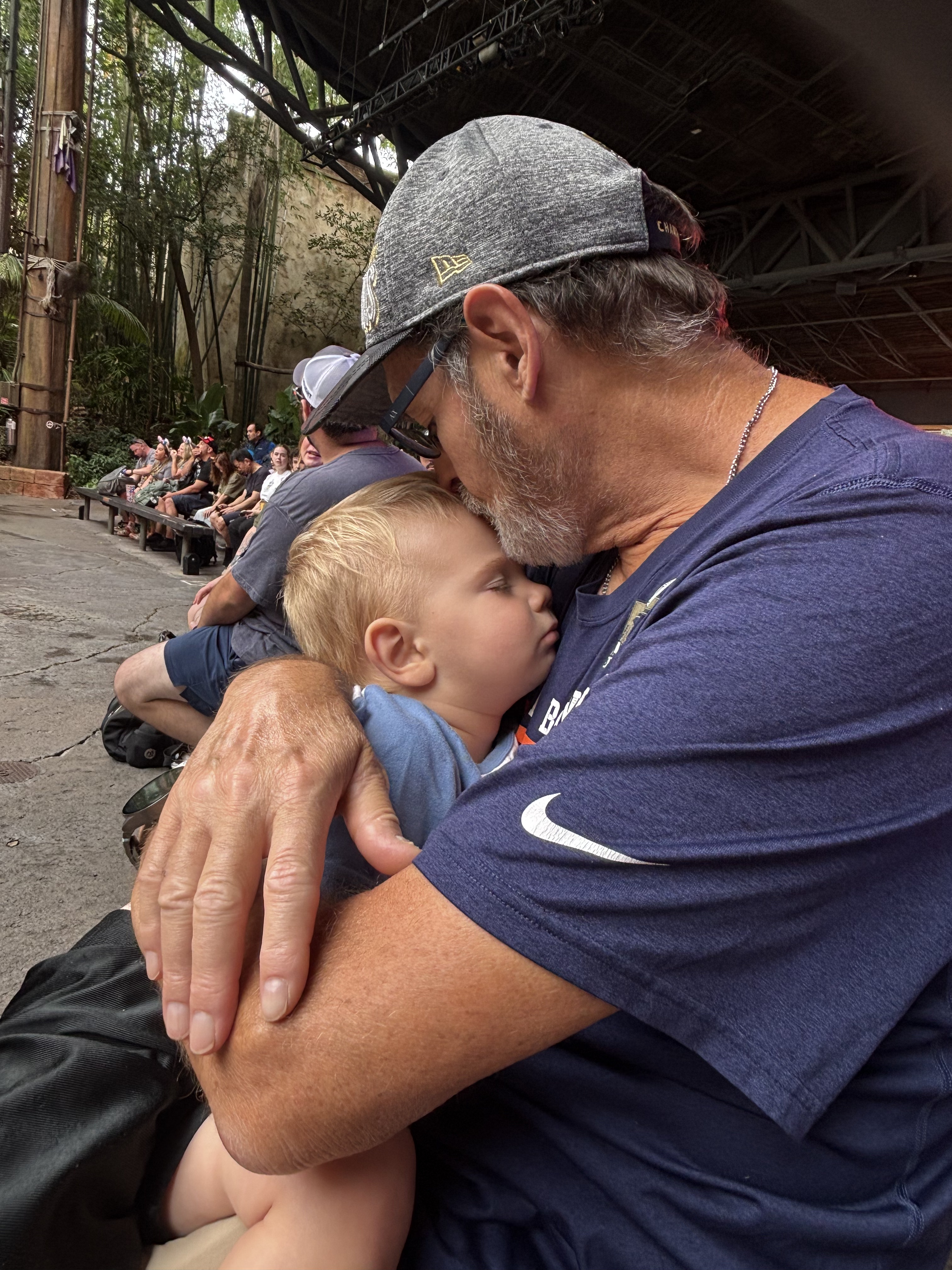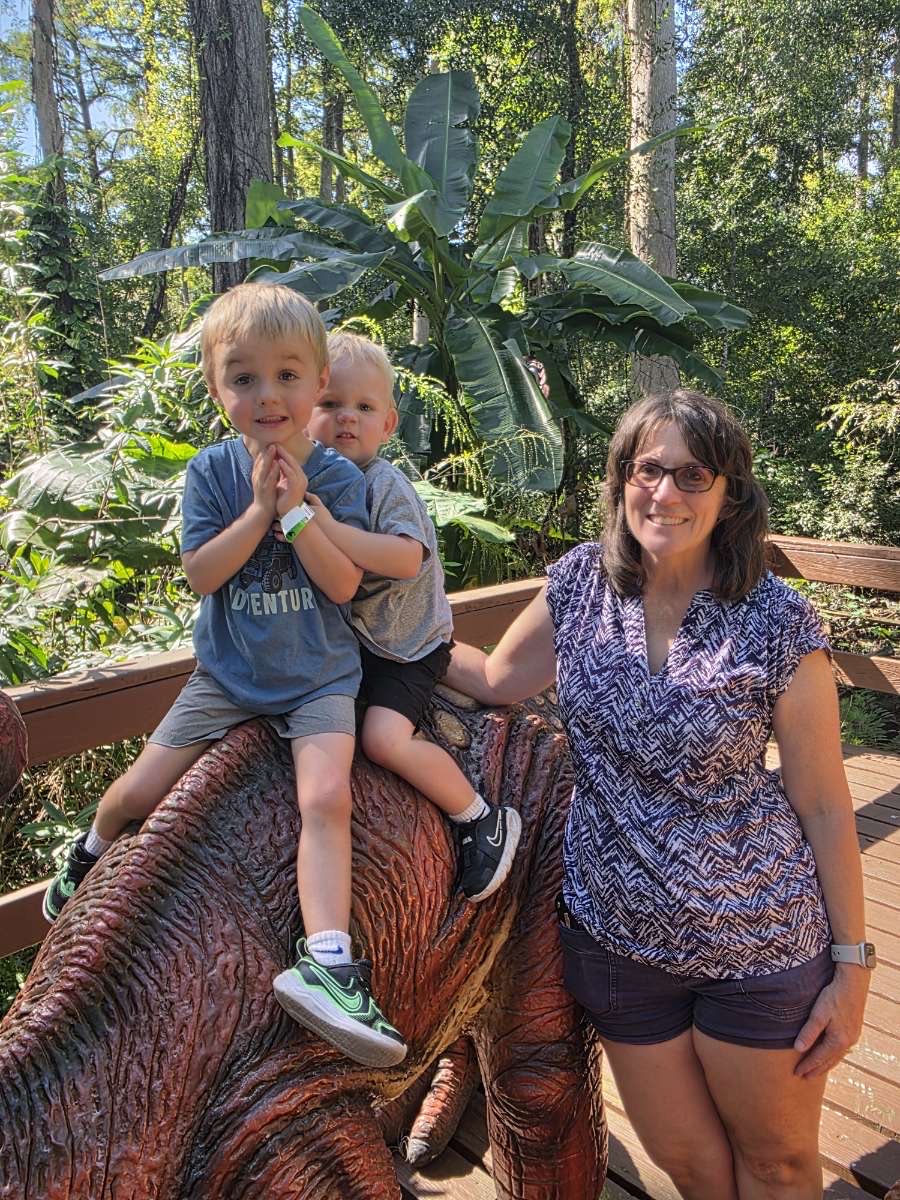
Sadly, our house is quieter today.
For the past two weeks, we’ve had our grandsons with us. They’re four and two, which means quiet hasn’t exactly been the defining characteristic of our days.
Their parents—our daughter and son-in-law—were here for the first week. Then they went on a cruise, leaving us in charge.
We survived.
More than that, we were blessed.
But we were also reminded that we’re about thirty years older than we were when our own children were those ages.
Apparently, that makes a difference.
Now that the boys and their parents have gone home, I miss them.
On my walk this morning, that sadness got me thinking about something their visit had brought into focus.
The way young children experience the world.
And what Jesus might have meant when He told us to become like them.
When my younger grandson was a newborn and his brother was two, I wrote about their dependence in “Dependence on God: Lessons from My Grandsons.”
This time, I found myself noticing how they navigate the distance between what they’re told and what they understand.
They ask questions—they’re both particularly fond of “Why?” They form their own explanations. Sometimes they object.
Yet they can still follow someone they trust without first understanding everything that person understands.
That’s the part I’ve been thinking about.
What Kind of Childlike?
In Matthew 18, the disciples ask Jesus who is greatest in the kingdom of heaven.
Jesus brings a child among them and tells them they must change and become like little children. He then identifies the child’s lowly position as the example they need to follow. (Matthew 18:1–5)
That context matters.
The disciples are asking about greatness.
Jesus directs their attention to humility.
Elsewhere, when His disciples try to keep children away, Jesus welcomes them and says:
“Truly I tell you, anyone who will not receive the kingdom of God like a little child will never enter it.”
He then takes the children in His arms and blesses them.
Jesus’ words challenge our assumptions about status, achievement, and self-sufficiency.
I explored our dependence on God in that earlier post. What these two weeks have helped me consider is one everyday expression of it: being willing to learn from someone whose understanding exceeds my own.
I don’t think Jesus is asking us to act childish.
There’s already enough of that coming from adults these days.
What I’m considering is the relationship a young child has with someone who has consistently loved and cared for him.
Someone he has learned to trust.
More Questions Than Understanding
At four and two, our grandsons are taking in an extraordinary amount of information.
Words.
Experiences.
Instructions.
Things they’ve never seen before.
Their minds seem like powerful vacuums, drawing in far more than they can possibly understand.
They try, of course.
Sometimes their explanations make sense.
Sometimes they make us smile, thanks to their adorable naiveté.
Watching them reminded me of my own childhood, when so much of the world was still a mystery. It also reminded me of raising our children and trying to explain things they weren’t yet equipped to grasp.
Young children live with that gap constantly.
They don’t fully understand their world.
Yet they still have to move through it.
And much of the time, they do so by accepting guidance from someone they trust.
Sometimes reluctantly.
Sometimes after a few questions.
Sometimes after quite a few questions.
But they don’t always need a complete explanation before they take the next step.
They know and trust the person helping them.
And their understanding keeps growing. Something that baffled them a month ago may already be beginning to make sense.
I doubt they consciously decide to set aside their need for an explanation.
But watching them makes me wonder whether I could become more willing to do that with God.
You’re Obviously Tired
Consider bedtime.
“You’re obviously tired, so you need to go to bed.”
I remember hearing some version of that when I was young.
It made no sense to me then.
If I wanted to keep playing, that seemed like strong evidence that I wasn’t ready for bed.
Then, decades later, it finally made sense. In fact, I found myself saying much the same thing to my own children.
Apparently, my parents had learned a few things in the intervening years.
Or perhaps I had.
As a parent, I could recognize what a tired child often couldn’t.
The inability to cope with a situation that usually wouldn’t bother them.
The tears over something that normally wouldn’t matter.
The rapidly disappearing ability to handle disappointment.
I wasn’t trying to end the fun. I could see a need the child couldn’t yet recognize.
And I wonder how often my relationship with God follows a similar pattern.
He sees something I don’t.
He directs me toward something I resist.
And I’m fairly certain that, if He understood the situation as well as I do, He would reconsider.
That makes a lot less sense when I say it out loud.
Taking the Offered Hand

Here’s another ordinary picture.
During our grandsons’ visit, just as when our own children were young, we reminded them to hold an adult’s hand whenever we approached a busy street or parking lot.
The child may see the car he wants to reach, or the toy on the other side of the street. He may not notice the vehicle backing out nearby or understand how difficult it is for a driver to see someone so small.
The adult sees more.
Taking that offered hand doesn’t require the child to understand every danger.
It requires enough trust to stay close.
That helps me think about these familiar words:
“Trust in the LORD with all your heart and lean not on your own understanding.”
The next verse connects submitting our ways to God with His direction for our paths. (Proverbs 3:6)
Our understanding has value. God gave us minds to use.
But our understanding also has limits.
Mine certainly does.
Perhaps childlike faith includes the humility to admit that God can see beyond the edge of what makes sense to me.
And the willingness to take His hand anyway.
Learning Whose Voice to Trust
There’s another quality I notice in young children.
With someone they know and trust, they don’t usually begin by searching for hidden motives.
They may object to the instruction.
They may dislike the answer.
But they aren’t necessarily wondering whether the person feeding them breakfast, comforting them, and reading their bedtime stories has secretly been plotting against them.
Experience can make adults more guarded.
Sometimes for good reason. People can misuse trust, and Jesus’ invitation doesn’t require us to abandon discernment or obey anyone who claims to speak for Him.
God’s guidance is consistent with His character and His Word.
That’s one reason spending time with Him matters so much.
Jesus says:
“My sheep listen to my voice; I know them, and they follow me.”
Knowing Him and following Him belong together.
As I spend time in Scripture, bring Him my questions, and pay attention to His faithfulness, I have opportunities to learn what He is like.
Patient.
Truthful.
Wise.
Loving.
The better I know Him, the more reason I have to trust His guidance when I cannot see where it leads.
Questions Are Welcome
One thing our grandsons certainly haven’t taught me is that children have no questions.
They have plenty.
So I’m not convinced childlike faith means pretending I don’t have any.
I can ask God why.
I can tell Him I’m confused.
I can admit that something He asks of me is difficult.
Forgiving someone, for example, can seem deeply unreasonable when I’m still carrying the hurt.
Being patient while following behind someone driving like they’re a speed bump is certainly a challenging test for me, too.
But I can begin obeying His command without first understanding everything He will do through that obedience.
I can ask Him to help me release my claim to revenge, even while working through the pain and maintaining whatever boundaries are needed. I can pray for patience even—or maybe especially—when I’m in a hurry.
In “Trusting Jesus, Even When It Makes No Sense,” I reflected on how bewildering Jesus’ path toward the cross must have been for His disciples.
They followed Him without yet understanding where He was leading.
Watching our grandsons has given me a much smaller, everyday picture of that gap between trust and understanding.
Sometimes understanding grows as I follow.
Some things that baffled me as a child became clearer when I became a parent. Other lessons have taken even longer.
Perhaps some of what God asks will make more sense years from now.
Perhaps some questions will remain unanswered throughout my earthly life.
God never promised that every explanation will arrive on my schedule—or ever.
And yet, I do have reason to trust the One I’m following.
Still Learning to Be His Child
I’m grateful for the two weeks we had with those boys.
For the laughter.
The questions.
The chance to see familiar things through eyes still discovering them.
I’m even grateful for the reminders that being tired doesn’t always make us willing to admit it.
At any age.
I miss them already.
But as I walked this morning, I realized they had left me with something to practice.
I want to bring God the curiosity of someone who still has much to learn.
The humility to receive what I cannot provide for myself.
And enough trust to follow His direction before I understand every reason behind it.
Lord, I don’t always know why You’re asking me to go this way.
Sometimes I’d rather keep doing what I was doing.
Sometimes I’m frightened by what I cannot see.
But I want to know You well enough to trust You here.
Help me listen.
Help me follow.
And when I’m tempted to insist that I can manage everything myself, remind me
that I’m still Your child.
I don’t have to understand the whole parking lot.
I can take my Father’s hand and trust Him to lead me.