
Have you ever read something Jesus said and thought, You’ve got to be kidding?
I have.
More times than I’d probably care to admit.
Sometimes it’s a command about how I’m supposed to treat someone who has treated me badly.
Sometimes it’s an instruction about forgiveness.
Or generosity.
Or what I’m supposed to do with an attitude or thought that I’d really rather keep to myself.
And sometimes it’s something much bigger.
Something God seems to be asking me to do that feels so far beyond my abilities that I can’t imagine how I could possibly accomplish it.
I find myself thinking, Seriously, Lord? You want ME to do THAT?
And I suspect I’m not alone.
The Bible is filled with people who received assignments from God that seemed unreasonable, overwhelming, or downright impossible.
And the remarkable thing is that God often seems to choose people who are painfully aware of their own limitations.
I’ve been thinking about why that might be.
Because I don’t believe God sets the bar impossibly high just to watch us fail.
I think He’s inviting us into something much better.
Something we could never experience if He only asked us to do what we already knew we could accomplish on our own.
The Impossible Standards of Jesus
Let’s start with something that hits pretty close to home.
The Sermon on the Mount.
If you’ve ever read Matthew chapters 5 through 7 and come away feeling completely confident in your ability to live up to everything Jesus said, I’d be interested in hearing how you managed that.
Because I certainly haven’t.
Jesus takes some of the commandments His listeners already knew and raises the standard in ways that must have been astonishing.
For example, most of us understand that murder is wrong.
That seems like a reasonable expectation.
But Jesus doesn’t stop there.
He goes deeper, addressing the anger, contempt, and broken relationships that can take root in our hearts.
In Matthew 5:21–22, He warns that anger and contempt are matters of serious spiritual concern.
Wait a minute.
Now we’re talking about what goes on inside my head?
Apparently so.
And then there’s adultery.
Again, I understand the commandment.
But Jesus says that looking at someone lustfully is already a violation of faithfulness in the heart (Matthew 5:27–28).
So it’s not enough to avoid doing the wrong thing.
He wants me to address the desires and intentions behind my actions.
And it doesn’t get any easier.
Jesus tells us to turn the other cheek.
To give generously.
To go the extra mile.
To love our enemies.
And to pray for those who persecute us.
Love my enemies?
Really?
Not merely tolerate them?
Not simply refrain from getting even?
Actually love them?
And pray for them?
I sometimes struggle to pray sincerely for people who merely annoy me.
Then Jesus concludes this part of His teaching with a statement that seems to put the standard completely out of reach:
“Be perfect, therefore, as your heavenly Father is perfect.”
— Matthew 5:48 (NIV)
Well, that settles it.
I’m in trouble.
It’s Not Just What I Do
One of the things that strikes me about Jesus’ teaching is that He’s not particularly interested in allowing me to congratulate myself for outwardly respectable behavior while my heart is going in a completely different direction.
I might manage to keep my mouth shut when someone irritates me.
But what am I thinking about that person?
I might avoid saying something unkind.
But am I secretly enjoying the opportunity to feel superior?
I might give generously.
But am I doing it because I genuinely care about someone, or because I want to feel better about myself?
I might forgive someone outwardly.
But am I still rehearsing the offense in my mind, keeping it alive long after I claim to have let it go?
Jesus seems determined to get beneath the surface.
And frankly, that’s uncomfortable.
Because other people can usually see only what I do and say.
But God sees my heart.
He knows my motives.
My resentments.
My pride.
My selfishness.
Even the thoughts I would never dream of sharing with another person.
And He wants to transform those things, too.
Not merely make me better at concealing them.
That’s a much higher standard than simply behaving myself.
It’s a different kind of life altogether.
And if I’m relying entirely on my own strength to produce it, I have a problem.
A pretty big one.
Then There Are the Things He Asks Us to Do
If that’s not enough, there’s another category of seemingly impossible expectations that I’ve been thinking about lately.
Sometimes God doesn’t merely ask us to become different people.
He asks us to do things that seem far beyond our abilities.
Consider Moses.
God tells him to go confront Pharaoh and lead the Israelites out of Egypt.
Moses responds with what amounts to a series of objections explaining why he’s not the right man for the job.
I’m not important enough.
What if they don’t believe me?
I’m not a good speaker.
Couldn’t You send somebody else?
I can relate to Moses.
Then there’s Gideon.
God calls him a mighty warrior while he’s hiding from the Midianites. Then, when Gideon finally assembles an army, God reduces it from thousands of men to just 300.
Apparently, God wasn’t particularly concerned about making the assignment seem achievable.
In fact, He explained why He was reducing the army: so Israel wouldn’t claim that its own strength had won the victory (Judges 7:2).
That’s interesting.
Sometimes God seems to deliberately remove the very things we would ordinarily depend on.
And then He asks us to trust Him.
But there’s another biblical example that I find even more intriguing.
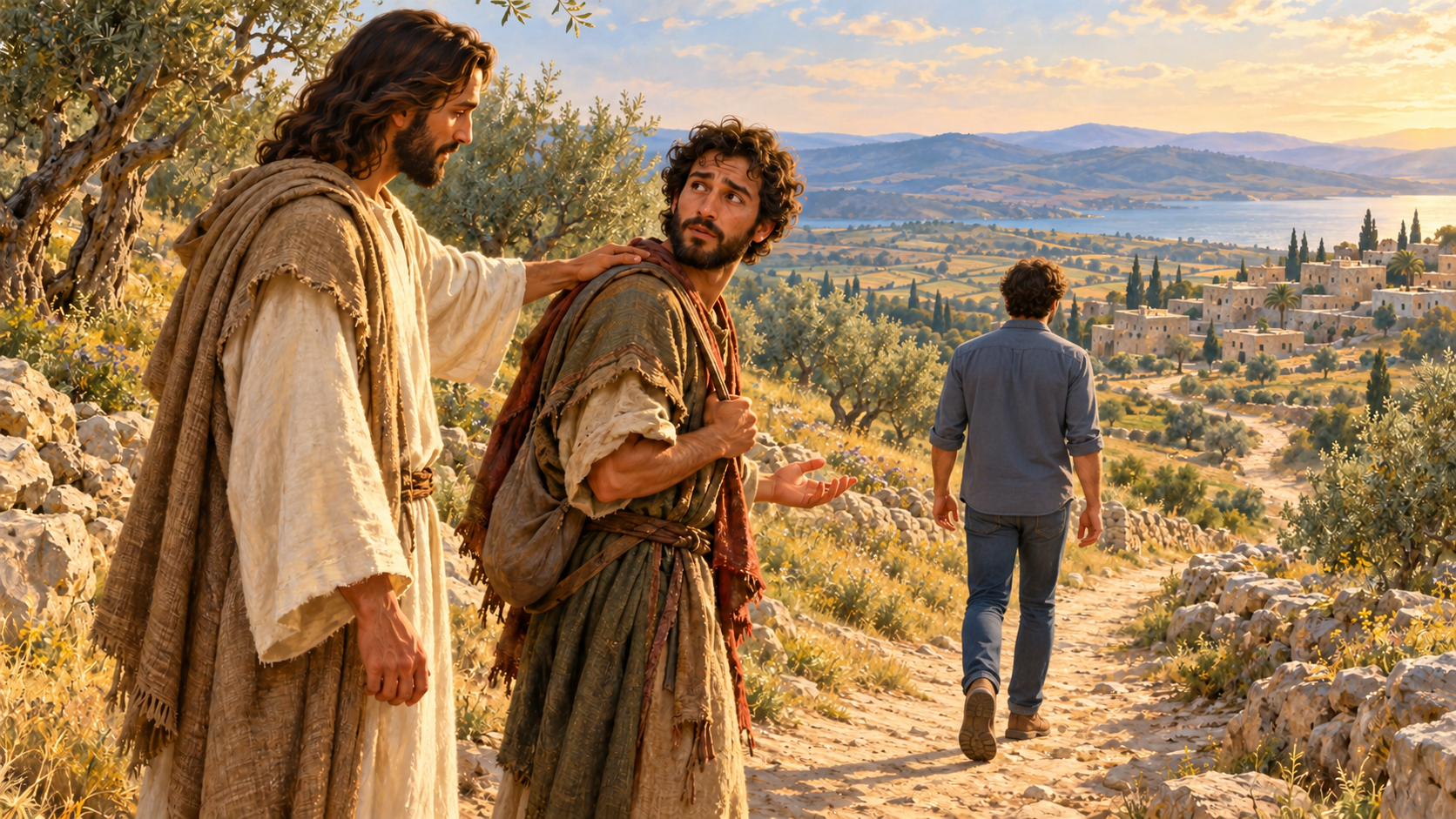
Wait. You Want US to Do That?
Imagine being one of Jesus’ twelve disciples.
You’ve been traveling with Him.
Listening to His teaching.
Watching Him perform miracles.
You’ve seen blind people receive their sight.
You’ve seen people healed of terrible diseases.
You’ve watched Him command demons to leave people.
You’ve even seen Him exercise authority over the wind and the waves.
Extraordinary things.
Things you never imagined you’d witness.
And then one day Jesus gathers the twelve of you together.
He gives you authority to drive out impure spirits and heal diseases.
And He sends you out in pairs to proclaim the kingdom of God.
Without Him physically accompanying you.
Wait.
What?
You want US to do those things?
I can only imagine the looks that must have passed between the disciples.
Now, to be clear, Scripture doesn’t tell us exactly what each disciple was thinking at that moment.
But I know what I would have been thinking.
Lord, I think there’s been a misunderstanding.
You’re the One who heals people.
You’re the One who casts out demons.
I’m the guy who carries the supplies and occasionally asks embarrassing questions.
Are You absolutely sure You’ve got the right person?
We recently watched the episode of The Chosen (my favorite TV show) that portrayed this moment, and I thought they captured the tension masterfully.
The disciples seemed to be struggling to understand how Jesus could possibly expect them to do things they had only ever seen Him do.
I found myself identifying with them.
Because I suspect I would have been terrified.
Not necessarily because I didn’t believe Jesus could perform those miracles.
I’d already seen Him do them.
But because I wasn’t at all sure He could do them through me.
And that’s an important distinction.
It’s one thing to believe God can do extraordinary things.
It’s another thing entirely to believe He might choose to do them through an ordinary person like me.
The Part We Sometimes Miss
Here’s what I find especially important about that story.
Jesus didn’t simply send the disciples (Mark 6:7) out and tell them to figure it out.
He gave them authority.
Matthew tells us:
Jesus called his twelve disciples to him and gave them authority to drive out impure spirits and to heal every disease and sickness.
— Matthew 10:1 (NIV)
They weren’t being asked to manufacture miraculous power through determination or positive thinking.
They were being sent to act under the authority Jesus Himself had given them.
And when the disciples returned, Luke tells us they reported what they had done. Jesus then took them aside (Luke 9:1–10).
I wish we had a transcript of their conversations along the way.
Imagine the first time one of them prayed for someone to be healed.
The uncertainty.
The trembling voice.
The wondering whether anything would happen.
And then imagine the amazement of seeing God work through them.
I wonder whether that experience changed the way they understood their relationship with Jesus.
Because suddenly they weren’t merely spectators watching what He could do.
They were participants in what He was doing.
Not because they had become powerful in themselves.
But because they had learned something about depending on His power.
I think there’s an important lesson for us in that.
I’m not suggesting that every Christian has been given precisely the same assignment or miraculous authority Jesus gave the Twelve on that particular mission.
But I do believe God continues to call ordinary people into work that requires extraordinary dependence on Him.
Sometimes that means stepping into a ministry we’re not sure we’re qualified for.
Sometimes it means sharing our faith when we’re afraid of saying the wrong thing.
Sometimes it means reaching out to someone we’d rather avoid.
Sometimes it means giving when we’d prefer to hold on tightly to what we have.
Sometimes it means beginning something that seems far too large for our abilities or resources.
And sometimes it means doing something no one else will ever notice.
Forgiving.
Serving.
Encouraging.
Showing up.
Loving someone who isn’t particularly easy to love.
Starting a blog you’re pretty sure nobody will ever read.
Those assignments may not look spectacular.
But that doesn’t make them insignificant in God’s kingdom.
Apart From Me, You Can Do Nothing
I keep coming back to something Jesus told His disciples shortly before His crucifixion.
He described Himself as the vine and His followers as the branches.
And then He said:
“I am the vine; you are the branches. If you remain in me and I in you, you will bear much fruit; apart from me you can do nothing.”
— John 15:5 (NIV)
There it is.
The part I keep needing to remember.
Apart from me you can do nothing.
Now, obviously, people can accomplish all sorts of things without consciously depending on God.
We can build houses.
Run businesses.
Write books.
Solve problems.
Make plans.
And achieve a great deal by the world’s standards.
But Jesus is talking about something deeper.
The kind of lasting spiritual fruit that comes from being connected to Him.
The transformation of our hearts.
The growth of His kingdom.
The work He wants to accomplish through our lives.
That kind of fruit doesn’t originate in our own strength.
It comes from remaining in Him.
And I find that both humbling and enormously encouraging.
Humbling because I have a tendency to rely on my own abilities.
My experience.
My knowledge.
My planning.
My determination.
I’ve spent much of my life solving problems and getting things done.
And there’s nothing inherently wrong with that.
But sometimes I can become so focused on figuring out how to accomplish something that I forget to ask whether I’m depending on the One who called me to do it.
And encouraging because the outcome doesn’t ultimately depend on the limits of my own abilities.
God knows those limits already.
He knew them before He asked anything of me.
And apparently, they don’t disqualify me from participating in His work.
Maybe That’s the Point
I’ve been wondering whether these two categories of difficult things God asks of us are actually more closely related than they first appear.
The Sermon on the Mount calls me to love in ways that don’t come naturally.
The Great Commission calls Christ’s followers to participate in a mission far beyond anything we could accomplish on our own.
One deals with the transformation of my character.
The other deals with the work God wants to accomplish through my life.
But both require the same thing.
Dependence.
I cannot consistently love my enemies through sheer willpower.
I cannot transform my own heart into the likeness of Christ through determination alone.
And I cannot produce lasting fruit for God’s kingdom simply by working harder.
I need Him.
His grace.
His wisdom.
His strength.
His Spirit working within me.
Paul understood that tension when he wrote:
“I can do all this through him who gives me strength.”
— Philippians 4:13 (NIV)
I know that verse is sometimes used as though it means God will help us accomplish anything we set our minds to.
But in context, Paul is talking about learning contentment in every circumstance, whether he has plenty or is in need.
The strength Christ provides isn’t simply a guarantee that all my ambitions will succeed.
It’s the strength to be faithful in whatever circumstances He places me.
And perhaps that’s an even greater promise.
Because God hasn’t promised to accomplish everything I want.
But He has promised to be with His people as we follow Him.
And He’s given us His Spirit to help us live the lives He’s called us to live.
What If I Actually Trusted Him?
I wonder how much of what God wants to accomplish through my life I’ve missed because I was too focused on my own limitations.
How often have I decided something was beyond my ability before seriously considering whether God might be inviting me to depend on His?
How often have I avoided a difficult conversation?
Delayed an act of obedience?
Held back from serving?
Resisted forgiving someone?
Or dismissed an opportunity because I couldn’t imagine how it would work out?
Of course, not every difficult idea that enters my mind is an assignment from God.
Discernment matters.
Scripture matters.
Wise counsel matters.
And sometimes the faithful response is to wait rather than rush ahead.
But I don’t want fear or self-doubt to become excuses for ignoring what God has made clear.
I don’t want to spend my life doing only those things I’m confident I can accomplish without Him.
Because if that’s all I ever attempt, how much room am I leaving for God to demonstrate what He can do?
And perhaps more importantly, how much am I missing of the relationship He wants to have with me?
Because I don’t think the ultimate point is simply to accomplish bigger things.
It’s to grow closer to Him.
To learn to recognize His voice.
To trust His character.
To depend on His strength.
To discover that He really is faithful.
And to participate, in whatever ways He chooses, in the work He’s doing in the world.
Sometimes that work may be extraordinary.
Sometimes it may seem remarkably ordinary.
But if God is in it, it matters.
You Want Me to Do WHAT??
So the next time I encounter something Jesus commands that seems beyond my ability, I hope I’ll remember that He isn’t asking me to manufacture holiness out of my own determination.
He’s inviting me to surrender more of my heart to Him.
And the next time I sense God leading me toward something that seems far beyond my abilities, I hope I’ll remember those disciples.
The ones who had watched Jesus do extraordinary things.
The ones who must have wondered what would happen when they stepped out without Him physically beside them.
The ones who discovered that His authority and power weren’t limited to the moments when they could see Him standing next to them.
I still suspect my first reaction will occasionally be:
You want me to do WHAT??
But perhaps my second response can become something different.
Lord, I don’t know how to do this.
I’m not sure I’m capable.
And I certainly can’t guarantee the outcome.
But if You’re calling me to it, I want to trust You.
Show me what obedience looks like.
Give me the strength to take the next step.
And accomplish through me whatever You desire.
Because maybe the most remarkable thing about the seemingly impossible things God asks of us isn’t that we eventually discover we’re capable of more than we imagined.
It’s that we discover He is.
And He invites us to do those things together.


