No Comparison: Finding Joy in Our Own Journey

In the Daily Audio Bible’s annual journey through the Bible, this week we reached the end of the book of John, the last of the gospels. In John 21, we find a poignant scene that speaks volumes about human nature and the spiritual pitfalls of comparison. After His resurrection, Jesus takes a moment to reinstate Peter, who had previously denied Him three times. This should have been a moment of profound relief and gratitude for Peter. Instead, he turns around, sees John following them, and asks, “Lord, what about him?” (John 21:21). This seemingly harmless question reveals a deep-seated struggle many of us face: the urge to compare our journey with others.

The Pitfall of Comparison

Peter’s question to Jesus highlights a common human tendency—to look at others and measure our own life against theirs. This moment of comparison detracts from the profound personal interaction Peter was having with Jesus. Instead of focusing on the grace being extended to him, Peter looked at John and sought to measure his own destiny against that of his friend and fellow disciple.

We can’t blame Peter, though, since we all do this. It gives us another opportunity to appreciate the raw humanness of one of Jesus’s closest friends and followers. He’s one of us–always doing and saying dumb things, and yet Jesus uses him as the foundation upon which to build His church.

But why does Peter try to compare himself and his blessings to John’s? Why do we?

It’s the same idea behind the curated views we see of our friends’ “perfect” family or meal that we see them post on Facebook, or their “perfect” career recounted on LinkedIn. I might have been thrilled about my vacation until I saw my friend take a better one.

Jesus’ response to Peter is telling:

“If I want him to remain alive until I return, what is that to you? You must follow me”.

John 21:22 (NIV, emphasis added)

Here, Jesus redirects Peter’s focus back to what truly matters—not John’s path but his own. Jesus emphasizes that each disciple has a unique journey, shaped by God’s specific calling and timeline for them.

The Thief of Joy

The saying goes that comparison is the thief of joy, and scripture supports this notion extensively. In Galatians 6:4, Paul advises, “Each one should test their own actions. Then they can take pride in themselves alone, without comparing themselves to someone else.” This wisdom from Paul aligns with Jesus’ instruction to Peter, teaching us to focus on our own spiritual responsibilities and growth rather than looking over at the path of others.

Satan’s Strategy: Steal, Kill, and Destroy

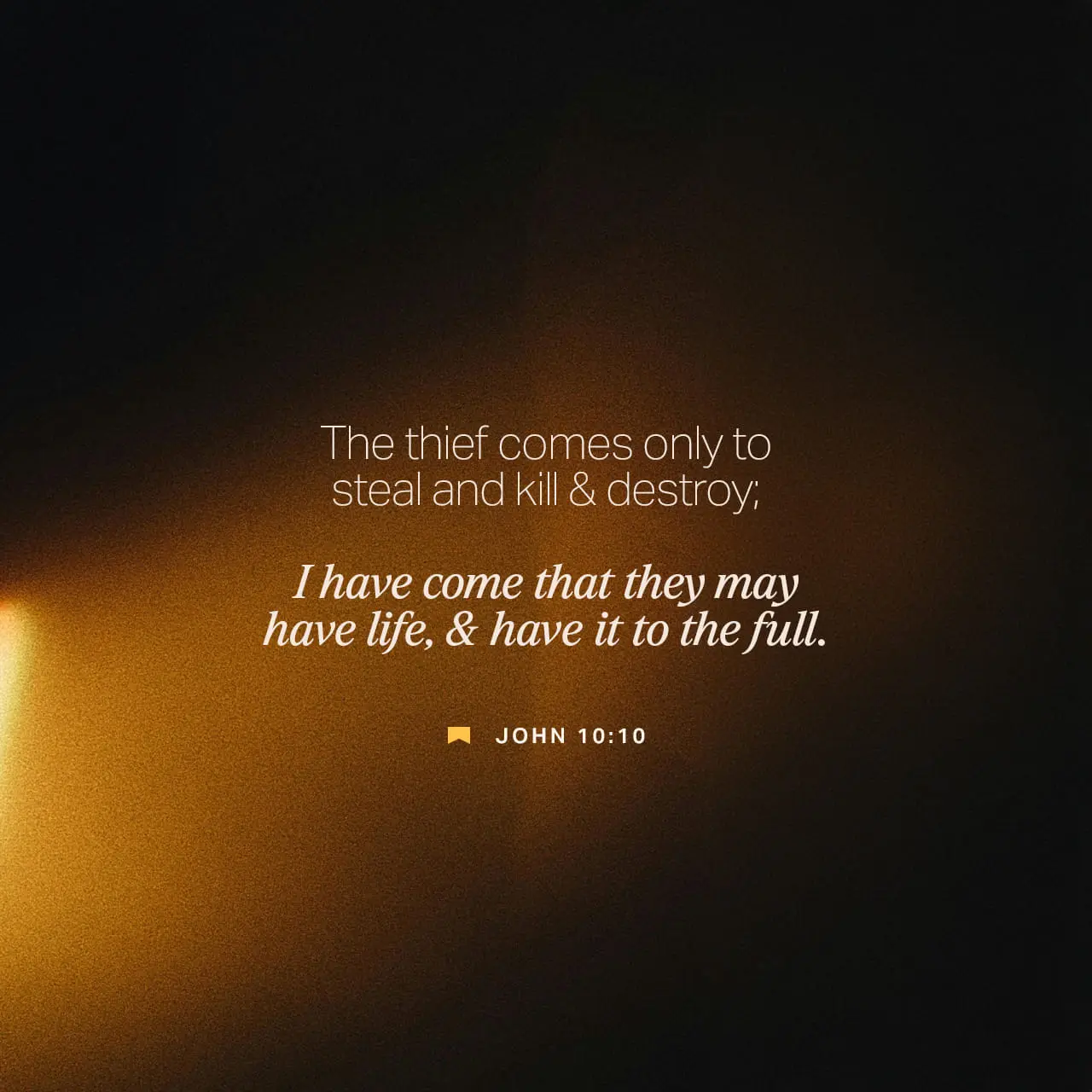
When we engage in comparisons, we play into a strategy that Satan often uses to distract and derail us. Jesus described Satan’s motives in John 10:10, stating, “The thief comes only to steal and kill and destroy.” When we compare, we allow the enemy to steal our joy, kill our sense of gratitude, and destroy our spiritual contentment. Each of us has our own blessings, challenges, and divine path, and when we focus excessively on others, we miss the beauty and opportunities and blessings in our own lives.

Cultivating Contentment

To combat the urge to compare, we can cultivate a spirit of contentment and gratitude. Philippians 4:11-12 shows Paul speaking about learning to be content in any situation, relying on the strength provided by Christ. By focusing on what God is doing in our lives and recognizing His blessings, we can maintain a sense of gratitude and fulfillment. We can keep the enemy from stealing them.

Conclusion: Embrace Your Unique Journey

As we move forward in our faith, let us take to heart the lesson that Jesus imparted to Peter beside the Sea of Galilee. Our focus should not be on how God is working in the lives of others, but rather on how He is working in our own. Each path is uniquely crafted by God, and when we trust in His plan for us, we find that our journey is exactly where we need to be. Whenever we are tempted to compare our journey to someone else’s, Jesus’s words to Peter should echo through our minds: “You must follow me.”

This week, let’s challenge ourselves to look inward and upward, thanking God for our personal journey, and resisting the temptation to compare it with that of others. By doing so, we affirm God’s sovereignty and grace in our lives, and we keep our hearts aligned with His purposes, filled with peace and joy, overflowing with gratitude for the blessings he showers upon us.

Posted in Biblical Teachings, Christian, Christian Living, Christianity and Mental Health, Daily Devotional, Faith, Jesus's teachings, Self-Improvement, Spiritual Encouragement, Spiritual Growth | Tagged , , , , , , , | Leave a comment

Remembering Sacrifice: Gratitude for Freedom and Life

Introduction

As we approach Memorial Day, a poignant moment arises in our collective consciousness—a time to remember and honor those who have made the ultimate sacrifice for our nation. This day is set aside not just as a holiday from work, but as a sacred time to reflect on the cost of our freedoms. In a similar spirit of remembrance, this occasion also invites us to reflect on the supreme sacrifice made by Jesus Christ, whose death on the cross granted us freedom from the bondage of sin and death. In both cases, these acts of sacrifice demand our deepest gratitude and reflection.

The Sacrifice of Service

Memorial Day is dedicated to the brave men and women who laid down their lives in the service of our country. Their sacrifice is a stark reminder of the price paid for the liberties we often take for granted. As Scripture says:

“Greater love has no one than this, that someone lay down his life for his friends”.

Jesus, in John 15:13 (NIV)

This verse powerfully encapsulates the spirit of Memorial Day, urging us to consider the depth of love and commitment demonstrated by those who have served.

The Sacrifice of the Savior

In parallel, the sacrifice of Jesus Christ stands as the cornerstone of our faith, offering us spiritual freedom and the promise of eternal life. His death and resurrection are pivotal events that we must continually bring to our hearts and minds. The Apostle Paul reflects on this sacrifice saying:

“For I delivered to you as of first importance what I also received: that Christ died for our sins in accordance with the Scriptures”.

1 Corinthians 15:3 (NIV)

Just as we remember the soldiers who fought for our earthly freedom, we should also remember Christ, who conquered death to set us free from eternal bondage.

The Power of Remembrance

Here’s something to keep in mind, though: remembering is for gratitude, not regrets or dwelling on past mistakes. Life, like a river, flows in one direction—forward. While the past is laden with lessons, it is not a place of permanent residence but a wellspring of wisdom for the future. The act of remembering, especially in the context of sacrifice, should elevate our appreciation for the present and inspire us to live better, fuller lives in the freedom we’ve been granted.

Finding a Space for Reflection

Sometimes, finding the right mindset for remembrance requires stepping away from our daily routines. Nature, in its vast beauty and tranquility, provides a perfect backdrop for contemplation. Whether it’s a quiet park, a serene beach, a bench by a lake, or a lush garden, natural settings have a unique way of stirring reflection and enhancing our sense of gratitude. As we immerse ourselves in these peaceful surroundings, let us open our hearts to the profound truths these sacrifices represent.

Conclusion: A Call to Gratitude

This Memorial Day, let’s take time to remember—not just in passing, but with intentional moments of silence and reflection. Let’s honor those who have sacrificed their lives for our nation and remember the One who gave His life for our ultimate freedom. May this day be a reminder of the precious freedoms we enjoy and the high cost at which they were purchased. Let these acts of immense sacrifice inspire us to live with gratitude and to extend love and kindness in our own spheres of influence, just as Christ has taught us.

As we pause and reflect on these sacrifices, let us renew our commitment to living in the freedom they have secured for us, embracing each day with gratitude and purpose. We are not just beneficiaries of these sacrifices—we are bearers of their legacy. Remember this.

Posted in Christian, Christian Living, Daily Devotional, Faith, Spiritual Encouragement, Spiritual Growth | Tagged , , , , , , , , , , , , , , , | Leave a comment

Anxiety Destroyed Saul

Introduction

In my journey with the Daily Audio Bible through the Bible in one year, we’ve slogged through the miserable period of the Judges of Israel (where we’re reminded repeatedly that everyone did what was right in their own eyes–does that sound familiar?) and reached the strange story of the first two kings of Israel: Saul and then David. One odd thing about this story is that Saul seemed to be an unlikely choice to be the first king. He was from the smallest of the tribes of Isreal, and the reason it was small was because it had been almost completely annihilated by the other tribes several hundred years earlier due to awful, aberrant behavior by some of its men. This part of the odd story is actually somewhat inspiring, a reminder that God uses unlikely people to accomplish His purposes.

Anyway, God gives Saul the unexpected blessing of being selected as the first king of Israel. At first, it sounds like the stuff fairy tales are made of, but it quickly turns into a tragic saga of how anxiety can unravel even the most promising of beginnings. Saul was anointed by God and was given every opportunity to succeed. Yet, his reign was marred by fear and insecurity, leading him to make disastrous decisions that ultimately cost him his kingship before it could even get going.

Saul’s Anxious Downfall

Saul’s journey begins with great promise. In 1 Samuel 10:1, we see Samuel anointing Saul, declaring, “Has not the Lord anointed you ruler over His inheritance?” But despite this divine affirmation, Saul’s kingship is plagued by anxiety and self-doubt. One of the most telling examples of Saul’s anxiety is found in 1 Samuel 13:8-14. Facing an impending battle with the Philistines and feeling the pressure of his people scattering, Saul takes matters into his own hands. In other words, he does what was right in his own eyes. Instead of waiting for Samuel to offer the burnt offering, Saul performs the sacrifice himself. This act of disobedience reveals Saul’s lack of trust in God’s timing and his desperation to maintain control on his own.

Samuel’s rebuke is stern: “You have done a foolish thing…now your kingdom will not endure; the Lord has sought out a man after his own heart” (1 Samuel 13:13-14). Saul’s anxiety drove him to act rashly, undermining his role as king and his relationship with God.

Another poignant instance is Saul’s reaction to David’s growing popularity. After David defeats Goliath, the women of Israel sing, “Saul has slain his thousands, and David his tens of thousands” (1 Samuel 18:7). Saul’s insecurity morphs into jealousy and paranoia, leading him to pursue David relentlessly, seeing him as a threat rather than an ally.

Saul tries to kill David on many occasions, which is another reason I find this story strange. In one visit, Saul throws a spear at David twice–I’m pretty sure I would leave the first time someone threw a spear at me in their house. Also, David becomes the greatest military leader in Israel, winning one victory after another for Saul, and Saul tries to kill him. David becomes Saul’s son-in-law and his personal musician, whose job it is to try to soothe the worrying king, but still Saul tries to kill him. This is a very strange relationship, and it’s mainly because of Saul’s anxiety and resulting paranoia.

The bottom line: God gave Saul a blessing, but rather than continue to trust God with that blessing, he constantly wrestles it away from God and tries to manage it himself. So, it ultimately gets taken away from him.

David’s Trust in God

Here’s another weird thing about this story: it’s about 15 years between the time David gets anointed to replace Saul and when he actually becomes king (in 1 Samuel 16, we see that David is still a young shepherd when he gets anointed, be we later learn in 2 Samuel 5:4-5 that David was about 30 years old when he finally became king of Judah (and even later before he also became king of Israel)). Meanwhile, Saul stays in place as king. During this time, I can’t help but wonder how many times David pointed out to God that He has a strange way of showing David that he was the one God chose to become the new king.

But, I digress. Back to the point, in stark contrast to Saul’s anxiety-ridden reign, David exemplifies trust and reliance on God, even in the face of immense challenges. David’s life was far from easy; he faced numerous battles, personal failures, and betrayal. Oh yeah, and his leader/father-in-law was trying to kill him. Yet, David’s response to these trials was markedly different from Saul’s.

David’s deep trust in God is beautifully captured in Psalm 23, where he declares:

“The Lord is my shepherd; I shall not want. He makes me lie down in green pastures; He leads me beside quiet waters. He restores my soul”.

Psalm 23:1-3 (NIV)

David acknowledges God as his guide and provider, trusting Him to lead and restore him through every valley. He recognizes that God is the giver of blessings.

When David is pursued by Saul and finds himself in desperate situations, he repeatedly turns to God. In 1 Samuel 24, David has the perfect opportunity to kill Saul and end his own suffering. Yet, he refrains, saying, “The Lord forbid that I should do such a thing to my master, the Lord’s anointed” (1 Samuel 24:6). David’s restraint and trust in God’s justice stand in sharp contrast to Saul’s impulsive actions.

As a result of David’s trust in God, he came to be known as “the man after God’s own heart”, and with God’s help, he built Israel into the greatest world power at the time. He led them to one of the shining moments in Israel’s history.

Lessons for Us Today

The stories of Saul and David offer profound lessons for us today. Saul’s anxiety and resultant actions serve as a cautionary tale about the dangers of trying to control situations out of fear. His inability to wait on God and trust His plan led to his downfall. David, on the other hand, shows us the power of relying on God, even when circumstances are dire. His life was not free of trouble, but his trust in God provided him with the strength and guidance to navigate through every challenge.

As we reflect on these contrasting narratives, we have an opportunity to think about God’s blessings in our own lives. Are we, like Saul, allowing anxiety to drive our decisions? Are we grateful for God’s blessings one minute, but then in the next moment are we impatiently snatching them back from God because He’s not doing it right?

Or are we, like David, trusting in God’s timing and His provision?

Pastor Jason Starrett delivered a great sermon at church this morning (The Chapel.cc). It was probably the best message I’ve heard about Communion and why we remember Jesus’s sacrifice for us. One of his key points was that we need to remember that God provides for us. Yes, we are all born into sin and continue to sin throughout our lives, even after accepting Jesus as our Lord and Savior. But contrary to the lies Satan has woven into this culture (to the point where most people regard them as fact), God does not sit there rubbing His hands together, laughing maniacally, excited about the chance to punish us for all our wrongdoing. Instead, He offered up His only begotten Son to take the punishment in my place, in your place. In place of all who accept the Offer.

God provides what we need. His provision pours out of His love for us.

Here’s an example of why that matters for me. During the message at church and the subsequent Communion time, God pointed to a place of concern in my life: my job and career. I want to be able to provide for my wife and me, and for our family as long as I can, hopefully until I am ready to retire (at least from my “day job”). My job is going fine right now, but things are unstable in the technology industry, and ageism is rampant. So occasionally I get concerned that I may not be able to keep working in this sort of job for another few years (my targeted timeframe for retirement). What will happen, I sometimes wonder, if I get laid off from this job before then? What if I can’t find another one?

From a human perspective, I think these are valid questions. Even though I don’t feel like they are causing me daily anxiety, they are nonetheless questions that pop up in my mind regularly.

But here’s what I must remember when they float into my consciousness: God provides what we need.

In moments of uncertainty and fear, our minds should immediately pivot away from those thoughts, turning instead to David’s words in Psalm 23, where he trusts God for restoration and guidance. We too should choose to trust in God’s plan, knowing that He is our shepherd, leading us beside quiet waters and restoring our souls. Knowing that He provides what we need.

Conclusion

Saul’s story is a reminder that anxiety and fear can destroy even the most promising blessings and opportunities. But David’s life demonstrates that trust in God can lead to restoration and triumph, even in the midst of great trials. Let us learn from these two kings and strive to place our faith in God, allowing His wisdom and timing to guide our steps.

In doing so, we can overcome our anxieties and experience the fullness of life that God intends for us, remembering that God is the giver of all good things.

Posted in Christian, Christian Living, Daily Devotional, Faith, Spiritual Encouragement, Spiritual Growth, Trust in God | Tagged , , , , , , , , , , , , , , , , , , , , , , , , | Leave a comment

Do You Want to Get Well?

In the fifth chapter of John’s gospel, we encounter a story of Jesus healing a paralytic man who had been waiting by the pool of Bethesda for 38 years to try to get healed. It’s easy to glide past this little narrative as another of Jesus’s healings or miracles in general. But instead of doing that, I’d like to pause to ponder the simple question Jesus asks the man before doing anything else:

“Do you want to get well?”

Jesus in John 5:6 (NIV)

This question, direct and piercing, seems strange at first. Who wouldn’t want to be healed?

Well, not so fast. Sometimes we have to walk through pain to break through to healing. It’s worth it in the long run, but the road to get there can be long and arduous. So, it’s not really a given that we truly want Jesus to chip away all the garbage we may carry with us—deep-seated habits, negative thought patterns, and so on. So it is that Jesus’ question cuts to the heart of our own encounters with God and whether or not we truly desire healing in every broken area of our lives, be it emotional, spiritual, or relational.

The Desire for Healing

When Jesus asked this question, He was not merely inquiring about the man’s desire for physical health but was probing deeper into his readiness for a transformation that would upend his life as he knew it. To be healed is to embrace change, to accept a new way of living, and to undertake the responsibilities that come with it. Jesus asks the man—and us—this question to gauge preparedness for enduring the transformation.

The Power of God’s Healing

Jesus’ interaction with the invalid at Bethesda is a testament to the divine initiative—God reaches out first. He meets us in our places of despair and dysfunction, not to condemn but to offer a path to wholeness. This is the key that reveals God’s heart, His love for us. He loves us as we are, but He loves us enough not to leave us in our broken state. He knows we cannot heal ourselves, no matter how hard we try. He knows we need Him to be healed, even if we don’t recognize that ourselves.

Through His question, Jesus invites us to reflect on our willingness to step away from our infirmities and into His restorative grace.

The Challenge of Letting Go

To answer “Yes” to Jesus’ question is to let go of our familiar pains and the identities we’ve constructed around our brokenness. It challenges us to trust in God’s ability to heal more than our capacity to endure suffering, or at least repeatedly try to fix ourselves. This step of faith can be daunting because it requires us not only to believe in Jesus’ power to heal, but also to surrender to His ways, which can be challenging and are often beyond our understanding.

Embracing the Holy Spirit’s Transformative Work

Accepting God’s offer of healing means allowing the Holy Spirit to work within us, chiseling away the parts of our lives that do not conform to the image of Christ. This process is not always comfortable—it can be as painful as it is liberating. However, it is also filled with hope and the promise of a life lived in full alignment with God’s will and freedom from the garbage that has been separating us from Him.

An Invitation to Wholeness

Jesus’ question, “Do you want to get well?” serves as a daily invitation to each of us. It encourages us to examine the areas in our lives that require God’s healing touch. As we ponder this question, let us be honest about our desires and fears. Are we ready to let go of our old ways and embrace the new life God offers?

In accepting the call to wellness, we do not merely seek to be freed from our afflictions but to be wholly transformed by the renewing power of the Holy Spirit. Thus, every day becomes an opportunity to say yes to Jesus, to welcome His healing, and to trust in the perfect work of the Holy Spirit.

Jesus finds us disabled by our infirmities. Some we’ve been dealing with for a week or a month, but others could have been torturing us for 38 years or more. But Jesus doesn’t pass by us, pretending not to notice us. Instead, he offers His hand to me, to you, looks us in the eye, and asks us: Do you want to get well?

Posted in Christian, Christian Living, Daily Devotional, Faith, Miracles | Tagged , , , , , , , , , , , , , , , , , , , , , , , , | 2 Comments

More Power To You

In the dynamic journey of faith, there is a profound force at work within us, not merely guiding and comforting, but actively empowering and sustaining us—the Holy Spirit. This divine Helper, promised by Jesus, is the same Spirit that empowered Christ to perform miracles, teach with authority, and ultimately overcome death. Understanding and embracing the role of the Holy Spirit in our lives can transform how we live, how we serve, and how we face the challenges of daily life.

It is, after all, the power of God working in and through us. How could that NOT change our lives?

Jesus and the Promise of the Holy Spirit

Doesn’t it seem a little “out there” to think of ourselves as being filled with the power of God, the same power that Jesus called upon? But Jesus Himself makes this promise to His disciples—a promise that extends to you and me as well:

“Very truly I tell you, whoever believes in me will do the works I have been doing, and they will do even greater things than these, because I am going to the Father.”

Jesus, in John 14:12 (NIV)

But how? How are we supposed to do even greater things than what Jesus did?

Jesus answers this question a few verses later, saying that if we love Him and keep His commands, He will:

“ask the Father, and he will give you another advocate to help you and be with you forever—the Spirit of truth. 

Jesus, in John 14:16-17a (NIV)

In this passage, Jesus is explaining that the coming of the Holy Spirit will empower His followers (which includes all of us) to extend His work on earth, and that through the Spirit’s power, they (and we) will be able to accomplish even more than what was seen in His own ministry. This promise previews the profound impact and expansive reach that the disciples would have through the Holy Spirit’s enabling, continuing Jesus’ mission across the globe and through the ages.

Then, right before Jesus ascends to heaven, He reiterates the promise of the Holy Spirit:

“But you will receive power when the Holy Spirit has come upon you”.

Jesus, in Acts 1:8a (NIV)

Jesus always means what He says. And if He repeats something, it’s because He wants to ensure we understand the importance of His point.

The Role of the Holy Spirit in the Early Church

The book of Acts provides numerous examples of how the Holy Spirit empowered the early Christians. At Pentecost, the apostles received the Holy Spirit and began to speak in other languages as the Spirit enabled them (Acts 2:4), a powerful sign that God’s presence and power were indeed available to all believers. The Holy Spirit also gave the early Christians the boldness to preach, despite persecution, and the wisdom to handle complex situations in the fledgling church.

The Holy Spirit in Our Lives Today

In his letter to the church in Rome, Paul reminds them, and us by extension:

This truth is staggering when we pause to consider its implications. It means that the same power—yes, the very same— that enabled Jesus to walk on water, heal the lepers, and feed the thousands, is at work in us today. This power is not just for overcoming life’s challenges but for transforming us from the inside out, enabling us to change our world through love, joy, peace, patience, kindness, goodness, faithfulness, gentleness, and self-control (Galatians 5:22-23).

The Holy Spirit continues to work miracles great and small in and through followers of Christ.

I used to be angry a lot, judgmental, and prideful. Although I am of course far from perfect, I believe the Holy Spirit has replaced much of that garbage in my way of being with many of the fruits of the Spirit I listed above from Galatians.

And when I screw up, acknowledge my mistake, and ask for forgiveness, He helps me to do a little bit better the next time. Like Michelangelo sculpting David, the Spirit is slowly but surely chipping away all the extra stuff that’s not supposed to be part of me. He is shaping me into a better person, and maybe in some small way, that will help advance the Kingdom of Heaven on this earth.

And with more and more of us allowing the Spirit to work in and through us, we are gradually overcoming the dark forces of this world, regardless of how it may seem otherwise on the 7:00 news.

Accessing the Power of the Holy Spirit

How can we tap into this incredible power? Here are a few ideas:

  1. Live Like Jesus’s Promise Is True: Faith unlocks the potential of the Holy Spirit’s work in our lives. We must believe that Jesus means what He says about the Holy Spirit’s power and presence.
  2. Seek the Filling of the Spirit: Ephesians 5:18 instructs us to “be filled with the Spirit.” Regularly asking God to fill us with His Spirit should be an integral part of our spiritual routine. As I’ve mentioned before, I’ve adopted the habit described by the pastor at my previous church (Brady Boyd at New Life Church) of starting each day with the simple prayer, “Come, Holy Spirit.” I’ve also added, “Fill this day. Fill me. Guide me, step by step, moment by moment, through this day in trusting dependence on You.” I do this first thing, before I look at my phone, before my feet hit the floor.
  3. Obey the Promptings of the Spirit: The Holy Spirit often guides us in subtle ways, nudging us toward acts of kindness, prompting us to speak truth out of love, or encouraging us to turn away from sin. Obedience to these promptings cultivates a deeper relationship with the Spirit.
  4. Pray for Empowerment: Just as the apostles did, we should continually ask for the Holy Spirit’s power to witness, serve, and live in a way that glorifies God. James 4:2 tells us, “You do not have because you do not ask God.”
  5. Practice Gratitude: When the Holy Spirit comes through for you in response to your actions above, as He does frequently throughout the day, take a moment to acknowledge that and thank Him for it. Not only will this develop your conversational intimacy with the power of God within you, it will help you realize how much He is working within you and through you. This is how you can find joy even in the smallest blessings.

Jesus modeled these behaviors for us. In spite of having so much to do and so little time in which to do it, He frequently separated Himself from the bustle of His frenzied life to reconnect with the True Source of His power.

Conclusion: Embracing the Holy Spirit’s Power

The Holy Spirit is not a distant or abstract force; He is God’s presence within us, sustaining, guiding, and empowering us to live lives that reflect the love and power of Christ. As we learn to rely on the Holy Spirit, we find that we are not walking through this world alone but are carried and upheld by the very power of God. We should embrace this gift with the seriousness and joy it deserves, trusting that as we do, the Holy Spirit will transform us and work through us in ways we can hardly imagine.

Buckle up and hold on tight! This will be the ride of your life.

Posted in Christian, Christian Living, Daily Devotional, Faith, Miracles, Spiritual Encouragement, Spiritual Growth, Trust in God | Tagged , , , , , , , , , , , , , , , , | Leave a comment

Soul Rest: Finding Restoration with God

In the relentless hustle of modern life, where the din of demands never ceases, the concept of rest can seem almost revolutionary. Yet, it’s not merely a modern necessity but a divine invitation. Scripture is full of references to rest, not just as physical cessation from labor, but as a profound, spiritual renewal that God eagerly offers to us.

Starting with my confession, I must admit that resting is something I struggle with. I am a driven person. I like to achieve things, get things done. Check them off my list (so I can add more…). For the most part, my drivenness has served me well. But sometimes it makes me tired.

God didn’t make me (or anyone) as a machine. He made us so we would need time to recharge, and not just physically. We need “soul rest”—a state of being where our innermost self finds peace and rejuvenation in the presence of God. This is essential for our spiritual well-being and our relationships, with God and with others.

The Divine Command to Rest

God’s commandment for Sabbath rest in Exodus 20:8-11 underscores the importance He places on rest. The Sabbath is not just a day off from work; it’s a sacred time dedicated to refocusing on God, reflecting on His goodness, and restoring our spirits. This command reflects God’s own example from Genesis, where He rested on the seventh day after creating the universe, not out of necessity, but to set a precedent for our need for regular restorative breaks.

Jesus and the Invitation to Rest

Jesus Himself emphasized the importance of rest, offering an open invitation to those who are weary:

Here, Jesus is not merely suggesting a temporary reprieve from labor but is offering a deep, transformative rest that rejuvenates the soul.

The Psalmist on Rest

David speaks beautifully of this kind of soul rest in Psalm 23, a passage that paints a vivid picture of God as our shepherd who leads us into rest:

This imagery of green pastures and still waters evokes a sense of profound peace and security, illustrating how our souls can be refreshed and restored under God’s care.

Practical Steps to Soul Rest

Here are some thoughts about how to make this happen. To experience this soul rest, we must be intentional about how we structure our time and prioritize our spiritual practices:

  • Sabbath Keeping: Dedicate one day each week to rest from your usual work and to engage more deeply with God through prayer, worship, and reflection.
  • Daily Devotion: Incorporate regular times of Bible reading (or listening using apps like the #Daily Audio Bible) and prayer into your daily routine to stay connected with God and to continually lay your burdens before Him.
  • Meditation and Prayer: Spend time in silence and solitude, allowing God’s Word to speak to you and His presence to fill you with peace.
  • Community and Fellowship: Engage with a church or other community of faith where you can find support, encouragement, and mutual growth, which are vital for maintaining spiritual vitality.
  • Spend Time in Nature: Of course, nature is not God, but it reflects the generosity of His endless creativity. If you’ll take time to notice, you will see that we are often surrounded by natural beauty. Sunshine, glowing moonlight, a blooming flower, clouds sailing across the vast expanse of sky, a flowing stream, the fresh scent of the world around you after a cleansing rain.

My Example

Yesterday, my wife and I took a delightful kayaking trip on the Crystal River. Even though paddling the kayak was invigorating at times, our journey was still soul-restful. Immersed in nature, I felt close to God and my wife. My to-do list was nowhere to be seen. Instead, we experienced several manatees, a bird that had caught a fish as big as it was, sea turtles, and an owl. I’ve included a few pictures below.

Our pace was unhurried as we explored. Psalm 23 wafted through my mind, God leading us through (not really beside) the still waters and restoring my soul.

And when we got home, I even indulged in a rare brief nap, which I sorely needed.

Conclusion: Embracing Soul Rest

In embracing the practice of soul rest, we not only obey a biblical command but also align ourselves with God’s rhythms of grace and renewal. As we do so, we find that our capacity to handle life’s challenges is not diminished but enhanced. We discover that in the economy of God, resting is not wasting time—it’s an investment in our spiritual health and vitality.

As we journey forward, we would all do well to remember that soul rest is not a luxury; it’s a necessity, as vital to our spiritual well-being as food and water are to our physical bodies. Let’s approach God’s invitation to rest with the seriousness it deserves, trusting that as we do, He will restore our souls, refresh our spirits, and renew our strength, enabling us to face each day with renewed energy and deep-seated peace.

Posted in Christian, Christian Living, Daily Devotional, Faith, Spiritual Encouragement, Spiritual Growth | Tagged , , , , , , , , , , , , , , , | Leave a comment

Live for Today IN Today (and Trust God for the Rest)

Introduction

Life is a river, flowing inexorably forward. Moments rush past and days blend into one another, and another year passes.

There’s a profound wisdom in the way God structured our existence—dividing our lives into days, hours, and seconds. He is unbound by time, but He knows well that we, His creations, need such divisions not just for organization, but for sanity.

We simply couldn’t handle it if everything happened to us all at once. Sometimes we have trouble coping with one flat tire on a rainy day or one trip to the dentist or one crappy day at work. Imagine if all of those things over the course of our lifetimes occurred at the same time!

And so it was within this framework that Jesus offers a crucial command that speaks directly to the core of human anxiety:

This directive isn’t just practical advice; it’s a divine strategy for living fully and faithfully.

The Tyranny of Worry

Worrying about the past or the future not only distracts us but also diminishes the richness of the present moment. Since life is like a river, it flows onward, only ever forward—each moment unique, each second unrepeatable.

When we are consumed by what was or what might be, we miss what is.

The laughter of a child, the warmth of a sunbeam, a blooming flower, the comfort of a shared silence with a good friend—these are the moments of beauty and connection that worry can steal from us if we let it dominate our thoughts.

The Illusion of Control

There’s a deeper issue at play when we succumb to worry about times beyond today: a subtle form of unbelief. By fretting over the future or lamenting the past, we are essentially saying to God, “I don’t trust You with this.” It’s as if we believe that by worrying, we might alter outcomes or reclaim lost opportunities.

This mindset not only reveals a misunderstanding of our own limitations but also a doubt in God’s sovereign care. Trying to control what is God’s alone to manage is not just futile; it’s spiritually perilous.

I have a dear friend who has a strong personal relationship with Jesus. I know he believes that God loves him and cares deeply for him. And yet, he grapples with excessive worry frequently. He tells me that he has trouble getting out of his own head. I’ll bet it would horrify him to think that every time he worries about something, he’s telling God, “I don’t trust You with this.” He would never intentionally say those words to God. But in a way he is.

I certainly don’t blame him—or any of us, since I think we all have a propensity to do this—for doing this. It’s our natural human tendency. I’ll bet we could all complete the sentence, “If you want something done right, you need to…” (do it yourself).

But as with so many things in the journey of following Christ, He calls us to rise above our natural human tendency and try our best to live the way He lived. He models the right way to deal with worry when He is deeply troubled about His impending crucifixion (to be fair, He had good reason to be deeply troubled). He prays a desperate yet simple prayer:

“Abba,  Father,”he said, “everything is possible for you. Take this cup from me. Yet not what I will, but what you will.”

Jesus, in Mark 14:36 (NIV, emphasis added)

In other words, He knew the situation was in the hands of God the Father, and as much as He wanted to grab hold of the crisis and try to change it, He affirmed to God (and reminded Himself) that He trusts God the Father.

For us, the prayer could be as simple as, “God, please forgive me for trying to live in the past (or future). Help me to remember that I can only live in the right now. I trust You, but help me to keep remembering that.”

Let Go, Let God

To live fully within the boundaries of today is to practice a radical trust in God. It means acknowledging that while we can prepare, we cannot control; we can reflect, but we cannot change what has passed. Each day, God invites us to experience life’s breadth deeply—its joys and its trials—without the added weight of yesterday’s regrets or tomorrow’s anxieties.

This perspective isn’t born from naive optimism but from a robust faith that understands God’s omnipotence and love. The old bumper sticker wisdom “Let Go, Let God” might seem overly simplistic, yet it captures the essence of this trust. It reminds us to surrender our illusions of control and embrace the peace that comes from faith in God’s perfect oversight.

This is the path to the peace that surpasses all understanding, which the Apostle Paul wrote about in his letter to the church at Phillipi (Philippians 4:7).

Conclusion

As we journey through each day, let us strive to appreciate the present fully, engage authentically with the people around us, and face our challenges courageously—all the while trusting that God holds our past, present, and future securely in His more than capable hands.

Living for today in today isn’t about disregarding the future, but about entrusting it to God, whose care for us is meticulous and loving. So today, let’s focus on the present, cherish its blessings, navigate its difficulties, and leave the rest to God. After all, in doing so, we aren’t just surviving; we’re living as we were meant to—free from the tyranny of worry and saturated in the peace of God.

Posted in Christian, Christian Living, Daily Devotional, Faith, Spiritual Encouragement, Spiritual Growth | Tagged , , , , , , , , , , , | Leave a comment

Immanuel: Exploring the Depths of “God With Us”

Introduction

Throughout the sweeping narrative of biblical history, the theme of God’s presence paints a picture of intimacy, then distance, followed by ultimate restoration. From the idyllic walks in Eden to the prophetic fulfillment in a humble manger, the presence of God has shaped the contours of humanity’s story, revealing a divine desire to dwell among His people.

The Intimacy of Eden

In the Garden of Eden, God’s presence was a tangible reality. Adam and Eve lived in a remarkable closeness with God, walking with Him in the cool of the day, sharing in the peace and beauty of His direct fellowship (Genesis 3:8). However, this intimacy was disrupted by sin; their choice to listen to Satan and disobey God introduced a chasm between humanity and the Divine. As a result, they were cast out of Eden, and thus from the immediate presence of God—a separation that extended to all of humanity.

Divine Interventions in the Old Testament

Despite this separation, God did not cease to engage with His creation. Throughout the Old Testament, He communicated with key figures, revealing His will and providing guidance. For instance:

  • Abraham: Called the “Friend of God,” Abraham’s journey was punctuated by direct dialogues with God, who made a covenant with him, promising a multitude of descendants and blessing to all nations through him (Genesis 12:1-3, Genesis 18:1-33).
  • Moses: God spoke to Moses from the burning bush (Exodus 3:4) and on Mount Sinai, where He gave the Ten Commandments (Exodus 31:18). Moses’ encounters with God were profound, marked by miraculous signs and a unique face-to-face communication (Exodus 33:11).
  • Joshua: As Moses’ successor, Joshua was assured of God’s abiding presence. God’s words to Joshua, “As I was with Moses, so I will be with you; I will never leave you nor forsake you” (Joshua 1:5), underscored the continued divine presence guiding the Israelites.

Growing Distance

Despite these profound encounters, the narrative of the Old Testament reflects a growing distance between God and His people, exacerbated by their recurrent disobedience and idolatry.

Not wanting this trend of separation to continue, God sent many prophets–messengers whose job it was to convince different people groups (usually the Israelites) to change their ways, to turn back to their loving Creator.

However, unfortunately, the typical reaction by the people of Israel to the people bringing prophetic messages was to execute them. Evidently, they really didn’t like to be told what to do (but who does?). This repeated rejection of God’s prophets culminated in the Babylonian exile, a period of punishment for Israel’s sins but also of reflection and prophetic insight about returning to God.

The Prophecy of Immanuel

The prophecy of Immanuel first appears in the book of Isaiah. During a turbulent period in Judean history, God gave a sign through Isaiah to Ahaz, the king of Judah, as a promise of divine intervention and assurance:

Borrowed from YouVersion

This prophecy was a beacon of hope, not only to the people in Isaiah’s time, but to all future generations. It foretold the miraculous birth of a child who would embody the presence of God with His people. The initial context of this prophecy dealt with the immediate threats facing King Ahaz, but its ultimate fulfillment reaches far beyond, to a universal promise.

Silence

Following the prophetic era, there ensued a period of approximately 400 years often referred to as the “silent years,” where there are no recorded prophetic messages. During this time, it’s conceivable that doubt and questions permeated the minds of many: Was God still with them? Did He still care?

Don’t those sound like questions people are asking today?

The Arrival of Immanuel

It was into this silence that the cry of a newborn in Bethlehem shattered centuries of divine silence. The prophecy of Isaiah was fulfilled:

“All this took place to fulfill what the Lord had spoken by the prophet: ‘Behold, the virgin shall conceive and bear a son, and they shall call his name Immanuel’ (which means, God with us).”

Matthew, quoting Isaiah 7:14, in Matthew 1:22-23

In Jesus, God incarnate walked among humanity, shared in our struggles, and embraced the mess we had made of ourselves and the world. This was the fulfillment of God’s promise to be with His people. God came back to be with us in person again, not just to walk beside us but to live as one of us—to share in our struggles, to offer a path of redemption, and to restore the lost intimacy. Through Christ, the abstract became tangible, and the distant deity became an approachable, relatable presence.

The Global Embrace of Jesus

Today, the impact of Jesus’s arrival is undeniable. Billions embrace the name of Jesus, finding in Him not just a historical figure but the very presence of God in their lives. Through Christ, we regain the access to God that was lost in Eden, and we are invited into a relationship that transcends time, culture, and geography.

The Implications of Immanuel Today

The implications of Jesus being “Immanuel” are both comforting and transformative for His followers:

  • Presence in Our Struggles: The assurance of “God with us” means that in our darkest and most challenging moments, we are not forsaken. God’s presence is a constant reality, as close as our own breath, providing strength and comfort when we are most in need.
  • Guidance in Our Decisions: With God walking alongside us, we have access to divine wisdom and guidance. This assures us that in our life journies, we can depend on His wisdom to navigate complex situations and make decisions that align with His will.
  • Comfort in Our Loneliness: Knowing that God is with us can transform our experience of loneliness. His presence fills the emptiness that human relationships, no matter how deep or wide, can never completely satisfy.
  • Hope in Our Despair: The name Immanuel is a reminder that our current struggles and pains are not the end of the story. Just as Jesus overcame death and rose again, His presence assures us of ultimate victory over the trials we face.

Living in the Reality of Immanuel

To live in the reality of “God with us” is to embrace each day with the knowledge that we are never alone, never without hope, and never without access to the divine. It invites us to rely on, commune with, and be comforted by God, not as a distant ruler, but as a close, personal friend and guide.

In the lingering afterglow of Easter, reflecting on what Jesus endured to bridge the vast expanse between humanity and divinity, let us hold fast to the name Immanuel. Let this name remind us daily that God’s presence is not a lofty ideal, but a lived reality, and in this reality, we find the strength to face whatever comes our way.

Posted in Christian, Faith, Miracles | Tagged , , , , , , , , , , , , | Leave a comment

The Search for Significance: Yes, We Matter

Introduction

In writing this blog each week, sometimes I feel like God is poking and prodding me to write about something I’d rather keep to myself. This is one of those weeks. But I figure if I resist God’s prodding, He might have a whale swallow me up like Jonah, then have it barf me up on the shores of Nineveh, and I’ll end up writing about this eventually anyway.

Significance

I’ve written before about my belief that Satan is very clever and excellent at finding ways to try to separate us from God and diverge, albeit ever so slightly sometimes, from God’s path for us. In my experience and observations of the people I know, the evil one doesn’t usually attack us with an axe or machete, or even his infamous pitchfork. Instead, his attacks are more subtle, like quick but painful pin pricks.

As I grow older, it’s starting to feel like one such tool that Satan uses against me is allowing me to wonder if I matter any more. Unfortunately, this question wove its way into my personal reflections this past week.

Background

In my lucid moments, when I’m not wondering if Satan’s lies are true, I know I matter to my wife. For example, she agreed to move across country with me because I thought it would be best for our future and eventual retirement. And she has even told me I’m the most important in her life, and that she loves me even more than her little barky dog, our grandson, and our kids. And yet, when Satan pricked me with his pin, I allowed myself to question my significance to my wife.

Adding to that, I’ve recently started a new job. They gave me an important title and have essential things lined up for me to do, but those responsibilities haven’t kicked in yet. But at work, I’m used to being responsible for critical projects, and a key part in making sure they get done on time and with high quality. So, in some of my weaker moments this week, I allowed myself to lament my insignificance, even though it’s a false narrative. A lie from the father of lies.

Also, in recent years, I have even struggled with my importance to my grown children. Logically, I know that my position in their lives must evolve as they grow up. The days when my children’s reliance on me was immediate and tangible have transitioned into a different kind of need—one that is less about dependency and more about love, guidance, and support from a distance. This change, though a natural progression of growth and independence, occasionally stirs in me a longing for the time when I was central in their worlds.

I know, all this makes no sense. That’s why I didn’t really want to write about it.

Turning to God: Our Eternal Significance

Normally, I’m able to remind myself that ruminations like these are attacks from the evil one, thereby slamming the door on them. However, there are times when I can’t shake these negative thoughts.

Yet, in these moments of doubt, I am reminded that our significance cannot be solely measured by the roles we play or the recognition we receive from the world around us. Turning to God, I find a truth that is both humbling and uplifting: I matter to God—deeply and unequivocally.

God created each of us uniquely, placing us in our specific contexts for reasons beyond our full understanding. The afterglow of Easter, with its powerful reflection on sacrifice and resurrection, serves as a poignant reminder of our value in God’s eyes. Jesus endured the cross for us, not as a distant deity performing an abstract act of salvation, but as a friend who desires an intimate relationship with each of us. This act of love is a testament to our worth in the divine narrative.

God’s Work Through Us

Moreover, the way God chooses to work in the world further underscores our significance. More often than not, God’s interventions are not marked by grandiose miracles but by the quiet workings through the lives of ordinary people. We are God’s hands and feet, called to serve and love others, sometimes in ways we may never fully realize. Our actions, our words, even our struggles shared, can become vessels of God’s grace to someone else—perhaps someone we’ve never met, in circumstances we could never have predicted.

This perspective shifts the lens through which we view our significance. It’s not about the visible markers of importance or the loudness of our impact. Instead, it’s about being faithful to God’s calling, recognizing that we are part of a larger, divine purpose that transcends our understanding. Our worth is intrinsic, woven into the very fabric of our creation and sustained by the love that sought us out, even to the point of death on a cross.

Embracing Our Role in God’s Story

As I continue my search for significance in my weaker moments—and as each of us does the same thing—we should rest in the assurance that we do matter—to God and in the nearly infinite web of human connection He weaves around us. Our significance might evolve over time, but it never diminishes in the eyes of the One who created us. In every season of life, whether we are acutely needed or gently supporting from the sidelines, our value remains constant in God’s unchanging gaze.

So, let us move forward with confidence, not in our own indispensability, but in the knowledge that we play a critical role in God’s eternal story—one of redemption, love, and unending significance. Yes, we matter, not because of what we do or how much we are needed, but because we are cherished by God, called to reflect His light in a dark world in desperate need of it. And in this truth, may we find our ultimate significance.

Posted in Christian, Faith, Miracles | Tagged , , , , , , , , , , , , , , , , | Leave a comment

Access to the Peace of Christ

For Easter, Jesus made a really bad deal. But it was His idea. He exchanged His perfect life for all the rotten things I’ve ever done and ever will do, His spotless robe for my filthy rags. And He offers the same deal to everyone.

This makes no sense, yet He offers it anyway.

Why? Because He loves us so much and wants us to be with Him for eternity.

We usually talk about presents at Christmas, but Easter is the time when the value of God’s gift to us becomes fully vested.

Because of God’s grace-filled gift, amidst the storms of life, there lies a profound serenity calling out to us—the peace of Christ. This peace transcends mere emotions or situational respite; it is a deep-seated, unshakeable assurance made possible through the greatest acts of divine love and sacrifice. The Bible recounts the pivotal moments in our faith, particularly through the life, death, and resurrection of Jesus, illuminating the incredible ways God has bridged the vast divide between our flawed nature and His perfect holiness, thus granting us access to a peace that defies all logic.

The Veil Torn, Access Granted

When Jesus breathed His last on the cross, an extraordinary event took place within the temple: “And the veil of the temple was torn in two, from top to bottom” (Mark 15:38). This was no ordinary fabric; it was the barrier separating the Holy of Holies, where God’s presence dwelt, from the rest of the temple. Traditionally, only the high priest could pass beyond this veil, and even then, only once a year on the Day of Atonement.

Yet, in this divine act of the veil being torn, God Himself declared that the way to His presence was now open to all humanity, not just to a select few. Despite our filthy rags, we have been granted the privilege of unhindered access to our holy and perfect God through Jesus’s sacrifice. This profound act is the foundation upon which the peace of Christ is built—a peace that flows from the ability to approach God’s throne of grace with confidence (Hebrews 4:16).

Whatever it is we’re grappling with, we can remind ourselves: God’s got this.

The Stone Rolled Away, Hope Unveiled

Similarly, the rolling away of the stone from Jesus’s tomb (Matthew 28:2) was an act of divine provision, offering us a glimpse into the miracle of the resurrection. The angels who moved the stone did so not to free Jesus (for He had already risen) but to allow us, through the eyewitnesses of His disciples, access to the evidence of His victory over death. This visible testament to the power of God invites us to believe in something that, under normal circumstances, would be beyond belief: Jesus, once dead, was now alive. Through this act, we are called to a hope that is as enduring as it is bold.

We should never stop wondering: if God has the power to bring Jesus back to life, what are the dead things in my life that need His resurrecting power?

Access to Peace Amidst the Improbable

The tearing of the veil and the rolling away of the stone are not just historical events; they are emblematic of the access we now have to the peace of Christ. This peace, often incomprehensible to our human minds (and especially baffling to those who are not yet followers of Christ), assures us of God’s sovereignty and care, regardless of the turmoil around us. It is a peace that whispers to us that despair and defeat are never final and that, no matter how unlikely our deliverance may seem, God will make a way (Isaiah 43:16).

He always has and He always will.

This divine peace tells us that because of Jesus’s sacrifice and triumphant resurrection, we are reconciled to God and recipients of the victory He achieved over sin and death.

This is the gift of Easter.

There may be many days when it feels like Satan is way ahead in the cosmic battle taking place for our souls and eternal destinations, but Easter shows us that God wins. And He’s sharing that victory with those of us who have fallen to our knees in front of the cross.

Knowing how it ends should help us view our daily struggles through the right lens. Yes, our circumstances can be challenging, or even sometimes downright awful, but how much will they really matter in the end, as long as we hold tight to Jesus’s hand?

Think of the peace this perspective gives us. Who couldn’t use more peace? The world could sure use it, and so could I.

As the Apostle Paul writes:

Borrowed from YouVersion

As we meditate on these truths, let the peace of Christ reign in our hearts (Colossians 3:15). May this peace, which surpasses all understanding, guard our hearts and minds in Christ Jesus (Philippians 4:7), especially when the world around us seems engulfed in chaos. And may we always cherish the access we have been given to the eternal, unchanging peace of our Lord.

Posted in Christian, Faith, Miracles | Tagged , , , , , , , , , , , , , , , | Leave a comment