More Lessons from Moses – Being Set Apart

Last week we looked at some important lessons from when Moses burst onto the scene as a screaming baby in Exodus 2. This broader story, which really recounts God’s efforts to form His people into a unique monotheistic culture, has some more gems to offer. Picking up where we left off, turning to chapter 5, we see Moses and Aaron getting into hot water. To recap where we were in the story, Moses had finally given into God’s calling for him, to return to Egypt and lead His people out of slavery and into the Promised Land. Anticipating that the people wouldn’t readily follow Moses, God gave him a number of signs to perform for the Israelites to convince them that he had truly been sent by God. They finally agreed, worshipping God for recognizing their plight and sending a deliverer to them.

Sounds easy, right? They should be on their way by next Tuesday.

Well, not so fast. In chapter 5, we see that things don’t go as they had pictured in their minds. In fact, it’s a disaster. Moses and Aaron appear before Pharaoh, telling him that the Lord told them to tell him to let His people go. Pharaoh, of course, does not recognize the Lord (Pharaoh thinks of himself as divine, and obviously more powerful than the God of the Israelites since he has subjugated them). Even worse, he tells them that if they’re going to pull this kind of nonsense, he’s going to significantly increase their workload and even more brutally oppress them.

This does not win Moses or Aaron any points with their fellow Hebrews, who blame them for making the Israelites obnoxious to the Egyptians. God assures Moses that He has control of the situation and that He will deliver His people from Egypt and into the Promised Land. Moses and Aaron pass this message of assurance and encouragement along to the Israelites, but they don’t believe it.

This brings me to the first lesson in this segment of Moses’ epic story. Our world today abounds with negativity, hatred, and “doom and gloom” news. Yet there are pastors and other messengers of God who are reminding us that God is in control, that He has a plan to redeem even the most dire of circumstances. So the question is, which voices are we going to listen to? Will we listen to God’s voice, even in spite of all of the “evidence” the culture points to in order to support their assertions that there is no God or that He just doesn’t care?

Getting back into the story, we come to the famous ten plagues. The pattern repeats itself ten times where God tells Moses to warn Pharaoh that he will bring a certain plague on the Egyptians if he doesn’t let the Hebrews go, but at the same time, He also warns that He will harden Pharaoh’s heart so that he won’t let them go. (Note that this odd bit of theology–God hardening Pharaoh’s heart–is worth exploring, but it is beside the point for today, so I’ll set it aside for now). The final plague, recounted in Exodus 11, 12, and 13, is that of the firstborn sons (and livestock) of Egypt being killed. This leads to the story of the Passover, a foundational part of the history for the people of Israel, and also for followers of Christ, since Jesus draws a stark parallel between His own crucifixion and the sacrifice of the Passover lamb since both sacrifices atone (or take away) the sins of another.

This brings up the next lesson for today. The story of Passover is a story about God rescuing His people. In Exodus 12, it tells how the Israelites are to identify themselves as God’s people by marking their doorways with the blood of the Passover lamb. Jesus Christ, as the Passover Lamb for the New Covenant, told us how to mark ourselves as God’s people, how to set ourselves apart from those around us. The Sermon on the Mount is full of such guidance, but here are a couple challenging ways in which Jesus tells us how to “mark our doorways”–to set ourselves apart from our culture:

 “You are the salt of the earth. But if the salt loses its saltiness, how can it be made salty again? It is no longer good for anything, except to be thrown out and trampled underfoot.

You are the light of the world. A town built on a hill cannot be hidden. Neither do people light a lamp and put it under a bowl. Instead they put it on its stand, and it gives light to everyone in the house. In the same way, let your light shine before others, that they may see your good deeds and glorify your Father in heaven….

“You have heard that it was said, ‘Love your neighbor and hate your enemy.’ But I tell you, love your enemies and pray for those who persecute you, that you may be children of your Father in heaven. He causes his sun to rise on the evil and the good, and sends rain on the righteous and the unrighteous. If you love those who love you, what reward will you get? Are not even the tax collectors doing that? And if you greet only your own people, what are you doing more than others? Do not even pagans do that? Be perfect, therefore, as your heavenly Father is perfect.”

Jesus Christ, in Matthew 5:13-16, 43-48 (NIV, emphasis added)

Wait, what?? We have to be perfect?

You know I can’t do that, Dave, so count me out!” I’m glad you brought that up, because I’m right there with you. None of us is perfect, or even capable of being perfect. In our own strength.

This leads me to our third and final lesson from this part of the story: just as the Hebrews had to mark their doorways with someone else’s blood to set them apart, so too are we made holy with blood that is not our own, but that of Jesus, the ultimate Passover Lamb. It is out of that sacrifice that we are to, in a posture of humility and gratitude, try as best we can to live like Jesus and love others as He did. He knows our hearts, our failures, and yet this is what He calls us to do. This is God’s favorite modus operandi for working in this world: He sends regular people–us–to feed the poor and help our neighbors on His behalf.

God never promised this would be easy–only that He would be with us on the journey….

Borrowed from YouVersion: https://my.bible.com/verse-of-the-day/MAT.5.44/5764?version=111
Posted in Christian, Faith, Uncategorized | Tagged , , , , , , , | 2 Comments

Choose Someone Else – God’s 10x Plan for Moses and Us

For those continuing to follow the blazing trail through God’s and our story, you’ve undoubtedly encountered Moses, one of the more important people in the Hebrew Testament and in the story of the people of Israel. Moses’ journey offers many encouraging and challenging messages to us, even several thousand years later. He appears in the second chapter of Exodus and dominates the story (along with God) for many years and chapters to come.

In the 430 years since Joseph had brought his father and 11 brothers to Egypt, the 12 tribes of Israel had thrived and multiplied significantly–from about 70 men (plus their families) to now about 600,000 men (plus their families, so well over 1 million people). Their rapid growth scared the heck out of the Egyptians, who had since enslaved the Israelites. One result of this is that Pharaoh (King of Egypt) had decreed that all newborn Israelite boys must be killed in order to slow down the growth of the Hebrew people. It was into this environment that Moses was born (Exodus 2). Fearing God more than Pharaoh, the midwives found ways to disobey Pharaoh (at risk to their own lives) and keep the baby boys alive. It was only because of this miracle of defiance that Moses even survived. His mother made a little basket boat for him and set him adrift in the Nile, hoping he would somehow survive the journey and end up in a good home.

Reflecting on this, that’s the first important message for you and me from Moses’ epic journey: through a series of countless miracles, God has given us life and kept us alive to bring us to where we are now, so that we may both glorify and enjoy Him.

Anyway, baby Moses is found by Pharaoh’s daughter who, like any good youngster, brings him home and asks if she can keep him (“Please, Daddy, can I? Please!?”). Like any dad, he has a hard time saying no to that, so Moses ends up getting raised like an Egyptian in Pharaoh’s palace. However, somehow along the way, he learns that he is a Hebrew. After he has grown up, one day he sees an Egyptian beating a fellow Hebrew. Moses intervenes and kills the Egyptian. Pharaoh finds out, so he tries to kill Moses. Moses runs away to nearby Midian to escape punishment. There he meets a priest of Midian, who has seven daughters. He stays with the priest, who gives Moses one of his daughters to marry. She bears him his first son, and he utters the famous phrase, that he has become a stranger in a strange land.

Meanwhile, the king of Egypt dies, but the Israelites are still oppressed. They cry out to God. Moving into chapter 3 of Exodus, God launches the plan He must have had for Moses all along. We arrive at the famous scene of the burning bush. It’s on fire but not being consumed. Moses goes to the bush to figure out what’s going on, and God speaks to him from the bush. God calls on Moses to go back to Egypt, stand up to one of the most powerful kings on the planet, and lead the Israelites out of Egypt.

Message #2: What’s special about the bush? Nothing. Any old burning bush will do–God can use any means He sees fit to get our attention.

Throughout the rest of chapter 3 and into chapter 4, we see the negotiation taking place between God and Moses. Moses doesn’t know what he will say or how he will convince the people of Israel to listen to him. He certainly has no confidence that he will be able to persuade Pharaoh to let the Hebrew people go (the Israelite slaves are foundational to the Egyptian economy). He reminds God that he is not eloquent and that he is “slow of speech” (i.e., he probably stuttered). In short, he tries to convince God to p-p-pick someone else. God refuses, although He makes one small concession, allowing Moses to engage his brother Aaron in this mission.

Message #3: Why would God choose Moses? He could have chosen a current leader of the Hebrews, someone well-spoken with a force-of-nature personality. Or He could have at least picked Aaron directly. Why pick a stuttering murderer like Moses? Because any old person will do. It’s not about how great Moses is (or is not), it’s about how great God is. If God had selected someone we would view as a logical choice, people might have been inclined to believe that the mighty deeds to be performed resulted from that person’s strength, not God’s.

What does this mean to us? That God can and wants to use us to do great things in His service as well, just like Moses. It may not be leading a mass exodus out of slavery, but that’s OK. God cares about one hurting person as much as He does about one million. If you help a neighbor who is in distress, or give a meal to a homeless person, you are helping or feeding Jesus, as He points out in the Gospel of Matthew:

“‘For I was hungry and you gave me something to eat, I was thirsty and you gave me something to drink, I was a stranger and you invited me in, I needed clothes and you clothed me, I was sick and you looked after me, I was in prison and you came to visit me.’

“Then the righteous will answer him, ‘Lord, when did we see you hungry and feed you, or thirsty and give you something to drink? When did we see you a stranger and invite you in, or needing clothes and clothe you? When did we see you sick or in prison and go to visit you?’

“The King will reply, ‘Truly I tell you, whatever you did for one of the least of these brothers and sisters of mine, you did for me.’”

Jesus the Messiah, in Matthew 25:35-40 (NIV)

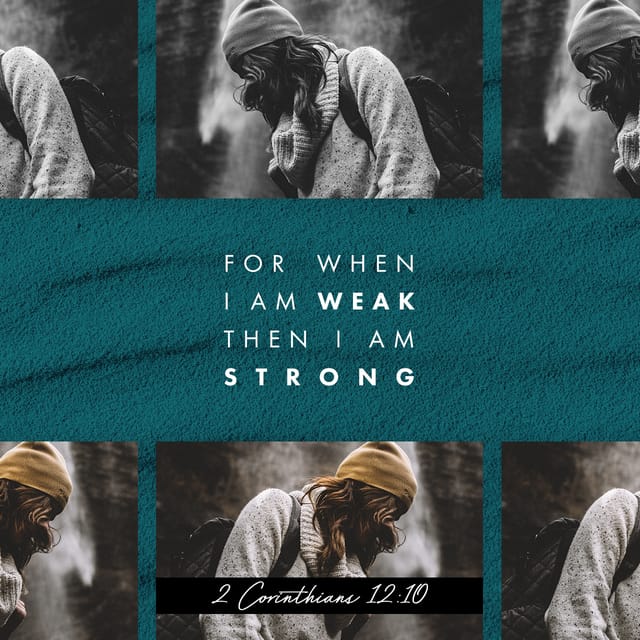
At the end of it all, Moses gives up his argument with God. God tells Moses he will take care of everything. Moses feels inadequate, but God fills in all our cracks of inadequacy with His power. This is unbelievably good news! As the Apostle Paul puts it:

Borrowed from YouVersion: https://www.bible.com/verse-of-the-day/2CO.12.10/22970?version=111

Message #4: We should never worry that our strength won’t be enough to complete tasks God has assigned to us. He is enough. The strength He used to create the universe and raise Jesus from the dead will more than make up for our shortcomings! This is God’s version of the 10x plan for each of us!

Message #5: It’s OK to argue and debate with God. In fact, I believe He invites this level of interaction with Him; it’s definitely preferable to indifference, and ultimately leads to a deeper faith and deeper relationship. In the end, of course, we probably won’t win those arguments since we are called to obey our Creator, but He’s fine with it if we want to question what He is asking us to do.

For me, writing this blog is an example of obedience to something I believe God is calling me to do. I don’t really know why He wanted me to do this and I even argued with Him about it, but I still ended up feeling compelled to comply (“writers write”, among other things), so here I am. What’s more, I felt like He put specific boundaries around what He wanted me to say in this forum, as well as (and especially) what He did NOT want me to say (as I’ve shared before, as an example, I am not to use this forum to express my political views or other strong opinions that would detract from the encouragement I am to called spread with my words). I am often tired when I sit down to write these blog posts, but God always finds a way to give me the endurance I need to get them done.

What about you? Is there something you feel God calling or nudging you to do? Do you feel unworthy of the task? Is something else holding you back? Whatever it is, argue with God, then go do it!

Posted in Christian, Faith, Miracles, Uncategorized | Tagged , , , , , , , , | 4 Comments

“You Intended to Harm Me, but God Intended it for Good” – Joseph’s Crazy Ride

For anyone who has undertaken to read through the Bible in a year, or listen to it (as with the #DailyAudioBible, which I recommended earlier in the year), has undoubtedly encountered the story of Joseph. For those new to the Bible, this Joseph isn’t the earthly father of Jesus (who doesn’t appear on stage until the New Testament). This Joseph is the eleventh of the 12 sons of Jacob (a.k.a. Israel). The saga of Joseph is important enough that it spans the last 14 chapters of the book of Genesis, beginning in chapter 37.

Joseph’s story doesn’t have the greatest beginning. Through a combination of Joseph’s arrogance as a youngster (telling his older brothers about his dreams that they would one day bow down to him) and less than stellar parenting by Jacob (in which he blatantly declared that Joseph was his favorite by making him a fancy coat–of the “Technicolor Dreamcoat” fame), his brothers ended up hating him. They flirted with killing him, but ended up selling him into slavery and told their father, Jacob, that he had been killed by wild animals.

Joseph gets bought by Potiphar, captain of the guard for Pharaoh, king of Egypt. God seems to bless Joseph, and the success he enjoys propels him to become the head of Potiphar’s household. But then everything seems to fall apart again. Joseph has become a good-looking young man, and he has also matured. Potiphar’s wife tries to coax him into bed. In a display of considerable maturity for an 18-year-old, he tells her no, saying it would be a sin against God and the wrong thing to do to Potiphar. But his reward for doing the right thing is getting thrown in prison when Potiphar’s wife lies about what happened.

Although he has a chance to get out, people let him down again, so he’s stuck in prison for several years. While there, he seems to be blessed again, to the point where he is in charge of the prison. He finally gets an opportunity to get out when he’s asked to interpret Pharaoh’s dreams. He says he can’t do it, but God can. Pharaoh likes Joseph’s/God’s interpretation and associated plan so much that he appoints Joseph to be second in command and in charge of all of Egypt.

Seven years later, a severe famine strikes the world, which Joseph had predicted in his interpretation of Pharaoh’s dreams, and prepared accordingly. And wouldn’t you know it? A couple years into the famine, his 10 older brothers show up and bow down before Joseph, begging to buy grain so they and their families won’t die. Joseph’s arrogant dream from so many years ago comes true! They don’t know it’s him yet because they don’t recognize him, but he knows it’s them.

After some time, Joseph finally reveals to them that he is the brother they had sold into slavery. Joseph is a powerful man and could have them tortured or killed. He may have been right to do so, after what they had done to him. But instead, he shows them grace. None of them deserves this–that’s why it’s called it grace. At the end of it all, Joseph is also reunited with his father, Jacob, and his younger brother, the only brother from his mother. They all move down to Egypt, where there is food. And because of Joseph’s high standing with Pharaoh, they are well regarded and taken care of.

What’s the point of all this?

Joseph could have been bitter. He could have been angry toward God and toward his brothers. As hard as he had tried, he couldn’t sustain any pattern of success, at least not by worldly standards. And for a long time, his life sucked. But instead of feeling sorry for himself or shaking his fist at God, he did the best he could in whatever situation he found himself. Since there is no mention in all 14 chapters of Joseph feeling abandoned by God, we can safely assume that he continued to trust God despite all the evidence, prolonged over years, that might have turned so many people into depressed, militant atheists.

Near the end of this epic saga, right after Jacob dies, Joseph’s brothers again fear that Joseph will retaliate for the way they had mistreated him in his youth. Joseph reassures them that he will do them no harm, telling them, “You intended to harm me, but God intended it for good to accomplish what is now being done, the saving of many lives.” (Genesis 50:20, NIV)

I wonder at what point during his decades-long odyssey Joseph arrived at that conclusion, that God had orchestrated the whole thing in order that the sons of Jacob, which would go on to become the 12 tribes of Israel (and the lineage of Jesus), would survive the 7-year famine that plagued the earth.

At what point in our own journeys should we take the long view that, no matter how crappy and challenging things get, God has a plan for each of us as He guides us along our winding paths, which always seem to be shrouded in a misty fog if we try to peer more than a day ahead? And how many other people will be impacted, or even saved, because we persevere, clinging desperately to the outstretched hand of our loving Savior and King?

Posted in Christian, Faith, Uncategorized | Tagged , , , , , , , | 4 Comments

Fruit Salad of the Spirit – The Only Way to Fight Back

To borrow a phrase from Thomas Paine, these are times that try our souls.* And now my own words: the fabric of our nation is threadbare, made brittle by the scorching sun of discontent and discord. On this, mostly everyone agrees. The explanation for how we got here, however, will vary widely depending on whom you ask.

Regardless of how we got here, our situation is dangerously precarious. The slightest tear, it seems, could easily lead to a complete shredding of the fabric, to utter destruction. Paine wrote his revolutionary words 244 years ago to encourage the 13 colonies that started this American experiment to rebel against the greatest military force on the planet. A brave undertaking, to say the least.

I write these words tonight to encourage a New American Revolution, although probably not in the way you might think. Borrowing ideas from revolutionaries who came well before Thomas Paine, the bravest and fiercest way to fight against the destruction of our great nation is to call upon the Holy Spirit, the most powerful force the world has ever known.

What?? Pray? That’s your answer?!

Unapologetically, yes.

What is there that cannot be accomplished by the awesome power that breathed life back into a Jewish rabbi who had been beaten nearly to death and then crucified the rest of the way? If you answer with anything, I’ll tell you that you don’t know the God whom we serve, the God who made this planet from nothing. It may seem like an insurmountable challenge for you or me to resurrect this country–and it is if we try to do so from our own strength–but with God, nothing is impossible.

One thing is sure: anything we do or say that we think will make the situation better but does not come from God will probably make the situation worse. So how do we know if our thoughts, words, and actions come from God? By looking at the outcomes–the fruits of what we say and do. Let’s peek in on what the revolutionary Apostle Paul (who first tried to kill followers of Christ, then was blinded by the Light, and ended up writing 3/4 of the New Testament) had to say about how to tell if our actions are from God:

The acts of the flesh are obvious: sexual immorality, impurity and debauchery; idolatry and witchcraft; hatred, discord, jealousy, fits of rage, selfish ambition, dissensions, factions and envy; drunkenness, orgies, and the like. I warn you, as I did before, that those who live like this will not inherit the kingdom of God.

But the fruit of the Spirit is love, joy, peace, forbearance, kindness, goodness, faithfulness, gentleness and self-control. Against such things there is no law. Those who belong to Christ Jesus have crucified the flesh with its passions and desires. Since we live by the Spirit, let us keep in step with the Spirit. Let us not become conceited, provoking and envying each other.

Apostle Paul, in Galatians 5:19-26 (NIV)

So, if the outcomes of our words and actions don’t fall into the heavenly fruit salad list that starts with love and ends with self-control, then what we’re doing or saying is not from God. We are not bringing the Holy Spirit to bear on the situation, so we’re probably making things worse. This means that, for the most part, we need to separate ourselves from our political opinions and anything else that is putting ourselves in violent opposition to someone who doesn’t believe what we believe.

To be clear, we can and absolutely should hold firm to those beliefs, and should continue to vote accordingly. But for the sake of civil discourse and bringing the power of God into the situation, we should not try to force our opinion on others just for the sake of being right. We are ONLY allowed to view others through the lens that God loves them and Jesus chose to die for them–NOT as a Democrat or Republican or any other label that might cause enmity.

Trust me, I know this isn’t easy. I have very strong and deep-rooted opinions (ask my wife and kids!), but I know I cannot indulge them right now since they do not bring life to interactions I have with others. Candidly, this is probably one of the most monumental struggles with the flesh that I’ve ever had to deal with, so I completely understand how difficult this is.

But Jesus never promised that following Him would be easy–only that He would be there with us to help us every step of the way.

And also, referring back to the passage in Galatians I mentioned earlier, Paul starts it off by quoting Jesus, who was himself quoting Leviticus:

For the entire law is fulfilled in keeping this one command: “Love your neighbor as yourself.” If you bite and devour each other, watch out or you will be destroyed by each other.

Galatians 5:14-15 (NIV)

To sum it up, to love people not in our “tribe” can be infinitely more difficult than hating them or saying nasty things to or about them. To pray for someone you disagree with is braver than yelling at them or posting a tirade about them. But Jesus tells us to do the difficult and brave thing, and it is the only way to win, to bring life back into our country. Hatred, discord, jealousy, fits of rage, selfish ambition, dissensions, and factions may feel more natural, but we cannot give in to any of them. But fear not, our weapons are powerful: love, joy, peace, forbearance, kindness, goodness, faithfulness, gentleness and self-control. In the end, nothing can overcome them.

God bless us all this week, and may He continue to bless the USA. Please join me in praying for government leaders at all levels, including both the incoming and outgoing Presidents.


* The actual quote by Thomas Paine was:

These are the times that try men’s souls: The summer soldier and the sunshine patriot will, in this crisis, shrink from the service of his country; but he that stands by it now, deserves the love and thanks of man and woman.

Thomas Paine, The American Crisis, 1776
Posted in Christian, Faith, Uncategorized | Tagged , , | 2 Comments

No Resolutions – Do or Do Not / A Shield for 2021

There’s something about turning the calendar over to a new year that feels fresh, restores hope. While this is true, the same could be said for a new month, new week, or even a new day. A chance to start over again. Try again, do better.

So my first bit of commentary is toward our penchant for creating New Year’s Resolutions, which really makes no sense. If you disagree, ask yourself how many resolutions from this year you recycled from last year. The reason they make no sense is the way we tend to approach them, which is basically little more than wishes for the new year. I’ll borrow (and slightly alter) a phrase from Yoda of “Star Wars” fame: “Do or do not. There is no resolve.” If instead the goal is to make lasting change in your life, then read a book about habits–forming good ones and breaking bad ones. An excellent one I read and recommend is Atomic Habits, by James Clear.

One other quick note in this regard. Some people have a sense that they should read through the Bible, perhaps setting a goal to do so in a year. While this is a worthy goal–this is, after all, one way our loving Father in Heaven has chosen to communicate with us–it can also be a daunting undertaking. And I really don’t recommend reading it from cover to cover like you would a “normal” book. At the very least, I think you should read some from the Old Testament and some from the New Testament each day (I’d be happy to explain why if anyone is wondering). Better yet, My.Bible.com (aka YouVersion) has some excellent reading plans available, and they make many translations available across multiple devices, so it’s a great resource worth checking out. And finally, another personal favorite of mine is to take a guided journey through the Bible in a year with Brian Hardin and the Daily Audio Bible (DAB) family. I’ve done this many years now, and I still hear from God in different ways all throughout the year. Brian is an ordained pastor (and this is his “church”), so following each day’s reading, he spends a few minutes (yes, just a few) talking about whatever God put on his heart to discuss from that day’s reading. This is an excellent way to go through the Bible, with a trained professional to help you make sense of it all.

TWR360 | Daily Audio Bible
Daily Audio Bible Logo

OK, so back to the hope that can be associated with turning the calendar over to a new year. I’m right there with most of the world celebrating closing the book on 2020. But as much as I hate to point this out, nothing has really changed. Most (if not all) of the problems that were present in our world on December 31, 2020, were still with us on January 1, 2021. Why should the new year give us hope?

Maybe it’s not the new year that gives us hope per se, but rather the reset that it brings with it–the chance to remind ourselves that all is not lost, even if the outlook in the world remains bleak. We can recall that God is in control, even if it doesn’t look like it to us. We can and should (daily!) find comfort in God and His promises–there are gems of hope and comfort and peace woven all throughout the Bible. Here are just a few:

Therefore, since we have been justified through faith, we have peace with God through our Lord Jesus Christ, through whom we have gained access by faith into this grace in which we now stand. And we boast in the hope of the glory of God. Not only so, but we also glory in our sufferings, because we know that suffering produces perseverance; perseverance, character; and character, hope. And hope does not put us to shame, because God’s love has been poured out into our hearts through the Holy Spirit, who has been given to us.

Romans 5:1-5 (NIV, emphasis added)

…we who have fled to take hold of the hope set before us may be greatly encouraged. We have this hope as an anchor for the soul, firm and secure. It enters the inner sanctuary behind the curtain, where our forerunner, Jesus, has entered on our behalf.

Hebrews 6:18b-20a

Praise be to the God and Father of our Lord Jesus Christ! In his great mercy he has given us new birth into a living hope through the resurrection of Jesus Christ from the dead, and into an inheritance that can never perish, spoil or fade. This inheritance is kept in heaven for you, who through faith are shielded by God’s power until the coming of the salvation that is ready to be revealed in the last time.

1 Peter 1:3-5 (NIV, emphasis added)

Also, besides the tender message of hope woven throughout God’s love letter to us, He also assures of His protection. He wants nothing but the best for us. Here are some examples:

But you, God, shield me on all sides;
You ground my feet, you lift my head high;
With all my might I shout up to God,
His answers thunder from the holy mountain.

Real help comes from God.
Your blessing clothes your people!

King David, in Psalm 3:3-4, 7-8 (MSG)

For I know the plans I have for you,” declares the Lord, “plans to prosper you and not to harm you, plans to give you hope and a future. Then you will call on me and come and pray to me, and I will listen to you. You will seek me and find me when you seek me with all your heart.

Jeremiah 29:11-13 (NIV, emphasis added)

So go boldly into 2021, knowing that God goes before you as a shield. Hold onto the hope that only He can bring, and give to you personally. I pray that God blesses you richly in this new year, and that you (we all) will have the eyes to see those blessings.

Posted in Christian, Faith, Uncategorized | Tagged , , , | Leave a comment

Retrospective: Where was God in 2020?

Now that we are finally counting down the few remaining hours in this rough year, it might be useful to reflect on the year that was. As with any sort of retrospective pondering, this is usually a bittersweet thing to do, but with 2020, there may be more bitter than sweet.

For me, 2020 began with us having to euthanize a beloved dog, a member of our family for over 15 years. That was the first weekend, and the year never really got much better. There were bright moments, to be sure, but it was definitely the type of year that could leave one wondering where God was in all the messiness. It breaks my heart to say this, but one of my adult children has basically walked away from the faith (at least for now) because she has asked a similar question about the pattern of bad things that has seemed to plague her throughout her relatively brief life: if there is a loving, caring God, how can He allow so many bad things to happen to me?

He is the short answer regarding God’s whereabouts: He is here for us and with us to help us weather the storm. To expand a bit, God has never promised us an easy life. If someone has convinced you to believe otherwise, they need to read the Bible. It is a collection of true stories written by and about people who endured unspeakable hardships, and most of their stories do not have happy endings. At least not for their time on earth–the eventual ending is glorious, being restored and in the presence of God for all eternity. In fact, Jesus Himself confirmed that life is hard when he said, “In this world, you will have trouble.” (John 16:33, NIV, emphasis added).

However, He also added, “But take heart! I have overcome the world.”

But if Jesus has overcome the world, why does it still suck so badly sometimes?

That is a fair and natural question. The answer plumbs the depths of theology, I think, but here is how I understand it, in a nutshell. When Adam and Eve listened to Satan and ate the fruit God told them not to eat, sin (and Satan with it) gained a foothold in this world. It has been spreading like a plague (worse even than COVID-19) ever since, as history and the evening news clearly show. When Jesus came to earth, lived a sinless life, died on the cross to pay the price for the sin of every person who has ever lived or ever will live, and then rose again on the third day, He defeated Satan and death in the spiritual world. The book of Revelation contains some details (but not many), but this victory won’t manifest itself in the physical world until Jesus returns (the Second Coming). Battles will ensue in this physical realm, the end result of which will be that everyone who has called on the name of Jesus and accepted His gift of salvation (the only requirements) will be restored, along with a new heaven and new earth, to dwell forever in paradise with our great and loving Creator.

So unfortunately, because of the brokenness introduced and spread throughout the world by Satan, this world will suck until then.

But here’s the really great news: God has also promised to never leave or forsake us! Said another way, rather than just sit up in heaven eating bonbons and saying, “Wow, look at the mess they’ve made! Good luck with that!”, God has entered into our messiness. Because there is growth to be had through the muck and mire of life, He doesn’t usually take us out of the messiness, but He does find various ways to help us through it. He gives us shalom (deep, lasting inner peace) if we ask Him for it. He puts people in our path who will help us (financially, spiritually, emotionally, and in myriad other ways), if we let them. He has spread churches and other gatherings of believers all around the world with the intent of giving us a place to worship Him and remind ourselves and each other that this isn’t the way it was intended to be, nor will it be this way forever.

Even if you’re not yet a follower of Christ, He stands always at your door, knocking softly and waiting for you to open it. In conjunction with the Holy Spirit, He is only a breath, a brief prayer, away. You have only to say, “Help me, Jesus, I need you,” and He will step in to help you carry your burden. You may not be able to imagine how He will help you (His answers never look like our questions, but they are always better!), but He will. It’s what He does. He does not want a single one of us to endure the hardships of this life on our own.

So where has God been during the storm that has been 2020? Standing on the shores of heaven cheering us on? No way! Our kind and loving Savior has left the grandeur of heaven to get into the rocking boat with us, even as it gets tossed about by ferocious waves. It may not make sense, but this is our God. Someday we will understand.

I pray you will have a healthy, prosperous, and peaceful 2021, but even more so that you (as well as I) will always remember to look to God, our Creator and Giver of Life and Light, all throughout the coming year, regardless of what comes our way. May God bless your 2021!

Posted in Christian, Faith, Uncategorized | Tagged , , | 2 Comments

Advent: The Invasion – Love

We close out this advent season reflecting on love.

Grace is love in action. God has taken action, giving wings to His love by sending His Son to this planet before we had any idea what was going on. We did not deserve such an extravagant gift, nor could we ever. We cannot earn it, we can’t buy it, not even on Amazon.

This is grace.

Before God (the Hound of Heaven) tracked me down and brought me into relationship with Him, I thought I would have to get my act together prior to going to church. Since then, I have heard many variations of this from people who are not yet followers of Christ–“God would never accept me like this.”

As it turns out, it’s all a load of crap.

This IS NOT about going to church. Far too many people (believers included) see going to church as a way to earn God’s love. It’s not, and you can’t earn God’s love. Why not? Because you already have it. He has loved you more than you can imagine since before you were even born. It doesn’t matter what you’ve done or will do. His grace is bigger than all of that. There is NOTHING that can separate you from His love!

For I am convinced that neither death nor life, neither angels nor demons, or nor heavenly rulers neither the present nor the future, nor any powers, neither height nor depth, nor anything else in all creation, will be able to separate us from the love of God that is in Christ Jesus our Lord.

Apostle Paul, in Romans 8:38-39 (NIV)

So this is what it’s all about: being in an intimate relationship with God.

The Bible frequently compares the relationship God wants to have with us to that of a (good) marriage. I love my wife and she loves me, and we fell in love a long time ago. We talk and share a life together because we already love each other, not so I can try to earn her love. And while I had shortcomings I wish I could have gotten rid of before we got married, I didn’t, but we got married anyway. It hasn’t always been easy, we have had to contend for it, but thankfully we are still in love today, even more so than when we got married 27 years ago. I’m so glad we didn’t wait until I “had my act together” (whatever that really means) before we got married! And I believe I’m a better person today because of my relationship with her.

So in the same way, we shouldn’t go to church to check a box or to try to earn God’s love. We should go to church to tell God how much we love and appreciate Him, and to learn more about Him so we can grow deeper in relationship with Him.

This is really all God wants from us: to accept His gift of love, entering into a relationship with Him so we can swim in his oceans of grace and forgiveness.

If you believe that it’s about anything else–standards of dress or behavior or anything else that the world thinks is required to go to church, then you have believed a lie straight from the pit of hell. Refer again to the passage from the eighth chapter of Romans above–none of these things can separate us from God’s love. God doesn’t care about your haircut.

So before the glow of Christmas cheer slips from our grasp completely like water draining from cupped hands, let me pass along this invitation: spend a moment pondering what unbelievably good news it is that the One who created us knows us better than we know ourselves, knows every rotten thing we have ever done and ever will do, but loves us anyway, more than we could ever hope or imagine. He love us enough to give us His Son as a Christmas gift.

This is grace. This is the gospel. It is the love of our God.

Posted in Christian, Faith | Tagged , , , , , , | 1 Comment

Christmas Eve, 2020 – If Ever We Needed a Holy Night…

Posted in Christian, Faith, Poetry | Tagged , , | 3 Comments

Advent: The Invasion – Ode to Joy!

I don’t know about you, but I love positive stories that are counter-intuitive or even, to some extent, counter-cultural. I must not be alone in this, since stories where the hero overcomes incredible odds to achieve his/her goal are quite popular.

One story I love is around composer Ludwig van Beethoven (my favorite) and his 9th Symphony. One remarkable aspect of this, his last completed symphony, is that he was one of the first composers to include chorale music in his symphony. For this, he borrowed (and modified) a poem written in 1785 by Friedrich Schiller called “Ode to Joy.” Another incredible aspect of this story is that by the time Beethoven completed the symphony and first performed it, in 1824, he was almost completely deaf. This would seem to be the greatest curse a professional composer and musician could endure, to lose the sense you counted on the most. And yet, without being able to hear a note of it, he completed one of the most beloved pieces of music of all time. And central to it is the “Ode to Joy”. Savor the taste of the delicious, counter-intuitive irony of this. How could he be joyful when composing music he couldn’t hear?! Here are some of words from Beethoven’s version of the song:

Joy, beautiful spark of divinity,
Daughter from Elysium,
We enter, burning with fervor,
heavenly being, your sanctuary!
Your magic brings together
what custom has sternly divided.
All men shall become brothers,
wherever your gentle wings hover.

Ludwig van Beethoven, Symphony No. 9, “Ode to Joy”

To carry this a bit further, in the initial performance, on May 7, 1824, in Vienna, Beethoven desperately wanted to conduct. However, since he couldn’t hear and would therefore be unable to keep the tempo, the orchestra used their own director (Michael Umlauf) to stand behind Beethoven and actually conduct–the performers were instructed to ignore Beethoven’s direction and follow only Umlauf’s baton). When the performance completed, Beethoven was several bars behind, so he was still “conducting”. Caroline Unger, who sang the contralto part, went up to Beethoven, stopped his conducting, and turned him around to face the audience, who was giving him the first of five standing ovations, which included many people waving handkerchiefs or their hands in the air since Beethoven couldn’t hear their applause.

Joy in the midst of tragic yet heartwarming circumstances… Joy from overcoming…

A German workers’ movement started a tradition of performing Beethoven’s Ninth Symphony on New Year’s Even in 1918, timing the start of the performance at 11:00 pm so the finale would carry the audience, uplifted on a wave of joy, into the the new year. This tradition has spread elsewhere in the world as well, as far as Japan.

In 1907, the pastor Henry van Dyke took the melody one step further and wrote the hymn, “Joyful, Joyful, we adore thee”, which includes such celebratory passages as:

Joyful, joyful, we adore Thee
God of glory, Lord of love
Hearts unfold like flow’rs before Thee
Op’ning to the Sun above
Melt the clouds of sin and sadness
drive the dark of doubt away
Giver of immortal gladness
fill us with the light of day

Henry van Dyke, “Joyful, Joyful, we adore thee”

And it all started with a composer who couldn’t hear the music he was writing, at least not in the same way you and I would hear it.

Or how about this one, which starts off in the unlikeliest of ways? On a dark and starry night in a small town in the middle of nowhere, the King of kings and Creator or the universe steps down from his throne of glory to be born as a baby to a poor teenage mother who got pregnant out of wedlock. He was born in a filthy barn, wrapped in a dirty rag, and laid in a feeding trough for animals.

If it were up to me, this is not how I would stage the initial invasion against the powerful forces of darkness and evil in this world. There is no way this would work!

And yet…

It has worked! This poor little child survived despite brutal attempts to kill him as an infant. He grew up, and even though he had no formal training, he became the greatest theologian the world has ever known. And so much more than that!

This man that none of us should ever have heard of 2000 years later still offers His friendship to us. He knows that all of us have fallen short of the perfection God intended for us, but instead of condemning us, He has taken the punishment for each and every one of us that we deserve for our failures.

He died so that we (anyone who calls on His name) can live!

If that’s not a cause for the greatest celebration each of us can muster, I don’t know what is!

If you ponder what this means, how can you feel anything but joy?!

And there were shepherds living out in the fields nearby, keeping watch over their flocks at night. An angel of the Lord appeared to them, and the glory of the Lord shone around them, and they were terrified. But the angel said to them, “Do not be afraid. I bring you good news that will cause great joy for all the people. Today in the town of David a Savior has been born to you; he is the Messiah, the Lord. This will be a sign to you: You will find a baby wrapped in cloths and lying in a manger.”

Suddenly a great company of the heavenly host appeared with the angel, praising God and saying,

“Glory to God in the highest heaven, and on earth peace to those on whom his favor rests.”

Luke 2:8-14 (NIV, emphasis added)

Though you have not seen him, you love him; and even though you do not see him now, you believe in him and are filled with an inexpressible and glorious joy, for you are receiving the end result of your faith, the salvation of your souls.

1 Peter 1:8-9 (NIV, emphasis added)

Rejoice in the Lord always. I will say it again: Rejoice!

Philippians 4:4 (NIV)
Posted in Christian, Faith | Tagged , , , , | Leave a comment

Advent: The Invasion – Prince of Peace?

OK, so I’m a week behind unpacking the symbolism of the advent candles, but I’m working on God’s time and there was something more pressing I felt like I needed to post before I started into advent. So the second advent candle symbolizes–you guessed it–peace. Hundreds of years before Jesus’ invasion into the darkness of this world, Isaiah prophesied about Him in this way:

For to us a child is born, to us a son is given, and the government will be on his shoulders. And he will be called Wonderful Counselor, Mighty God, Everlasting Father, Prince of Peace.

Isaiah 9:6 (NIV, emphasis added)

This notion of peace, and of Jesus being the Prince of Peace, may seem straightforward, but maybe also a little bit out of place in today’s world, so I thought it would be worth diving into it a little deeper.

To begin with, it may be hard for us who speak English to remember that the Bible was not originally written in our mother tongue (after all, don’t God and Jesus speak like King James??). The First (Old) Testament was, of course, originally spoken and then written in Hebrew. The word for peace in Hebrew is shalom, a word we have undoubtedly heard. The nuances of shalom, though, run much deeper than the way we usually think of peace, which is generally and basically interpreted as the absence of war, or at least a freedom from being disturbed.

Is that what we are experiencing today? In our country? In the world? Or even at the individual level–do you feel at peace?

I suspect I know the answer to all of these questions.

Or what are we to make of Jesus being referred to as the Prince of Peace? Look at what Jesus says about himself relative to peace:

“Do you think I came to bring peace on earth? No, I tell you, but division. From now on there will be five in one family divided against each other, three against two and two against three. They will be divided, father against son and son against father, mother against daughter and daughter against mother, mother-in-law against daughter-in-law and daughter-in-law against mother-in-law.”

Jesus, in Luke 12:51-53

“Do not suppose that I have come to bring peace to the earth. I did not come to bring peace, but a sword. For I have come to turn“ ‘a man against his father, a daughter against her mother, a daughter-in-law against her mother-in-law—a man’s enemies will be the members of his own household.’”

Jesus, in Matthew 10:34-36

This all seems pretty confusing. What I have found helpful in grappling with all this is to think back to the nuances of shalom. More than just an absence of conflict, it refers to wholeness or completeness. It hints at the way God meant for things to be, with our lives interwoven and interconnected with God and creation, everything working together for good.

Last week, I introduced the comparison of Christmas to an invasion story. This makes me think back to another famous invasion–D-Day (June 6, 1944), when the Allied troops stormed the beaches of Normandy to try to gain a foothold on Hitler’s “Fortress Europe”. It was such a massive and dangerous undertaking that its success was far from guaranteed. However, once it did succeed, an Allied victory in Europe was almost a foregone conclusion. Nevertheless, it took almost a year before Germany surrendered. And that time between invasion and V-E Day was dark and bloody. Nevertheless, at the end of it all, peace prevailed.

Perhaps we find ourselves in a similar state, in the time between invasion (Christ’s birth) and victory, when Jesus will come back to set all things right. Setting all things right sounds a lot like a return to shalom, the way it was in Eden before the fall, when Adam and Eve had God as their best friend.

So even though Jesus doesn’t seem to be focused on bringing peace to the world as we know it in the way we would think of it–putting an end to wars once and for all–with a bigger picture view, we can probably see that God has a plan for peace to prevail, when Jesus returns to usher in a New Heaven and a New Earth.

Is that it then? We have to wait for Jesus’ Second Coming to experience shalom?

No, not at all.

This is where it gets very cool, but also very hard for non-believers to understand. Even though Jesus never promised to give us an absence of conflict (peace) in this life, He did–and still does–offer us wholeness (shalom)! How is this possible? Through continuous prayer–in other words, by conversation with God. By being in relationship with Him. He will give us what we need to be whole and complete, if we ask Him and let Him. This is the way the Apostle Paul describes it:

Do not be anxious about anything, but in every situation, by prayer and petition, with thanksgiving, present your requests to God. And the peace of God, which transcends all understanding, will guard your hearts and your minds in Christ Jesus.

Philippians 4:6-7 (NIV, emphasis added)

In this light, I am pleased to wish you shalom, the peace of God that transcends all understanding, throughout the remainder of this Christmas season, into 2021, and beyond! I hope we are all able to give focused attention to the Prince of Shalom as we prepare to celebrate His birth!

Posted in Christian, Faith | Tagged , , , , , , | Leave a comment