
Introduction: When Slowness Is Personal
Over the past several weeks, we’ve talked about quiet seasons—about hurry, shame, returning, and learning to trust God even when the outcome doesn’t change.
Last week, we considered what grows in us when the prayer remains unanswered.
But there’s another angle worth sitting with.
What if God’s slowness isn’t just about our growth?
What if it’s about His character?
What if what feels like delay is actually patience?
Not weakness.
Not indecision.
Not distance.
Patience.
God Is Not Slow
Scripture makes a careful distinction:
The Lord is not slow in keeping his promise, as some understand slowness. Instead he is patient with you…
2 Peter 3:9 (NIV)
We interpret delay through the lens of urgency.
God operates through the lens of mercy.
What feels like slowness to us may actually be space—
space for repentance,
space for growth,
space for hearts to soften.
And Scripture reminds us that God does not act randomly or reactively. He moves “in the fullness of time.”
But when the fullness of time had come, God sent forth his Son, born of woman, born under the law.
Galatians 4:4 (ESV)
Not early.
Not late.
Not hurried.
At the right time.
God is not dragging His feet.
He is working toward fullness.
He is holding open the door until the moment is ripe.
The Patience We Depend On
If I’m honest, I’m deeply grateful for God’s patience when it applies to me.
I’m grateful He didn’t give up during seasons when my faith was inconsistent.
I’m grateful He didn’t withdraw when I wandered.
I’m grateful He didn’t demand instant maturity.
God has been patient with my growth.
Patient with my questions.
Patient with my weaknesses.
But here’s the harder part:
Am I as grateful for His patience when it affects what I want?
When Patience Delays What We Prefer
Sometimes God’s patience means someone else is being given more time.
Sometimes it means circumstances aren’t resolved as quickly as we’d like.
Sometimes it means we sit longer in uncertainty than feels comfortable.
We love patience when it protects us.
We struggle with patience when it stretches us.
But the same patience that gives us room to grow is the patience that shapes the world more gently than we would.
In my own life, of course, I have made mistakes. Sometimes they’ve been inconsequential, but others have had more material impacts on the trajectory of my life. In some cases, these mistakes have been direct results of me trying to force answers to my prayers that were not God’s answers.
Sometimes, my rush led to significantly difficult times in my life. Thanks to God’s good grace, though, he has found ways to get me back onto His intended trajectory for me, dragged me back onto His Path of Peace.
In hindsight, I have been able to see what’s God’s answers to my prayers have been. This has allowed me to compare and contrast how much better His answers have been over those I tried to force.
It has helped me understand more and more the benefit of waiting for His fullness of time.
The Strength Inside Divine Patience
Patience is not passive.
It is controlled strength.
It is power restrained for the sake of love.
God could act instantly.
He often chooses not to.
Not because He lacks authority—
but because He is working at a depth we cannot see.
Divine patience means:
He is never rushed.
He is never reactive.
He is never panicked.
And if we are walking with Him, we are slowly being shaped into that steadiness as well.
What God’s Patience Grows in Us
When we begin to trust God’s patience, something shifts in us.
We become less reactive.
Less controlling.
Less frantic about timelines.
We begin to reflect the patience we receive.
“Be completely humble and gentle; be patient, bearing with one another in love.”
—Ephesians 4:2 (NIV)
It’s almost as if the patience of God toward us becomes the patience of God through us.
And that is a different kind of maturity.
Learning to Rest Inside His Timing
Trusting the quiet teaches us to stay.
Trusting unresolved outcomes teaches us surrender.
Trusting God’s patience teaches us peace.
It allows us to say:
I don’t see the full picture.
I don’t understand the timeline.
But I trust the One who does.
That kind of trust isn’t urgent.
It is settled.
Go Deeper
Patience as an Expression of Love
We often define love emotionally.
Scripture defines it differently:
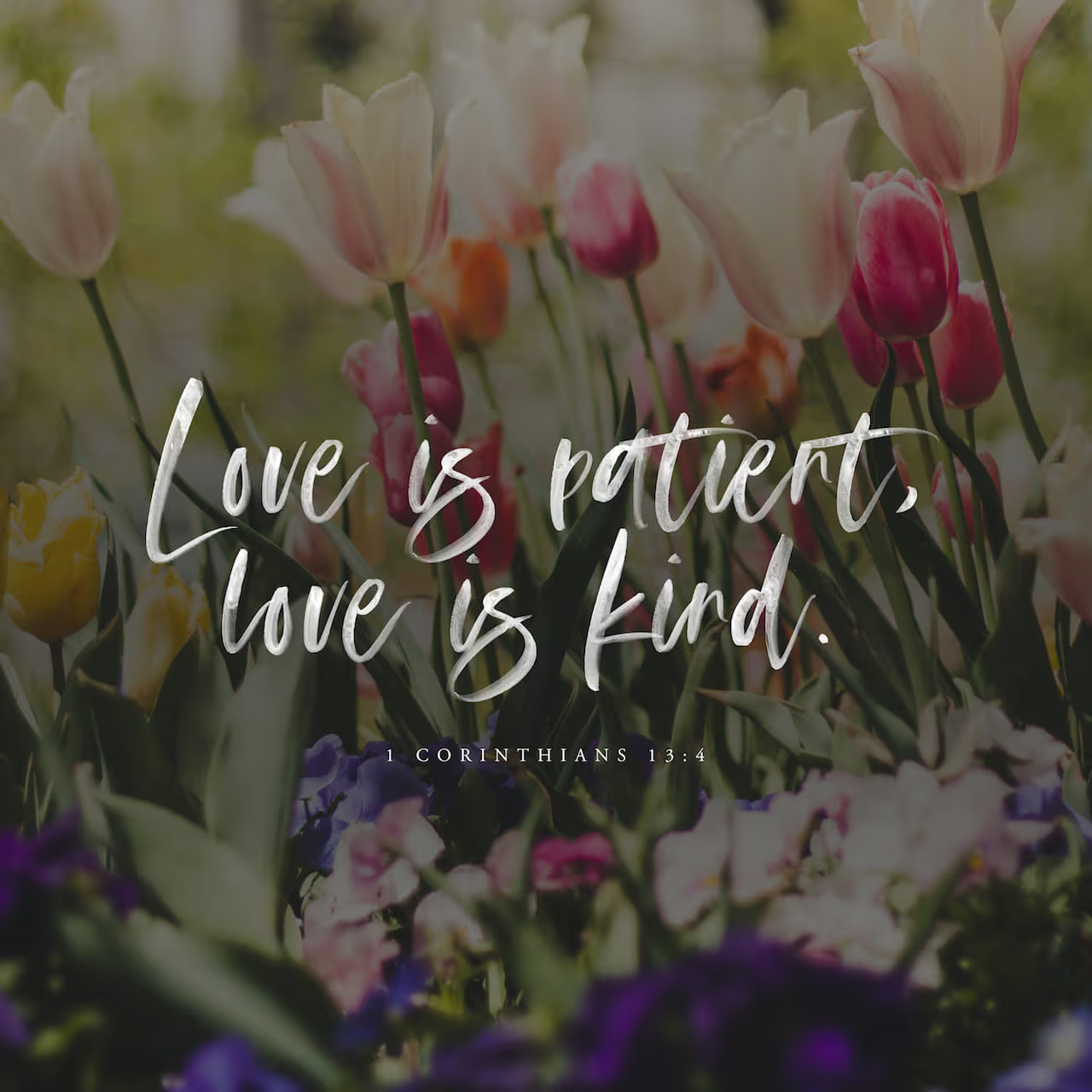
Patience is not just something God does.
It is something God is.
His patience toward us is not reluctant.
It is rooted in love.
Two questions to sit with this week:
Where in my life am I resisting God’s patience because it conflicts with my timeline?
And where might God be inviting me to reflect His patience toward someone else?
The quiet seasons we’ve been discussing aren’t empty.
They are classrooms.
And one of the deepest lessons taught there is this:
God is not slow.
He is patient.
Closing Encouragement
If you’re in a season that feels prolonged…
If the answer hasn’t come…
If the resolution feels delayed…
Don’t assume God is indifferent.
It may be that His patience is preparing something for its fullness.
And when the time is full — He will move.
Same God.
Same faithfulness.
Still working.
Still forming.
Still patient.


 Master's Canvas - Writing & Photography by David K. Carpenter